Commuters who want cola without sugar
A can can accompany a portable breakfast. If you also want to avoid caffeine, check the exact variant: zero sugar and caffeine-free are separate label claims.


If you want cola alongside a quick breakfast, choose a caffeine-free, zero-sugar variety when avoiding both sugar and caffeine matters; a regular zero-sugar cola is an option only if caffeine suits you. Have either alongside food rather than instead of breakfast. For a routine drink, consider water or milk: Norfolk and Suffolk NHS Integrated Care Board notes that even sugar-free fizzy drinks can be acidic and affect tooth enamel.
A can can accompany a portable breakfast. If you also want to avoid caffeine, check the exact variant: zero sugar and caffeine-free are separate label claims.
Look for an explicitly caffeine-free variant rather than relying on a diet or zero-sugar name. This distinction also matters if you are keeping track of caffeine from other drinks.
A zero-sugar cola is a drink to have alongside breakfast food, not a substitute for it. If choosing what to drink routinely is the main question, water or milk are alternatives worth considering.
Decide whether you want cola at all, then check sugar and caffeine separately on the exact variant you intend to take with breakfast.
Choose when: You want a cola alongside food without sugar or caffeine; Pepsi UK identifies Pepsi Max Caffeine Free as one such variant.
Bear in mind: Caffeine-free does not remove the acidity consideration that Norfolk and Suffolk NHS Integrated Care Board raises for sugar-free fizzy drinks.
Choose when: Avoiding sugar matters to you and caffeine is acceptable; Pepsi UK lists caffeine in Pepsi Max.
Bear in mind: A zero-sugar name alone does not tell you whether the drink adds caffeine to your day.
Choose when: You want a drink with food but cola flavour is not the priority; Norfolk and Suffolk NHS Integrated Care Board names water and milk as the safest drinks for teeth.
Bear in mind: Neither provides the cola flavour you may want, and your choice of drink is separate from what you take to eat.
| Priority | What to check | Your needs |
|---|---|---|
| Sugar | Read the sugars value for the exact drink and serving size. Pepsi UK lists 0 g sugars per 330 ml for Pepsi Max and Pepsi Max Caffeine Free. | I want the option of a cola with breakfast without sugar in that drink. |
| Caffeine | Check for an explicit caffeine-free name and read the ingredients on the exact pack. Pepsi UK lists caffeine in Pepsi Max but identifies Pepsi Max Caffeine Free as a no-caffeine variant. | If I am avoiding caffeine, a zero-sugar label on its own will not settle my choice. |
| Breakfast food | Choose food separately from the drink; a zero-sugar cola is not a replacement for a portable breakfast. | When I need breakfast rather than just something to drink, I will take food as well. |
| Acidity | Norfolk and Suffolk NHS Integrated Care Board says many fizzy drinks, including sugar-free ones, are acidic and can erode enamel. Consider how often you sip cola. | For a routine breakfast drink, I would rather take account of the effect on my teeth than judge a fizzy drink by its sugar label alone. |
| Sweetener labels | Read the current ingredients and any phenylalanine warning on the exact variant, particularly if phenylalanine is relevant to you. Recipes and labels can change. | I need to know what is in the pack I am buying, not assume that every diet or zero-sugar cola uses the same ingredients. |
Pepsi UK lists caffeine among the ingredients of Pepsi Max, while Joybuy product information lists it for Coca-Cola Zero Sugar 24x330ml. A sugar claim does not answer the caffeine question.
Choose an explicitly caffeine-free variant if that distinction matters, and check the current pack before buying.
A zero-sugar cola may be convenient to carry, but it is a drink rather than breakfast food.
Take something to eat if you need breakfast; treat cola, if chosen, as the accompanying drink.
Norfolk and Suffolk NHS Integrated Care Board says many fizzy drinks can be acidic and erode enamel even when they contain no sugar.
Consider water or milk as a routine drink, and avoid sipping cola repeatedly throughout the morning.
Ingredients differ between variants. The Food Standards Agency identifies undeclared aspartame as a potential risk for people with phenylketonuria (PKU).
If you need to avoid phenylalanine, check the ingredients and warning on the current pack of the exact product.
These ranges illustrate the label distinctions to look for; a brand name alone does not identify the sugar, caffeine or sweetener details of every variant.
Coca-Cola Great Britain describes both Diet Coke and Coca-Cola Zero Sugar as sugar-free and calorie-free. It positions Zero Sugar as closer in taste to Coca-Cola Original Taste and Diet Coke as lighter; that taste distinction is the brand's description, not an independent comparison.
Pepsi UK lists 0 g sugars per 330 ml for both Pepsi Max and Pepsi Max Caffeine Free, while distinguishing the variants by caffeine.
Tesco Groceries lists Tesco Caffeine Free Diet Cola 2L in its caffeine-free cola category alongside branded alternatives.
These are multipacks of individual cans for people considering cola alongside a grab-and-go breakfast. The selection includes caffeine-free and regular diet or zero-sugar variants; it does not change the separate choice of what to eat.
 No image available
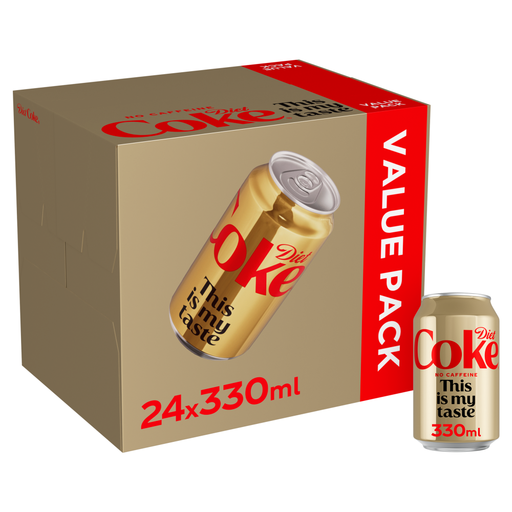
The named caffeine-free variant comes in individual 330 ml cans to take alongside food. Coca-Cola describes Diet Coke as sugar-free; check the current pack if sweetener warnings matter to you.
 No image available
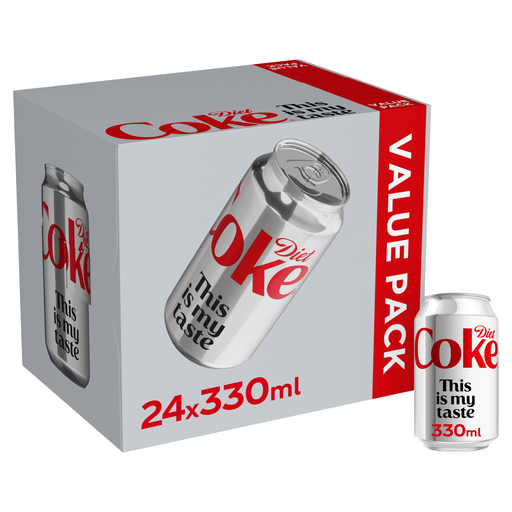
This multipack offers individual cans of Diet Coke, which Coca-Cola describes as sugar-free. It is not the No Caffeine variant; check the pack's caffeine information if you are limiting your intake.
 No image available
This is the caffeine-free Pepsi Max variant in individual 330 ml cans. Pepsi UK lists 0 g sugars per 330 ml for the variant; take it alongside breakfast food rather than in place of it.
 No image available
These individual cans suit a cola alongside breakfast if caffeine is acceptable to you. Pepsi UK lists 0 g sugars per 330 ml for Pepsi Max and includes caffeine in its ingredients.
 No image available
This multipack contains individual cans for a drink alongside food. Joybuy product information lists 0 g sugars per 330 ml and caffeine in the ingredients, so choose a separately named caffeine-free variant if you want to avoid caffeine.
No: it is a drink, not breakfast food. If you choose cola on a hurried morning, take something to eat alongside it rather than using the drink as the whole breakfast.
No. Pepsi UK lists caffeine in Pepsi Max, while Pepsi Max Caffeine Free is a separately named variant. Check the exact product name and ingredients if you want to avoid caffeine.
No. Norfolk and Suffolk NHS Integrated Care Board says many fizzy drinks, even sugar-free ones, are acidic and can erode enamel. It names water and milk as the safest drinks for teeth.
A warning matters if you need to avoid phenylalanine. The Food Standards Agency identifies undeclared aspartame as a potential risk for people with phenylketonuria (PKU), so read the current ingredients and warnings on the exact pack.
Use the current label for the exact drink and pack size you intend to buy. Check sugars per 100 ml or per serving, caffeine information, ingredients and any relevant warnings; Tesco notes that food products can be reformulated.