Car boot sellers serving hot drinks
Individual tea bags and pack-specific brewing instructions make it easier to prepare repeatable portions at a temporary stall. Keep the packs close enough to check ingredients when asked.


For a car boot sale, individually bagged herbal infusions explicitly labelled caffeine-free offer a straightforward way to serve visitors avoiding caffeine. Choose a small range if demand is uncertain, follow each pack’s brewing instructions and keep the packaging available for ingredient checks. If you sell or regularly supply refreshments, check with your local authority whether food-business registration applies.
Individual tea bags and pack-specific brewing instructions make it easier to prepare repeatable portions at a temporary stall. Keep the packs close enough to check ingredients when asked.
A small choice of herbal flavours gives visitors alternatives without assuming that every tea-style drink is caffeine-free. Check the caffeine statement on each variety.
A decaffeinated black or green tea is a separate option if familiar tea flavour matters more than a botanical infusion. Twinings distinguishes its decaffeinated teas from its naturally caffeine-free fruit and herbal infusions.
Decide whether the drink needs to be a naturally caffeine-free infusion or a decaffeinated conventional tea. Then match pack size, flavour choice and preparation instructions to the way you will serve it.
Choose when: Visitors need a drink whose specific pack states that it is naturally caffeine-free.
Trade-off: Camomile, peppermint and other botanical infusions have distinct flavours rather than the character of conventional black tea.
Choose when: A visitor wants a familiar black or green tea style with reduced caffeine.
Trade-off: Twinings treats decaffeinated traditional tea and naturally caffeine-free herbal infusions as different ranges; check the exact product rather than treating their labels as interchangeable.
| Priority | What to check | Your needs |
|---|---|---|
| Caffeine status | Read the exact variety’s caffeine statement and ingredients. Pukka notes that some products contain green tea; Yogi Tea identifies guarana, mate and dried kombucha drink as caffeine-containing ingredients in some varieties. | I want to describe the drink accurately to visitors avoiding caffeine, rather than relying on the word “herbal” alone. |
| Preparation | Check the number of bags per serving, water volume and infusion time on the pack. Twinings specifies one bag in 200 ml of freshly boiled water for three minutes for Pure Camomile and Lemon & Ginger; Clipper gives 2–5 minutes for its catering camomile. | When several people are waiting, clear instructions help me make portions consistently. |
| Flavour choice | Compare the named ingredients and keep the choice manageable. Camomile, peppermint and lemon-and-ginger provide different flavour directions; none establishes what every visitor will prefer. | A mixed group may appreciate a choice, but I do not want more open boxes than I can manage at the stall. |
| Pack format | Compare the bag count with expected demand and storage space. Clipper lists a 250-envelope camomile catering pack, while Twinings lists 20-bag packs of Pure Camomile and Lemon & Ginger. | For an occasional sale with uncertain demand, I would rather assess whether smaller boxes suffice before committing to one flavour in bulk. |
| Ingredients and service | Keep original packs available for ingredient checks. GOV.UK and the Food Standards Agency advise that selling or supplying food and drink may make an activity a food business requiring local-authority registration. | I need to answer ingredient questions and establish what applies to my refreshment stall before trading. |
A blend can contain caffeine-bearing ingredients: Pukka notes green tea in some products, and Yogi Tea identifies varieties containing guarana, mate or dried kombucha drink as exceptions to its general caffeine-free position.
Check the exact pack’s ingredients and caffeine statement before describing a drink as caffeine-free.
Clipper’s 250-envelope camomile pack provides many portions of one flavour, which limits the choice available from that box.
Match the bag count to expected demand; smaller boxes of more than one flavour offer flexibility when turnout is uncertain.
Instructions differ even among named products: Twinings gives three minutes for its Pure Camomile and Lemon & Ginger, while Clipper gives 2–5 minutes for its catering camomile.
Write a short preparation note from each pack, including its water volume where stated, rather than applying another product’s directions.
Without the packs at hand, it is harder to check the ingredients of each blend when a visitor asks.
Keep the original packaging at the stall, and ask your local authority about any food-business requirements that apply to your activity.
Brand ranges can help narrow the search, but the caffeine statement, ingredients and serving directions must still be checked for the individual product.
Pukka offers a naturally caffeine-free herbal collection with several flavour styles.
Twinings sells naturally caffeine-free fruit and herbal infusions alongside a separate decaffeinated traditional-tea range.
Clipper offers herbal infusions, including camomile, peppermint and rooibos, as well as a camomile catering format.
Yogi Tea sells herbal and spice blends whose ingredients need checking variety by variety.
Teapigs lists naturally caffeine-free herbal options, including peppermint and honeybush-and-rooibos infusions.
Tesco has a fruit-and-herbal tea category containing products from different brands.
These tea-bag options represent the naturally caffeine-free herbal-infusion route for individual servings at a car boot sale. Compare their flavours and bag counts, then check the pack instructions for the way you plan to serve them.
 No image available
A single-flavour option for individual caffeine-free herbal servings. The stated ingredient is 100% soursop leaves, and the product gives separate hot- and cold-preparation directions using one bag per cup. Consider whether this flavour suits the choice you want to offer.
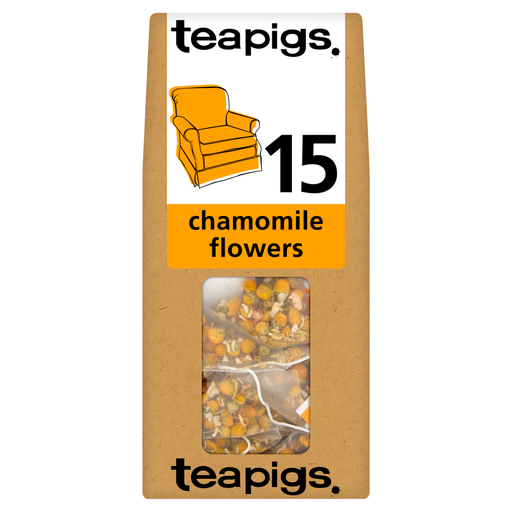 No image available
A caffeine-free camomile option in a 15-bag pack. The product description identifies 100% whole chamomile flowers; check this pack’s water volume and steeping time before setting out stall instructions.
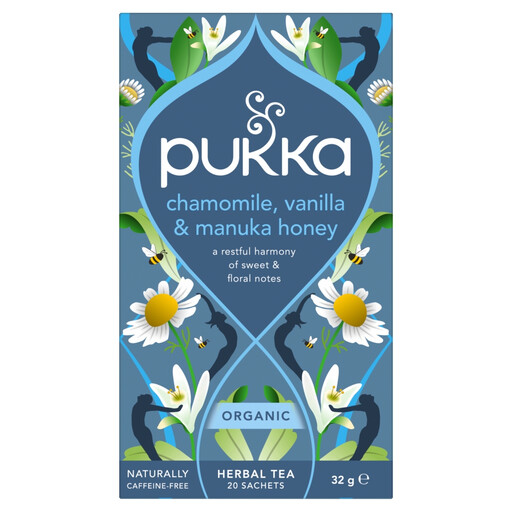 No image available
A caffeine-free, camomile-led blend with 20 individually wrapped bags. Its listed ingredients include chamomile, fennel, liquorice and vanilla; the stated infusion range is 5–15 minutes in 100°C water. Keep the ingredient information available: the product description advises caution for people with allergies to botanicals in the chamomile family. Check the pack for the water volume.
 No image available
A naturally caffeine-free lemon-and-ginger infusion that adds a different flavour to a small stall menu. This 20-bag product lists ginger, lemon flavouring, lemongrass, lemon peel and sweet fennel, with a stated brew time of 3–5 minutes. Check this pack for the water volume and keep its ingredients available to visitors.
 No image available
An 80-bag, single-flavour option for repeated individual servings. The product is described as caffeine-free and made from 100% peppermint. Check its own water volume and steeping directions before service; an all-peppermint pack will not provide flavour variety on its own.
No. Check the individual product’s caffeine statement and ingredients. Pukka notes that some of its products contain green tea, while Twinings distinguishes decaffeinated conventional teas from naturally caffeine-free fruit and herbal infusions.
A clearly labelled single-herb infusion such as camomile or peppermint makes a simple first menu choice. If you can manage another variety, lemon and ginger offers a different flavour; none of these choices guarantees that every visitor will prefer it.
No. Follow the directions for each product: Twinings specifies one bag in 200 ml of freshly boiled water for three minutes for its Pure Camomile and Lemon & Ginger products, whereas Clipper specifies 2–5 minutes for its catering camomile.
The original boxes let you check which ingredients belong to each infusion when a visitor asks. Keep the packs identifiable, particularly if you serve more than one blend.
Registration depends on the nature of your activity. GOV.UK and the Food Standards Agency advise that selling or supplying food and drink may make you a food business that needs to register with the local authority. Check with the relevant authority before trading if you are unsure how this applies to your stall.