Choose a diet or zero-sugar multipack if you want a sweet fizzy drink while reducing the sugar in your pantry stock. Check sugars per 100ml, caffeine, sweeteners and pack size on the exact variant: a zero-sugar label does not establish that a drink is caffeine-free. The NHS also notes that carbonated drinks are associated with dental erosion because of their acidity, whether or not they contain sugar.
Who is stocking the pantry?
Households replacing sugary cola
If you want to keep cola in the cupboard while choosing a drink with no sugar listed, compare the exact multipack label. Coca-Cola GB and Pepsi UK list 0g sugars per 100ml for Coca-Cola Zero Sugar and Pepsi Max respectively.
Caffeine-avoiding cola drinkers
Look for a specifically named caffeine-free variant rather than assuming a zero-sugar cola has no caffeine. Coca-Cola GB and Pepsi UK describe caffeine-free versions of their zero-sugar colas; check the selected pack before buying for everyone in the household.
Households wanting more than cola
A lemon-lime or fruit-flavour option can give people another choice without changing a 0g-sugars-per-100ml requirement. Coca-Cola GB lists 0g sugars per 100ml for Sprite Zero and Dr Pepper Zero, but their ingredients and caffeine declarations need checking separately.
What should you check before buying a multipack?
Start with the requirement that matters to everyone who will drink it, then check whether the exact pack has the right flavour and number of cans. A product can meet a sugar requirement while missing a caffeine or ingredient requirement.
| Priority | What to check | Your needs |
|---|
| Sugar content |
Read sugars per 100ml on the exact nutrition panel. Coca-Cola GB and Pepsi UK list 0g per 100ml for Coca-Cola Zero Sugar and Pepsi Max; do not use the words “diet” or “zero” in place of the panel. |
I want to replace a sugary fizzy drink but keep a sweet, carbonated option in the pantry. |
| Caffeine |
Check the variant name and ingredients. Standard Coca-Cola Zero Sugar and Pepsi Max list caffeine flavouring, while their separately named caffeine-free versions are presented as caffeine-free by Coca-Cola GB and Pepsi UK. |
Someone at home avoids caffeine, so a standard zero-sugar cola is not the pack I am looking for. |
| Sweeteners |
Read the ingredients and any phenylalanine warning for each variant. The NHS states that aspartame is unsuitable for people with phenylketonuria (PKU). |
Before stocking a shared cupboard, I need to know whether every intended drinker can use the selected product. |
| Drinking occasions |
Consider when the cans will be served, not just their sugar content. The NHS associates carbonated drinks with dental erosion because of acidity, including drinks without sugar. |
For drinks between meals, I do not want a sugar-free label to make fizzy drinks the automatic alternative to water. |
| Flavour |
Check whether the pack is cola, lemon-lime or another flavour, then read its own sugar and ingredient information. Coca-Cola GB lists 0g sugars per 100ml for Sprite Zero and Dr Pepper Zero; Dr Pepper Zero lists caffeine among its flavourings. |
A second flavour would give the household a choice, but it still needs to meet our sugar and ingredient requirements. |
| Pack format |
Confirm the can size, number of cans and space available for storage. A 24 x 330ml pack contains individual cans; check that this is the quantity you intend to keep. |
I would rather choose a pack size we will use than stock a large multipack solely because it is available. |
What can be easy to overlook?
-
Assuming zero sugar also means no caffeine
Standard Coca-Cola Zero Sugar, Pepsi Max and Dr Pepper Zero list caffeine or caffeine flavouring in their product information. A standard multipack may therefore miss a household caffeine-avoidance requirement.
Choose a variant explicitly labelled caffeine-free and check the ingredients on that exact pack.
-
Treating sugar-free fizz as a tooth-friendly all-day drink
The NHS associates carbonated drinks with dental erosion because of their acid content, regardless of whether they contain sugar.
Decide when the household wants fizzy drinks, and keep water available rather than relying on the multipack for drinks between meals.
-
Overlooking aspartame on a shared-household pack
Several of the named zero-sugar drinks contain aspartame. The NHS states that aspartame is unsuitable for people with phenylketonuria (PKU), so a multipack suitable for one person may not suit everyone.
Check the sweeteners and phenylalanine warning on every exact variant, including caffeine-free and flavoured versions.
Brand and retailer references
These examples help distinguish variants and ingredients; a brand name alone does not establish the nutrition or caffeine status of a particular pack.
Coca-Cola
Coca-Cola GB presents Coca-Cola Zero Sugar and a separately named caffeine-free version for different cola requirements.
- Both named Zero Sugar variants list 0g sugars per 100ml in Coca-Cola GB product information.
- Standard Coca-Cola Zero Sugar lists caffeine flavouring; check the ingredients and phenylalanine warning where aspartame matters.
Pepsi
Pepsi UK distinguishes Pepsi Max from Pepsi Max No Caffeine.
- Pepsi UK lists 0g sugars per 100ml for Pepsi Max and describes its No Caffeine variant as having no sugar or caffeine.
- The checked variants contain aspartame; standard Pepsi Max also lists caffeine among its flavourings.
Sprite
Sprite Zero is a lemon-lime alternative when a household wants something other than cola.
- Coca-Cola GB lists 0g sugars per 100ml for Sprite Zero.
- Its listed sweeteners include aspartame. The NHS acidity consideration applies to carbonated drinks without sugar too.
Dr Pepper
Dr Pepper Zero offers another flavour alongside cola in a zero-sugar selection.
- Coca-Cola GB lists 0g sugars per 100ml for Dr Pepper Zero.
- Its listed ingredients include aspartame and caffeine flavouring, so check both requirements before stocking it.
Tesco
Tesco Groceries provides a retailer listing for comparing the stated format and nutrition of a Coca-Cola Zero Sugar multipack.
- The listed Coca-Cola Zero Sugar pack contains 24 x 330ml cans and states 0g sugars per 100ml.
- Check the details on the pack selected for purchase rather than assuming another size or variant has the same information.
Fanta
For an orange-flavour option, select by the exact Fanta variant rather than the brand name alone.
- Check sugars per 100ml, sweeteners and ingredients on the UK pack before including it in a zero-sugar pantry selection.
Joybuy pantry-stock options
These multipacks cover diet cola, standard and caffeine-free zero-sugar cola, and an apple-flavour sugar-free alternative. Compare the exact variant against the needs of everyone who will drink it.
 No image available
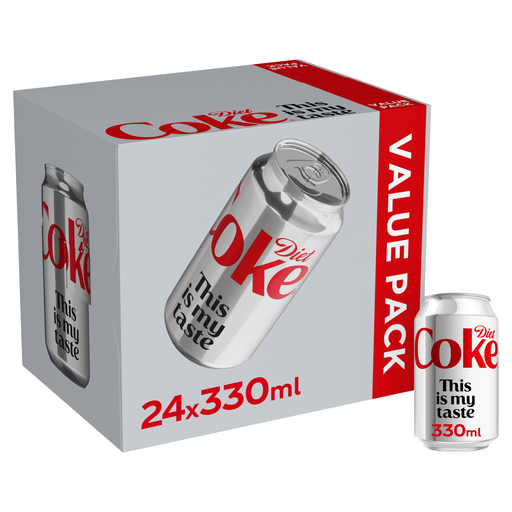
Coca-Cola Diet Coke 24 x 330ml
A diet-cola multipack for households that want Diet Coke in individual cans. Joybuy lists 0g sugars per 100ml for this 24 x 330ml pack. It contains caffeine and aspartame; the aspartame warning matters for people with PKU.
View on Joybuy
 No image available
Pepsi Max Caffeine Free 24 x 330ml
A cola multipack for households specifically seeking a caffeine-free variant. Joybuy identifies this 24 x 330ml pack as caffeine-free and lists 0g sugars per 100ml. It contains aspartame, so check the warning if anyone who will drink it has PKU.
View on Joybuy
 No image available
Pepsi Max 24 x 330ml
A standard Pepsi Max multipack for stocking zero-sugar cola. Joybuy lists 0g sugars per 100ml for the 24 x 330ml pack. Its ingredients include caffeine and aspartame, so it does not meet a caffeine-free requirement and needs a PKU label check.
View on Joybuy
 No image available
Coca-Cola Zero Sugar 24 x 330ml
A Coca-Cola Zero Sugar multipack for a household wanting individual cola cans. Joybuy lists 0g sugars per 100ml for this 24 x 330ml pack. This is the standard caffeine-containing variant, and its aspartame declaration matters for people with PKU.
View on Joybuy
 No image available
Tango Apple Sugar-Free 24 x 330ml
An apple-flavour alternative to the cola multipacks. Joybuy lists 0g sugars per 100ml for this 24 x 330ml pack and names sucralose and acesulfame K in its ingredients. If avoiding caffeine, confirm the declaration on the exact pack before choosing it.
View on Joybuy
Questions about diet and zero-sugar drinks
Can a zero-sugar fizzy drink replace a sugary one in the pantry?
It can meet a goal of choosing a sweet drink with less sugar when the exact product lists 0g sugars per 100ml. The NHS says lower- and no-calorie sweeteners can help reduce sugar intake when used instead of sugar; it also notes that carbonated drinks are associated with dental erosion because of acidity, so sugar content is not the only consideration.
Are sugar-free fizzy drinks tooth-friendly between meals?
No such conclusion follows from a sugar-free label. The NHS associates carbonated drinks with dental erosion due to their acid content whether or not they contain sugar. Keep water available if the multipack might otherwise become the household's routine between-meal drink.
What should someone with PKU check on a diet or zero-sugar drink?
Check whether the exact variant contains aspartame and carries a phenylalanine warning. The NHS states that aspartame is unsuitable for people with phenylketonuria (PKU); a caffeine-free or zero-sugar name does not establish that a product is aspartame-free.
Do “diet” and “zero sugar” mean the same recipe?
No: the wording does not guarantee identical ingredients or caffeine content. The checked Diet Coke, Coca-Cola Zero Sugar and Pepsi Max packs list 0g sugars per 100ml in their respective product information, but you still need to compare the nutrition panel and ingredients of the particular pack you intend to buy.


