Who is this for?

Cake bakers avoiding coffee, but not all caffeine

If your recipe specifies cocoa powder, start with a baking cocoa rather than a powder formulated as a hot drink. Sainsbury’s lists cocoa powders with baking directions, including a Dr. Oetker cake recipe that uses cocoa powder.

Bakers looking for a caffeine-free ingredient

Check the exact product for an explicit caffeine-free claim. The NHS lists chocolate among sources of caffeine; Natural Weigh describes its carob powder as caffeine-free and notes its sweeter, caramel-like flavour.

Bakers checking milk or soya allergy information

Read the current pack before using an ingredient. Sainsbury’s warns that its 250g cocoa powder is not suitable for customers with a milk or soya allergy because of manufacturing methods.

Which ingredient should you choose?

Baking cocoa powder

Choose it when: Your cake recipe calls for cocoa powder and strict caffeine avoidance is not required.

Bear in mind: A baking-use description does not establish that a cocoa product is decaffeinated.

Caffeine-free carob powder

Consider it when: You need a product explicitly described as caffeine-free and can accept a different flavour from cocoa; Natural Weigh makes that claim for its carob powder.

Bear in mind: Natural Weigh describes carob as naturally sweeter and caramel-like, so it is not an identical cocoa substitute.

Instant hot-chocolate mix

Use it when: The recipe specifically calls for drinking-chocolate powder, or you are prepared to test changes to a cocoa-based recipe.

Bear in mind: Ingredients in a drink mix can differ from baking cocoa; its product name alone establishes neither recipe equivalence nor decaf status.

Priority What to check Your needs
Recipe ingredient Read the recipe’s ingredient name and quantity. Sainsbury’s Dr. Oetker cake example specifies 25g cocoa powder; check a drink mix’s ingredients before considering a substitution. My recipe calls for cocoa powder, so I want to keep that ingredient unless I am willing to test a changed recipe.
Caffeine status Look for an explicit caffeine-free claim on the exact product or ask its manufacturer. The NHS identifies chocolate as a caffeine source. For strict caffeine avoidance, a chocolate flavour or a baking-use claim is not enough to settle my choice.
Flavour and sweetness Compare the ingredients of a drink mix with baking cocoa. If considering carob, account for the sweeter, caramel-like flavour Natural Weigh describes for its carob powder. I want to know whether a different powder will change the cake’s intended flavour before I bake a full batch.
Allergy information Check the current pack’s ingredients and precautionary allergen statements. Sainsbury’s 250g cocoa powder carries a milk and soya manufacturing warning. Where milk, soya or cross-contact matters, I need the information for the exact pack I will use.

What could go wrong in a cake?

  • Assuming hot chocolate is decaf

    The NHS lists chocolate among caffeine sources. A cocoa-based product’s name or intended use does not establish that it meets a strict caffeine-free requirement.

    Check the exact product for an explicit caffeine-free claim or seek manufacturer confirmation. If considering carob, check the claim on that product too and try its different flavour in a small bake.

  • Replacing cocoa with drink mix measure for measure

    A cake recipe specifying cocoa powder may control sugar separately. Instant or flavoured hot-chocolate powder can have a different ingredient formulation, so an equal quantity is not an established substitute.

    Use the ingredient named in the recipe where possible. For a drink mix, compare its ingredients and test any recipe changes rather than assuming the cake will turn out the same.

  • Using an old listing for an allergy decision

    Sainsbury’s 250g cocoa powder carries a milk and soya manufacturing warning. The Food Standards Agency explains that precautionary statements can communicate a risk of unintended allergen presence.

    Read the current pack’s ingredient and precautionary allergen information before baking, particularly when buying a different pack or variant.

Brand and retailer references

Cadbury

Sainsbury’s describes Cadbury Bournville Cocoa Powder 250g as suitable for baking and drinking.

  • The listed product is cocoa powder with an explicit baking-use description.
  • Baking suitability does not establish caffeine-free status.

Sainsbury’s

Sainsbury’s 250g own-label cocoa powder lists cocoa powder and acidity regulators and directs bakers to follow their recipe.

  • The listing provides ingredients and baking directions.
  • It warns that the product is not suitable for customers with a milk or soya allergy because of manufacturing methods; it does not establish caffeine-free status.

M&S

Marks & Spencer describes its Cocoa Powder for use in brownies and hot drinks.

  • The described product has both baking and drinking uses.
  • Those uses do not establish a decaffeinated or caffeine-free claim.

Galaxy

Tesco lists Galaxy instant and frothy products in its hot-chocolate category.

  • The category identifies specific Galaxy drinking-chocolate products to distinguish from baking cocoa.
  • Their category placement does not establish baking equivalence or caffeine-free status.

Options

Tesco lists Options Belgian chocolate and flavoured products in its hot-chocolate category.

  • The listed flavours give bakers a reason to check the exact mix when experimenting with a drink-powder recipe.
  • A flavoured hot-chocolate listing does not establish that the powder can replace recipe cocoa or meet a caffeine-free requirement.

Joybuy baking cocoa and cacao options

These powders are options for cakes using cocoa or cacao when strict caffeine avoidance is not required. Check the exact product before buying if caffeine or allergens affect your choice.
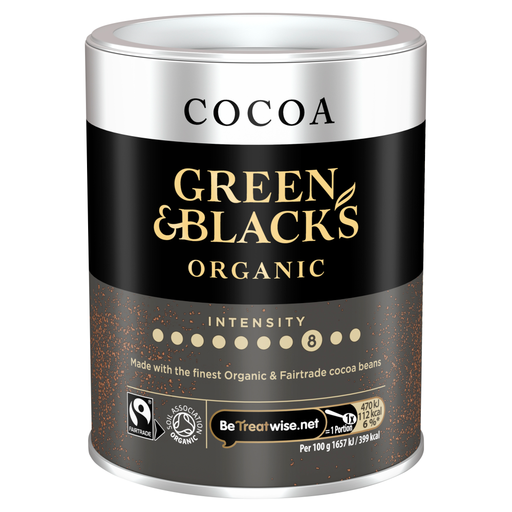
g&B Organic Cocoa 125g

g&B Organic Cocoa 125g

A cocoa-powder option for a cake recipe calling for cocoa; the product description includes baking use. Check the current pack for caffeine claims and milk precautionary information if either matters to you.

View on Joybuy
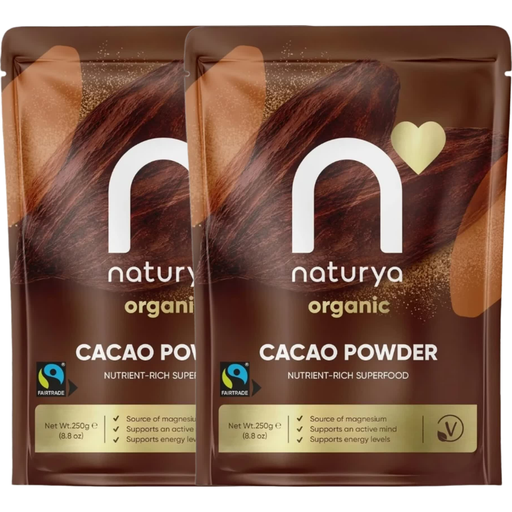
Naturya Organic Cacao Powder 250g, 2 packs

Naturya Organic Cacao Powder 250g, 2 packs

A cacao-powder option where the recipe permits cacao for baking. The product description states that cacao contains naturally occurring caffeine, so do not choose it for strict caffeine avoidance. Check recipe guidance before substituting it and the current pack if nut or seed cross-contact matters.

View on Joybuy
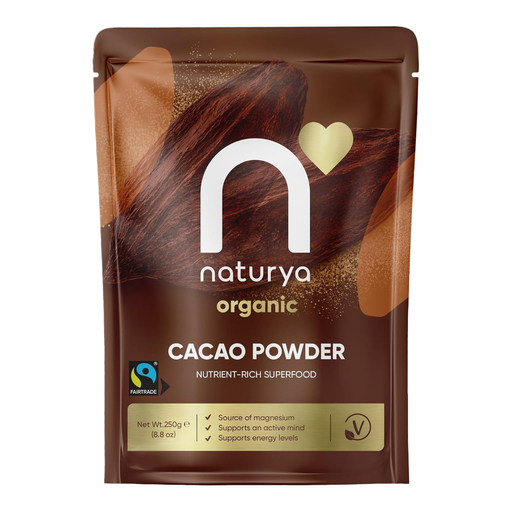
Naturya Organic Cacao Powder 250g

Naturya Organic Cacao Powder 250g

A single 250g cacao-powder option for baking where the recipe permits cacao. Its description states that cacao contains naturally occurring caffeine, so it is not a strict caffeine-free choice. Check recipe guidance before substituting it and the current pack if nut or seed cross-contact matters.

View on Joybuy

Questions about baking with cocoa alternatives

Can I assume ordinary cocoa powder is decaf?

No. The word “cocoa” does not establish decaffeinated status, and the NHS lists chocolate among caffeine sources. If you require a caffeine-free ingredient, check for an explicit claim on the exact product or seek manufacturer confirmation.

Can hot-chocolate powder replace cocoa powder in a cake?

Do not assume it can replace cocoa powder measure for measure. Sainsbury’s Dr. Oetker cake example specifies cocoa powder, while Tesco lists instant and flavoured hot-chocolate products separately. Check the mix’s ingredients and test any changes to the recipe.

What can I use for a caffeine-free, chocolate-style cake?

Consider a powder whose exact label explicitly says caffeine-free. Natural Weigh describes its carob powder that way, but also describes a sweeter, caramel-like flavour, so expect a different cake from one made with cocoa.

What should I check for milk, soya or cross-contact?

Read the current pack’s ingredients and precautionary allergen statements before use. Sainsbury’s warns that its 250g cocoa powder is not suitable for customers with a milk or soya allergy because of manufacturing methods; the Food Standards Agency explains that precautionary statements communicate potential unintended allergen presence.

Is a vegan label enough when checking for milk allergy?

No. Food Standards Agency research says vegan labelling alone is not a substitute for allergen information. Check the exact product’s ingredients and precautionary allergen statements.