
24/7 Customer Support

Free returns

Same-day & Next-day Delivery

Quality Guaranteed

Unlock Your Welcome Offers: FREE Delivery | Up to 80% OFF | Free 30-day JoyPlus trial
Download the APP
By the Joybuy Product Recommendation Officer
Cake mix can make birthdays, afternoon tea and weekend baking considerably easier, particularly when you are short on time or baking with children. However, a convenient packet does not always mean a convenient result. The right choice depends on flavour, preparation requirements, dietary information, serving size and how much flexibility you need.
Before adding a ready-made cake mix to your basket, watch for these common pitfalls.
Some mixes only need water and oil, while others require eggs, milk, butter or several additions. A packet may appear inexpensive, but the total cost can rise when you add ingredients already missing from your cupboard.
Always check the preparation panel before purchasing. For example, a chocolate cake mix may require eggs, water and vegetable oil, while a simple sponge mix may need eggs and milk.
A gluten-free cake mix is formulated without gluten-containing ingredients, but it may still carry a “may contain” warning for egg, milk or soya. This matters when baking for someone with an allergy or coeliac disease.
Read the full ingredient list and allergen statement every time. Under UK food labelling requirements, allergens are normally emphasised in the ingredients list, but recipes and packaging can change.
A 400g or 425g pack may suit one family bake, whereas a multipack is more practical for repeated celebrations, school events or batch baking. Also check the stated yield: one packet could make two cake layers, 12 portions, 24 cupcakes or a tray of brownies depending on the product.
Look for the number of additions, mixing time, oven temperature and expected baking time. A mix that needs only water and oil can be useful for beginner bakers, while a sponge mix that requires eggs and milk may provide a more traditional preparation method.
Check whether your oven should be set to 180°C, 160°C fan or Gas Mark 4, as these settings are commonly used for cake mixes in the UK. Use the packet instructions rather than relying only on a recipe found online.
Compare the net weight with the stated yield. A 500g mix may make one cake, 15 slices, 24 cupcakes or 12 muffins, depending on how it is prepared. A 425g vanilla or lemon cake mix may be designed for two 20cm cakes or 24 cupcakes.
Portion guidance is useful for working out whether a mix suits a family tea, children’s party or small everyday treat. Remember that icing, fillings and toppings are usually separate purchases.
If you need a vegetarian cake mix, confirm the suitability statement and still read the ingredients. Some products contain milk or egg ingredients, while others may be suitable for vegetarians but carry precautionary allergen warnings.
For a gluten-free cake mix, check whether the product is labelled gluten-free and review any “may contain” information. Do not assume that a mix is suitable for a medical dietary requirement simply because it uses rice flour or potato starch.
Nutrition panels can also help you compare mixes. Values are often listed per 100g as sold or as prepared, so check which format you are reading. Sugar, fat and salt levels can change once eggs, oil, icing or butter are added.
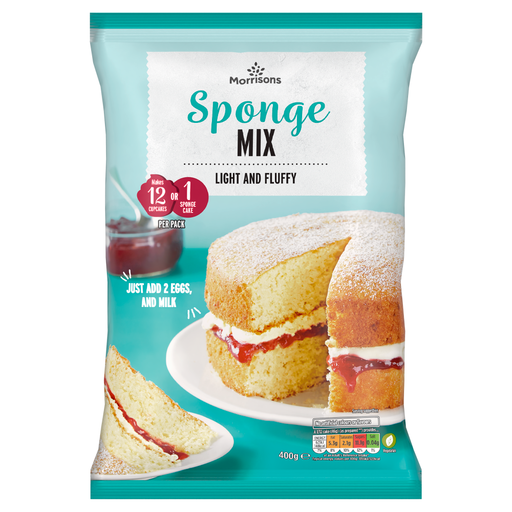
Why This Fits Their Persona: A practical starting point for new bakers and families wanting a classic sponge without weighing multiple dry ingredients.
The pack states that eggs and milk are added, making the preparation requirements clear before purchase. It is also labelled without artificial colours or flavours in the supplied product information.
Makes sponges, cupcakes or a banana loaf with added ingredients; the stated yield is 12 portions.

Why This Fits Their Persona: Suits chocolate-focused bakers preparing celebration cakes, cupcakes or traybakes while keeping the method straightforward.
The preparation details specify 200ml water and 60ml vegetable oil, with separate timings for a cake and cupcakes. This helps avoid unexpected ingredient costs and incorrect baking times.
Contains 5% chocolate chips and is suitable for vegetarians; the mix can also be used for a chocolate fudge pudding.
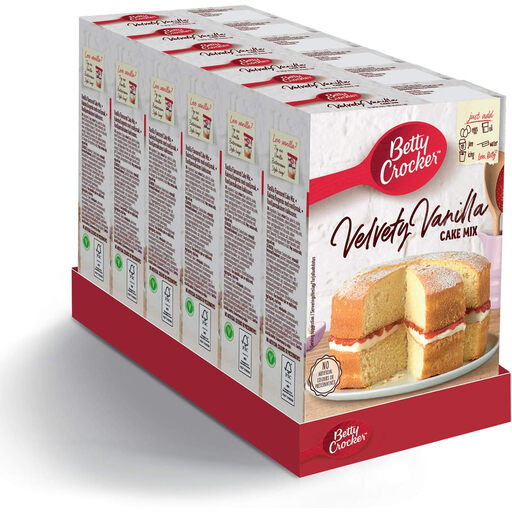
Why This Fits Their Persona: A six-pack suits busy households, repeated children’s baking sessions and shoppers planning several celebrations.
The multipack quantity is shown clearly, so regular users can compare buying several individual packs with keeping a supply in a cool, dry cupboard.
Each 425g pack makes approximately 12 portions and uses eggs, water and oil; the mix is made in the UK according to the supplied information.
We have compiled a complete, real-time list of products that fully satisfy these strict selection criteria and UK safety regulations.
It depends on the recipe and what is already in your cupboard. A mix can reduce the need to buy separate flour, sugar, raising agents and flavourings, but eggs, oil, milk, icing and electricity still contribute to the final cost. Compare the total preparation cost, not just the packet price.
Unopened mixes should be stored in a cool, dry place and used by the date shown on the packaging. Once baked, storage varies by product. Follow the packet guidance, keep cakes in an airtight container where appropriate, and freeze only when the instructions permit it.
Many cake mixes are suitable for supervised family baking. Adults should handle the oven, hot tins and electric mixers, while children can help measure liquids, stir the mixture or decorate cooled cakes. Do not allow anyone to eat raw batter, particularly where the packaging advises that flour or eggs must be fully baked.