
24/7 Customer Support

Free returns

Same-day & Next-day Delivery

Quality Guaranteed

Unlock Your Welcome Offers: FREE Delivery | Up to 80% OFF | Free 30-day JoyPlus trial
Download the APP
Buying cake moulds and tins can seem straightforward until a cake sticks, a flexible mould collapses in the oven or a non-stick surface starts peeling after a few uses. For UK home bakers, the right choice depends less on colour or promotional wording and more on material, dimensions, heat limits and the type of baking you actually do.
Whether you need silicone cake moulds for themed treats, non-stick cake tins for everyday baking or a set of baking moulds for parties, these are the details worth checking before you buy.
“Non-stick” describes a coating or surface treatment, not a guarantee that food will always release without preparation. Thin coatings may be more vulnerable to metal utensils, abrasive sponges and overheating. Check the material, maximum temperature and cleaning guidance before relying on a tin for frequent use.
For example, the Maison by Premier Black Round Cake Tin uses a mineral-based non-stick surface and is listed as free from PTFE and PFOA. It is made from carbon steel and has a stated heat resistance of up to 280°C. These are more useful details than a generic “easy release” description.
Novelty cake moulds can create attractive designs, but very flexible silicone may be difficult to carry when filled with batter. A mould that needs to be placed on a baking tray is not necessarily flawed; it simply requires more support than a rigid tin.
Look for integrated handles, a stable tray or a design that fits comfortably on your oven shelf. This is particularly important when baking with children or preparing several desserts for a party.
Some dishwasher-safe silicone moulds and tins can be cleaned in a dishwasher, but manufacturers may still recommend hand washing. Strong detergents, high temperatures and contact with sharp objects can affect finishes, colour or non-stick surfaces over time.
Always follow the product instructions. Avoid metal utensils and abrasive cleaners unless the manufacturer specifically states that they are suitable.
Carbon steel provides a firm structure and conducts heat readily, making it suitable for round cake tins, loaf tins and layered cakes. It normally needs careful handling to protect its coating.
Food-grade silicone is flexible and useful for intricate designs, chocolate moulds, cake pops and frozen desserts. It can make demoulding easier, but flexible moulds should generally sit on a flat baking tray before filling and moving.
For chocolate moulds, jellies and chilled desserts, check whether the product is freezer-safe as well as oven-safe. Microwave compatibility is also useful when melting chocolate, but it does not mean the mould can be used on a hob or over an open flame.
Check the stated maximum temperature rather than assuming all oven-safe bakeware has the same limit. Several silicone products in this selection are rated up to 230°C, while the Maison by Premier round carbon steel tin is listed up to 280°C.
Remember that an oven’s displayed temperature and the cookware’s maximum rating are separate considerations. Do not exceed the lower limit, and use oven gloves when handling hot bakeware.
Dimensions affect both recipe quantity and cooking time. A 26cm round tin, a 26cm square mould and a 31cm rectangular mould will produce different depths and portions even if filled with the same batter.
Useful options include:
Fill flexible moulds according to the manufacturer’s guidance. The listed silicone moulds commonly recommend filling to around two-thirds or three-quarters of capacity, leaving room for expansion.
The following options suit different household needs rather than one universal style of baker.
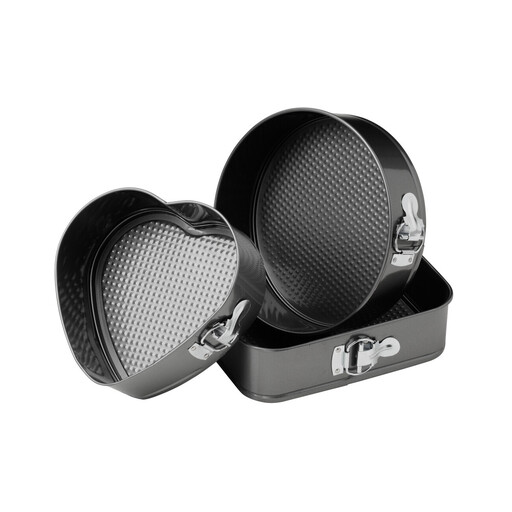
Why This Fits Their Persona: A practical starting set for households wanting round, square and heart-shaped tins without buying each shape separately.
The detachable springform sides help remove cakes without turning the tin upside down, while the carbon steel construction provides a rigid base.
Three shapes in one set; non-stick coating; listed as dishwasher safe.
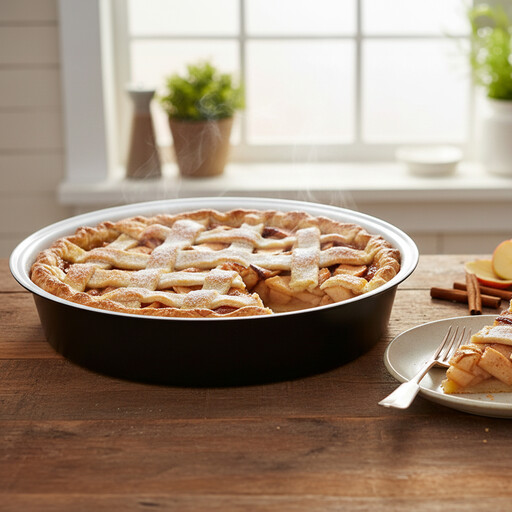
Why This Fits Their Persona: Suits frequent bakers who prefer a firm, conventional round tin for cakes, breads and other oven recipes.
Its stated 280°C heat resistance and mineral-based coating provide clearly specified limits and care requirements.
26cm round format; carbon steel body; listed as free from PTFE and PFOA; efficient heat conduction.
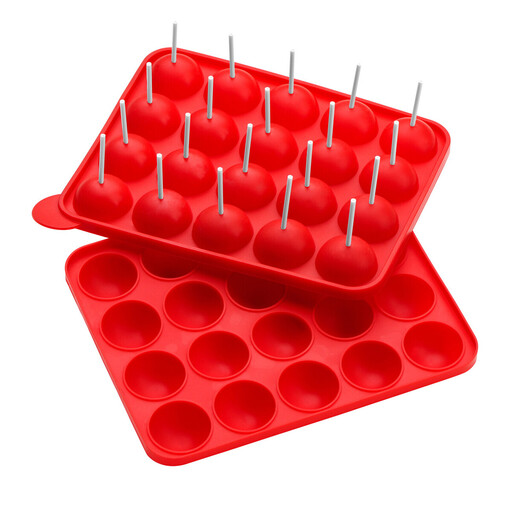
Why This Fits Their Persona: Designed for larger batches of individually portioned treats at children’s parties, school events or family celebrations.
The stated capacity is 20 cake pops and the set includes 40 polypropylene sticks, so the quantity is clear before purchase.
Non-stick silicone; oven, microwave, fridge and freezer suitability listed; supplied with sticks.
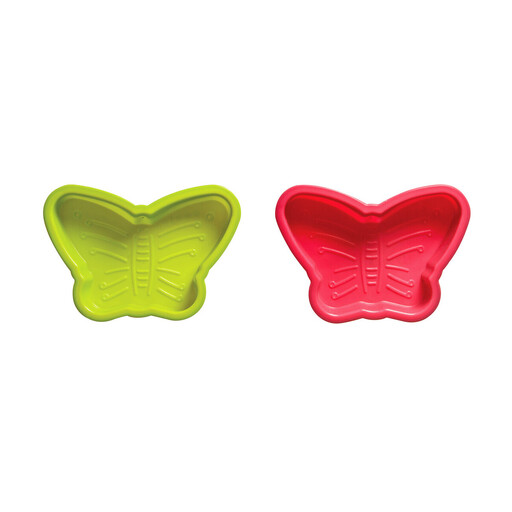
Why This Fits Their Persona: A colourful option for themed baking, children’s activities and small desserts for parties or special occasions.
The two-section set, food-grade silicone construction and stated 230°C limit make its intended use easier to assess.
Suitable for ovens up to 230°C, microwaves, freezers and dishwashers; flexible non-stick surface.
We have compiled a complete, real-time list of products that fully satisfy these strict selection criteria and UK safety regulations.
Many are, but the exact temperature limit varies. The products listed here include silicone options rated up to 230°C. Check the manufacturer’s instructions, place flexible moulds on a stable baking tray and do not use them on a hob or open flame.
They can be convenient for cakes that are difficult to turn out, because the side releases from the base. However, the seal should be closed securely and the tin should be placed on a level oven shelf. For runny mixtures, check the design and recipe suitability before filling.
Lifespan depends on frequency of use, storage and cleaning. Avoid overheating, abrasive cleaners and metal utensils, and follow the stated care instructions. A tin that is cleaned gently and stored without scratches is more likely to retain its release performance over repeated baking sessions.