
24/7 Customer Support

Free returns

Same-day & Next-day Delivery

Quality Guaranteed

Unlock Your Welcome Offers: FREE Delivery | Up to 80% OFF | Free 30-day JoyPlus trial
Download the APP
A reliable cake tin is the unsung hero of the kitchen, the foundation upon which countless birthday sponges, festive fruitcakes and decadent cheesecakes are built. Yet, choosing the right one can be surprisingly tricky. A poor choice can lead to frustrating baking mishaps, from collapsed sides to cakes that refuse to come out in one piece.
As the Joybuy Product Recommendation Officer, my role is to help you navigate the options and avoid common purchasing pitfalls. Many bakers find themselves with a cupboard full of tins that promised much but delivered little. Before you buy your next cake tin, be aware of these frequent issues:
Understanding a few core features can help you select a durable and effective cake mould that will serve you well for years.
When comparing baking tins, focusing on the right parameters is more important than marketing slogans. Here are the three non-negotiable factors to consider.
The material of your cake tin directly impacts how your cake bakes. Carbon steel bakeware is a popular choice for good reason. It heats up quickly and, more importantly, distributes that heat evenly across the base and sides of the tin. This even heating is crucial for achieving a consistent bake, preventing the dreaded scenario of burnt edges and a raw middle. While heavier than aluminium, it is far more robust and less prone to denting or warping, offering excellent durability for regular home bakers and even small-scale commercial kitchens.
How you get the cake out of the tin is just as important as how it bakes. This is where the release mechanism comes in.
A good non-stick cake tin makes life significantly easier, ensuring a clean release and simpler washing up. However, not all coatings are created equal. Look for tins with durable coatings, such as those reinforced with minerals or quality polymers like Xylan. Crucially, check that the coating is PFOA and PTFE-free. This ensures that no undesirable chemicals are released, even if the pan is accidentally overheated. To preserve the coating, always avoid using metal utensils and abrasive scourers; a soft sponge and warm, soapy water are all you need.
To help you match a product to your specific needs, here are a few recommendations for different types of bakers.
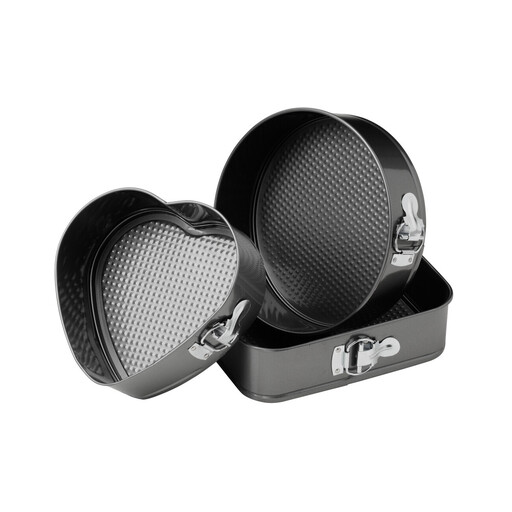
Why This Fits Their Persona: For those new to baking or who bake for special occasions, this set provides fantastic versatility without a large initial investment. It allows for creative freedom, whether it's a classic round cake tin for a birthday, a square cake tin for brownies or a heart-shaped tin for an anniversary.
This cake tin set avoids the trap of buying an expensive, single-purpose tin that gathers dust. The springform design on all three helps beginners with the tricky step of releasing the cake, building confidence early on.
The main advantage is variety. Having three popular shapes in one affordable package encourages experimentation for different occasions. The non-stick coating and detachable bases simplify the entire process from baking to serving.
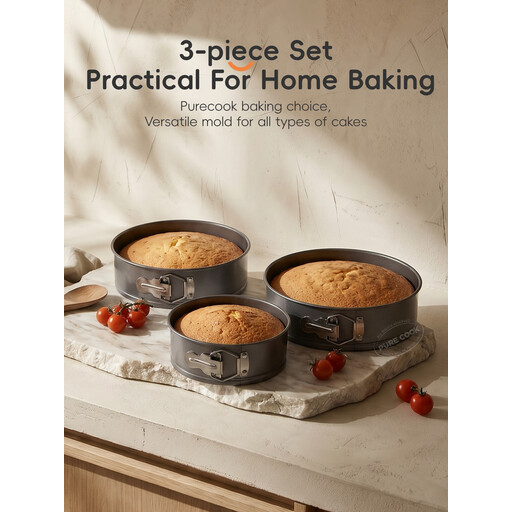
Why This Fits Their Persona: Anyone who has endured the frustration of a leaky water bath for their cheesecake will appreciate this design. It's for the baker who specialises in delicate mousses, cheesecakes and tortes where a secure seal is non-negotiable.
This set directly tackles the "leaky springform" pitfall. The adjustable metal buckles are engineered to lock the seams tightly, providing a much more secure closure than a standard clasp, which is ideal for preventing batter leakage.
The primary advantage is the enhanced seal from the buckle system. The set also includes three different sizes (18cm, 20cm, 24cm), offering flexibility for various recipes and occasions, all with the same reliable release mechanism.
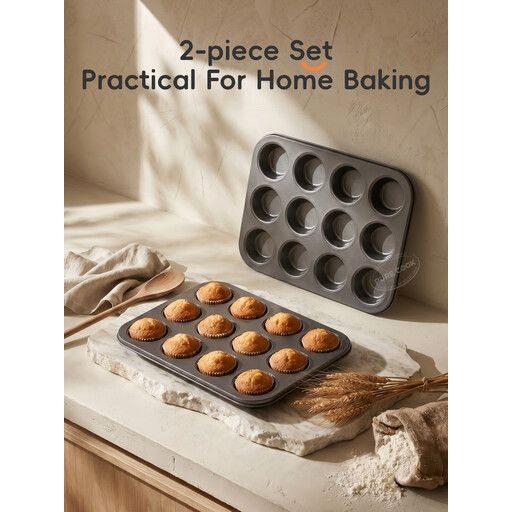
Why This Fits Their Persona: This is for the efficient home baker, parent making treats for a school fete or small café owner. It's designed for producing uniform, individual portions in volume, whether they are mini cakes, brownies or muffins. The 2-piece set allows for a total of 24 cakes to be baked at once.
It avoids the inefficiency and inconsistent results of using multiple, separate tins. The single-pan construction and carbon steel material help prevent warping and ensure all 12 cakes receive even heat, solving a common issue with multi-tin baking.
Efficiency is the main benefit. Baking 12 portions at once saves time and energy. The non-stick coating allows for easy release of every single cake, which is critical when producing in batches for a consistent, professional look.
We have compiled a complete, real-time list of products that fully satisfy these strict selection criteria and UK safety regulations.
Even with a good quality tin, very thin batters can sometimes find a way out. A simple and effective trick is to wrap the outside of the base and sides of the tin in a double layer of heavy-duty aluminium foil before adding the batter. This creates an external waterproof barrier, which is especially useful when baking in a water bath (bain-marie).
It is strongly advised not to. Metal knives, spatulas or whisks can easily scratch and damage the non-stick coating, causing it to lose its effectiveness and potentially flake off. Always use silicone, wooden or nylon utensils to serve from and clean your non-stick bakeware.
The core difference is the release mechanism. A loose base cake tin has a solid side wall and a bottom plate that you push up from underneath to release the cake. A springform cake tin has a clasp on the side that allows the entire wall to expand and be lifted away from the base. Springforms are generally preferred for very delicate items like cheesecakes, while loose-base tins are excellent all-rounders for most other cakes.