
24/7 Customer Support

Free returns

Same-day & Next-day Delivery

Quality Guaranteed

Unlock Your Welcome Offers: FREE Delivery | Up to 80% OFF | Free 30-day JoyPlus trial
Download the APP
A dependable cake tin can make the difference between a neat, evenly baked sponge and a cake that sticks, warps or breaks during removal. However, product descriptions often focus on finishes and decorative colours while leaving important practical details unclear.
Before buying cake tins, watch for these common pitfalls:
Choose the shape according to what you bake most often:
A 20–24cm round tin is a practical range for many household recipes, but changing the tin size can alter baking time and cake depth. A smaller tin generally creates a deeper cake, while a wider tin produces a shallower result. Always compare the recipe’s recommended dimensions rather than relying on appearance alone.
Carbon steel cake tins are commonly chosen for their relatively light weight, strength and efficient heat conduction. They can heat quickly, so follow the recipe temperature and avoid assuming that a darker finish requires the same timing as a lighter-coloured tin.
Aluminised steel offers a robust alternative. For example, a 0.8mm-thick pan may provide useful structural stability and help reduce bending under ordinary oven conditions. Silicone is flexible and convenient for release, but it needs support from a baking tray, particularly when filled with wet batter.
Check the stated maximum temperature before use. The products featured here list heat limits ranging from 230°C to 280°C, depending on the model. Do not use oven-only silicone moulds on a hob, under a grill or over an open flame.
A non-stick cake tin can reduce the need for heavy greasing and make cake release simpler, but the surface still needs careful treatment. Use wooden, silicone or plastic utensils and clean with a soft sponge unless the manufacturer specifically confirms dishwasher suitability.
A dishwasher-safe cake tin can save time, although repeated washing may still affect the appearance or performance of some surfaces over time. Always distinguish between “dishwasher safe” and “hand wash recommended” in the product instructions.
For everyday convenience, look for a combination of:
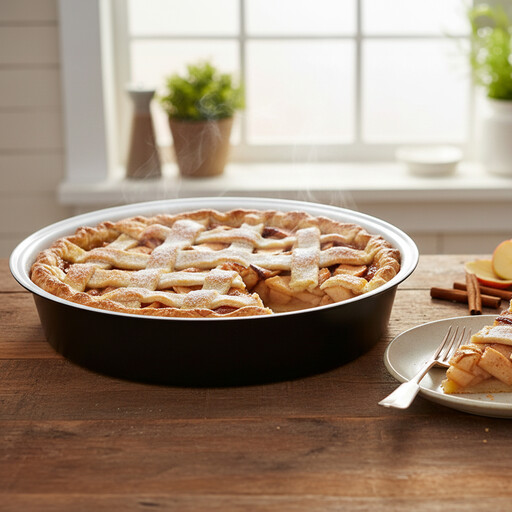
Why This Fits Their Persona: A straightforward 26cm round tin for beginners and families baking standard cakes, bread or everyday treats.
Its mineral-based non-stick surface is stated to be free from PTFE and PFOA, while the product guidance clearly recommends hand washing and avoiding metal utensils.
Carbon steel construction, 26cm round format and a stated heat resistance of up to 280°C.
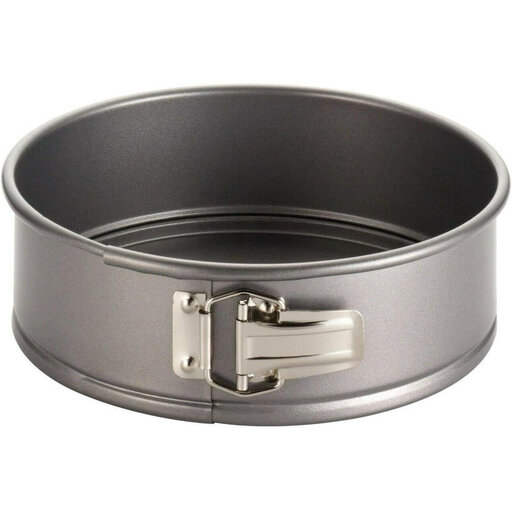
Why This Fits Their Persona: Suitable for bakers who prioritise neat presentation when making cheesecakes, layered desserts and larger celebration cakes.
The removable sides release through a latch, so delicate cakes do not need to be inverted. Its 0.8mm metal body is specified as oven-safe to 230°C.
24cm springform format, non-stick interior and removable sides for controlled release.
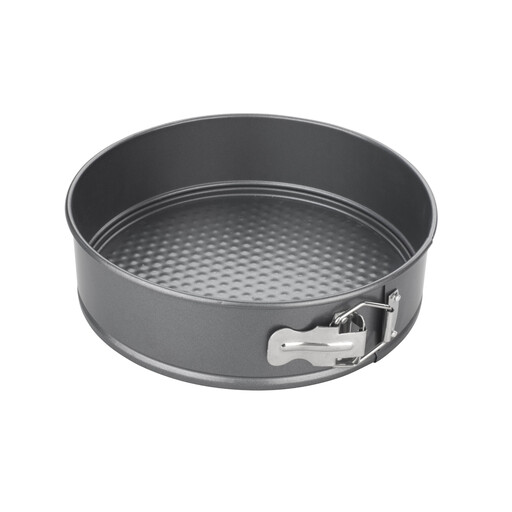
Why This Fits Their Persona: A practical choice for frequent bakers who want one tin for sponges, cheesecakes, pies and make-ahead desserts.
The springform latch addresses difficult unmoulding, while the listing states that the tin is dishwasher, fridge and freezer safe.
Carbon steel construction, Goldflon non-stick coating and a removable-base springform design.
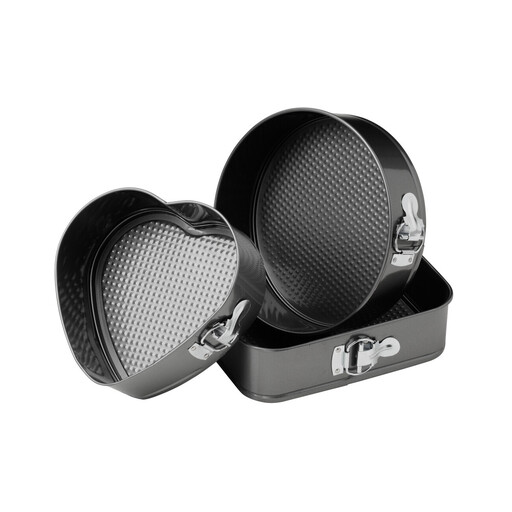
Why This Fits Their Persona: Families and occasional bakers can explore round, square and heart-shaped cakes without buying three separate tins.
The set provides three clearly different shapes and detachable springform sides, rather than relying on one multipurpose shape.
Round, square and heart designs, carbon steel construction and dishwasher-safe care instructions.
We have compiled a complete, real-time list of products that fully satisfy these strict selection criteria and UK safety regulations.
Treat the coating as a working surface rather than a permanent guarantee. Allow a hot tin to cool before washing, avoid sudden temperature changes unless the product is specifically rated for them, and dry it thoroughly before storage. For silicone cake moulds, place the filled mould on a firm baking sheet before moving it to the oven.
Inspect springform latches and loose bases regularly. If a side no longer closes securely, or if a coating is visibly damaged, replace the tin rather than risking leaks or difficult release. Store tins without heavy items pressing against their rims, as distorted edges can affect fit and batter leakage.
They can be convenient for cakes that are prone to sticking, particularly when paired with careful washing and non-metal utensils. Their value depends on whether easier release and cleaning are priorities for your recipes. For very delicate cakes, a springform or loose-base design may matter as much as the coating.
Match the tin to the recipe wherever possible. Round tins around 20–24cm are common for household baking, while larger 26cm tins suit wider cakes. Changing the size changes the cake depth and cooking time, so check the bake regularly if the dimensions differ.
Some can, including models specifically listed as dishwasher safe. Others recommend hand washing to preserve the non-stick surface. Check the individual care instructions before putting any bakeware in the dishwasher.