
24/7 Customer Support

Free returns

Same-day & Next-day Delivery

Quality Guaranteed

Unlock Your Welcome Offers: FREE Delivery | Up to 80% OFF | Free 30-day JoyPlus trial
Download the APP
Buying cake tins and moulds can seem straightforward until a sponge sticks to the base, a springform tin leaks into the oven, or a silicone mould collapses when you try to move it. UK home bakers often pay for features that sound useful but do not match their recipes or kitchen routines.
Before choosing a cake tin, check the material, dimensions, release mechanism and care instructions. This guide explains the practical differences between baking tins and moulds, then matches selected options to common baker profiles.
A non-stick cake tin can make release and cleaning easier, but the coating still needs care. Metal utensils, abrasive scourers and excessive heat may scratch or weaken the surface. Some products are dishwasher-safe, while others recommend hand washing to maintain the coating.
Look for clear information about the coating and cleaning method. For example, the Maison by Premier From Scratch round tin uses a non-stick Xylan coating and recommends avoiding metal utensils. The Maison by Premier Black Round Cake Tin uses a mineral-based surface and is specified as free from PTFE and PFOA in its product description.
A round cake tin, loaf-style rectangular mould and cupcake tin produce different depths, cooking times and serving formats. A recipe written for a 20cm springform cake tin may not transfer directly to a deep 26cm baking mould.
Check the diameter, depth and capacity, not just the product title. A mini cake tin may be useful for individual portions, but it will require shorter baking times and closer monitoring than a standard cake tin.
A silicone cake mould is convenient for shaped bakes, chocolates, jellies and frozen desserts, but flexible walls can make a filled mould difficult to carry. The safest method is to place it on a stable baking sheet before filling and moving it into the oven.
Also check the temperature limit. Several silicone options in this range are listed as heat-resistant up to 230°C, but they are not designed for direct contact with a hob or naked flame.
Carbon steel and aluminised steel cake tins are rigid and provide stable support for heavier mixtures. The KitchenAid metal tins use aluminised steel, which the product descriptions state is designed to support even heating. A rigid metal cake tin is generally practical for sponge cakes, tray-bakes and repeated use.
Food-grade silicone is flexible and lightweight. It can help release shaped cakes without forcing a knife around delicate edges. Silicone moulds are particularly useful for themed desserts, chocolates and frozen treats, although placing them on a baking sheet improves stability.
Always follow the stated temperature limit and the manufacturer’s instructions. “Oven-safe bakeware” does not automatically mean suitable for microwaves, hobs, grills or naked flames.
Common choices include:
Measure your oven shelf and storage space before selecting a cake tin set. A large multi-piece set offers variety, but it may take more cupboard space than one versatile round tin.
A loose base or springform mechanism can reduce damage when removing cheesecakes and soft sponges. However, springform seams may require careful positioning if your mixture is very fluid. For wet batters or water-bath recipes, check whether the product is described as leak-resistant and consider using a separate tray underneath.
Dishwasher compatibility is convenient, but it does not guarantee that the non-stick surface will retain its condition indefinitely. Hand washing with a soft sponge is usually the gentler option for coated metal and silicone bakeware.
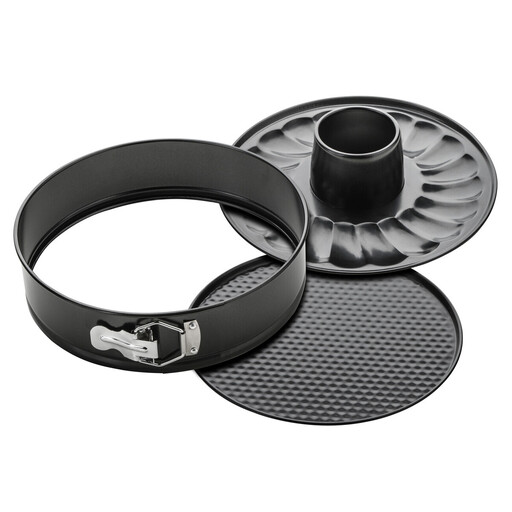
Why This Fits Their Persona: A three-piece set gives beginners round, ring and springform formats for everyday baking without buying each tin separately.
The set makes the shape and release mechanism clear, helping avoid buying a single tin that cannot handle different recipes.
Carbon steel construction; three-piece format with non-stick coating and springform design.
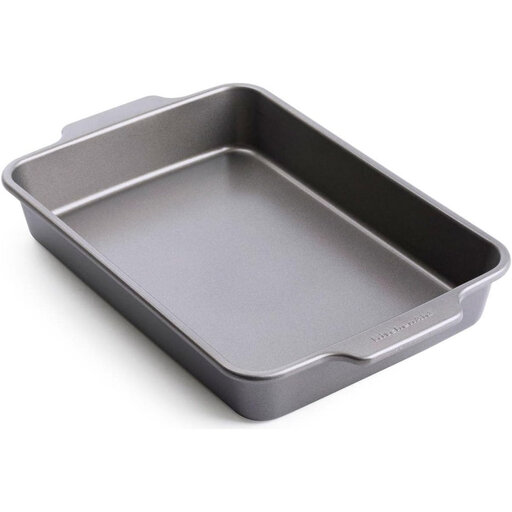
Why This Fits Their Persona: Suitable for bakers who prefer a rigid rectangular tin for cakes, tray-bakes and savoury oven dishes.
The specification states that it has no non-stick coating, so shoppers can choose it knowingly rather than assuming every metal tin includes one.
Aluminised steel; 33 x 22cm size; wide handles; dishwasher-safe specification.
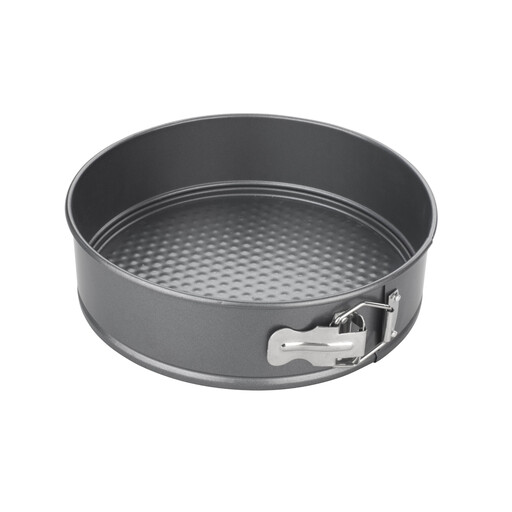
Why This Fits Their Persona: A practical option for regular bakers making cheesecakes, sponges, quiches and pies in one round format.
The springform latch and removable base address the common problem of damaging delicate cakes during release.
Carbon steel body; non-stick interior; dishwasher, fridge and freezer-safe according to the product description.
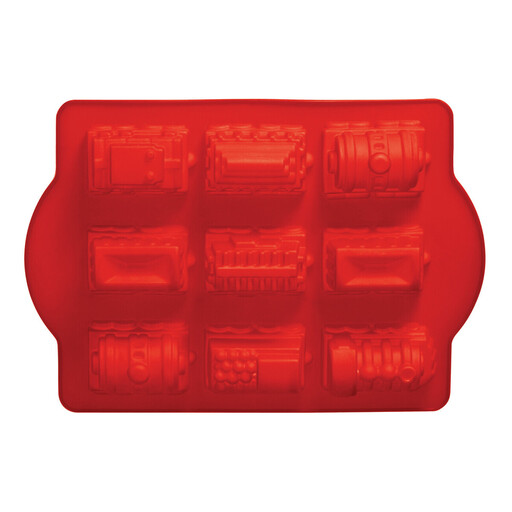
Why This Fits Their Persona: The train-shaped cavities suit children’s parties, themed treats and chocolate-making at home.
Its flexible silicone construction is specified for easier removal of shaped cakes or chocolates, while the mould should be supported on a stable surface.
Heat-resistant up to 230°C; suitable for ovens, microwaves, freezers and dishwashers according to the listing.
We have compiled a complete, real-time list of products that fully satisfy these strict selection criteria and UK safety regulations.
Many silicone moulds are suitable for oven use, but check the stated maximum temperature first. The Essentials by Premier train mould is listed up to 230°C. Place flexible moulds on a baking tray for support, and do not use them directly on a hob or naked flame.
A springform cake tin is useful when turning out a cake would risk damaging it. The removable side ring is particularly practical for cheesecakes, deep sponges and chilled desserts. Check the seam and follow filling instructions carefully, especially with thin batters.
Allow the tin to cool before washing, use wooden or silicone utensils, and avoid abrasive cleaners. Even where a product is dishwasher-safe, gentle hand washing may help preserve the coating. Store tins without sharp objects rubbing against their surfaces.