
24/7 Customer Support

Free returns

Same-day & Next-day Delivery

Quality Guaranteed

Unlock Your Welcome Offers: FREE Delivery | Up to 80% OFF | Free 30-day JoyPlus trial
Download the APP
By Joybuy Product Recommendation Officer
A new set of cake tins and moulds can look like an easy purchase, but attractive colours and “non-stick” labels do not always tell you whether a tin will suit your recipes. The wrong size may leave a cake undercooked in the centre, while a flexible mould without proper support can spill batter before it reaches the oven.
Before buying, look beyond appearance and check the construction, release method, temperature rating and cleaning instructions. This guide explains the main pitfalls and matches practical options to different UK baking habits.
A non-stick cake tin can make release easier, but coatings may be damaged by metal utensils, abrasive sponges or careless dishwasher use. Some products are dishwasher-safe, while others specifically recommend handwashing to preserve the surface or colour.
Check the care instructions before purchasing. If you regularly bake at weekends and want quick cleaning, dishwasher compatibility may matter. If you want to extend the useful life of a coated tin, handwashing with a soft sponge is generally the safer routine where recommended by the manufacturer.
Silicone is flexible, which helps with demoulding, but a full silicone cake mould can be difficult to carry when filled with batter. A mould placed directly on an oven shelf may bend or spill.
For flexible bakeware, place it on a flat baking tray before filling. Integrated handles can also improve handling, but they do not replace oven gloves or careful support when the mould is hot.
A listed diameter does not always reflect the overall external dimensions, and different recipes may be written for different tin capacities. A round cake tin measuring 20cm will not produce the same depth or baking time as a 24cm tin.
A springform cake tin uses a side latch to release the ring, while a loose-base cake tin allows the base and cake to be lifted out. These designs are useful for cheesecakes and delicate pastries, but the join should be checked carefully for a secure fit, particularly when using a water bath or a thin batter.
Metal bakeware, including carbon steel and aluminised steel, usually provides a firm structure and steady contact with the oven shelf. Thickness is also relevant: the KitchenAid metal bakeware products listed here use 0.8mm construction, which is specified to help maintain rigidity and reduce bending during ordinary oven use.
Silicone is lighter and flexible, making it suitable for shaped desserts and easy release. The referenced silicone products are rated up to 230°C and are suitable for ovens, microwaves and freezers according to their product information. Always follow the stated temperature limit and confirm whether the product is intended for oven use only.
Match the shape to the recipe and occasion:
Non-stick coatings, flexible silicone and removable bases each support easier release in different ways. Silicone can be gently flexed after cooling, while springform sides can be unclipped. A loose base helps lift a cake without turning it upside down.
For cleaning, look for a clearly stated dishwasher-safe cake tin if convenience is important. The KitchenAid quicheform and metal cake pan are listed as dishwasher-safe. By contrast, the PURECOOK springform set is handwash-only, and several silicone products recommend handwashing despite being dishwasher-safe. These differences can affect the time and care needed after each bake.
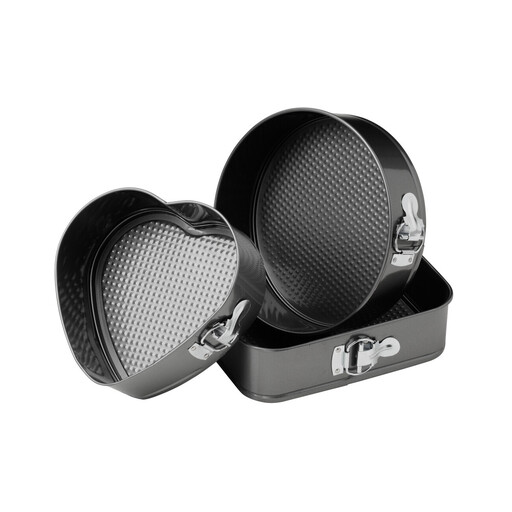
Why This Fits Their Persona: A three-shape set gives new bakers round, square and heart options for everyday cakes and celebrations without buying each tin separately.
The springform sides detach from the bases, helping reduce damage when removing cakes. The set also states that it is dishwasher-safe.
Carbon steel construction, non-stick coating and three different shapes for varied recipes.
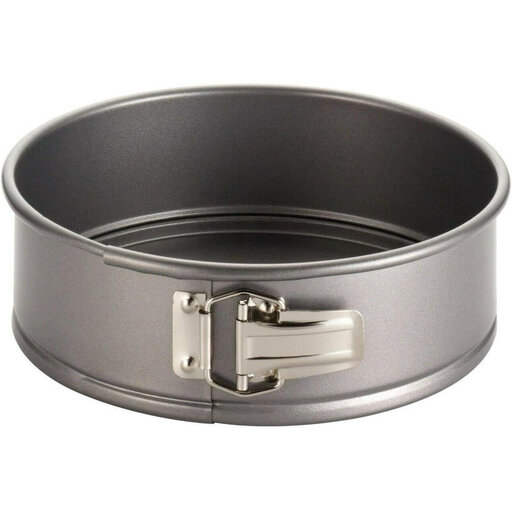
Why This Fits Their Persona: The 24cm format suits larger family desserts and celebration cakes where a neat finish is important.
Its removable sides avoid the need to invert delicate cakes, while the stated 230°C oven rating gives a clear operating limit.
0.8mm metal body, non-stick interior and springform release mechanism.
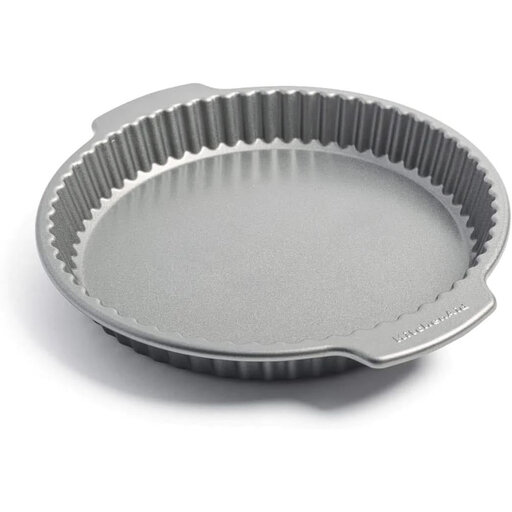
Why This Fits Their Persona: Frequent cooks making quiches, tarts and shallow pastry dishes may value its 28cm format and straightforward cleaning.
The product information clearly states the 230°C oven rating and dishwasher-safe construction, avoiding uncertainty around use and care.
Aluminised steel, non-stick finish, sculptured edge and 0.8mm thickness.
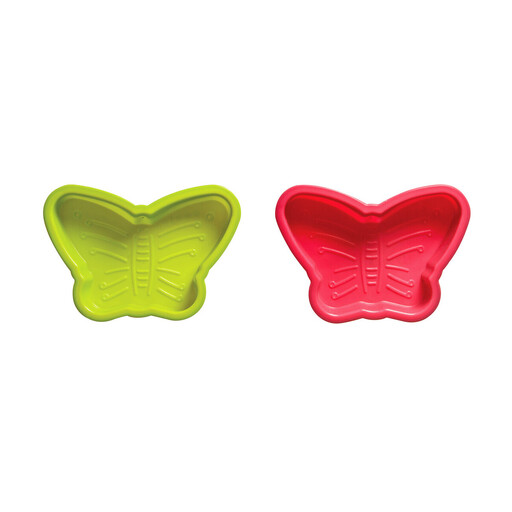
Why This Fits Their Persona: Families and party hosts can create matching butterfly-shaped cakes, chocolates, jellies or frozen treats for themed occasions.
The two moulds are flexible and stackable, but placing them on a tray before filling provides the stability flexible silicone needs.
Two food-grade silicone moulds, microwave and freezer suitability, and a stated 230°C heat limit.
We have compiled a complete, real-time list of products that fully satisfy these strict selection criteria and UK safety regulations.
They can be, provided the product is marked as oven-safe and the temperature limit is suitable for the recipe. The silicone moulds referenced here are listed as heat-resistant up to 230°C. Silicone moulds should normally be supported by a flat baking tray when filled.
Yes, its removable side ring is designed to help release cakes without turning them upside down. For a cheesecake or wet mixture, check that the base and ring connect securely. If using a water bath, follow the recipe and product guidance carefully, as not every springform design is fully leakproof.
There is no single lifespan because it depends on frequency of use, storage and cleaning. Avoiding metal utensils, overheating and abrasive products can help protect the coating. Replace a tin if the surface is visibly peeling, heavily scratched, distorted or no longer releases food safely.