
24/7 Customer Support

Free returns

Same-day & Next-day Delivery

Quality Guaranteed

Unlock Your Welcome Offers: FREE Delivery | Up to 80% OFF | Free 30-day JoyPlus trial
Download the APP
A perfect bake can be a source of immense pride, but the wrong equipment can quickly turn a joyful activity into a frustrating mess. Many of us have experienced the disappointment of a cheesecake cracking because it’s stuck to the sides, or a Victoria sponge with burnt edges and a soggy middle. When shopping for cake tins, it's easy to be swayed by marketing claims, only to end up with bakeware that fails you.
Before you invest in new tins, it's worth knowing the common pitfalls. Many home bakers in the UK find themselves with:
Understanding these issues is the first step to choosing bakeware that will serve you well for years to come.
To avoid these traps, focus on a few core features rather than flashy descriptions. These are the non-negotiable elements that determine a cake tin's performance and longevity.
How you get the cake out of the tin is crucial, especially for delicate benders. There are two primary designs to consider:
The material of your cake baking tins directly impacts how evenly your cake cooks. While you'll find tins made from aluminium, silicone and even glass, carbon steel cake pans offer a compelling balance of properties.
Carbon steel is known for its excellent heat conductivity and retention, meaning it heats up quickly and distributes that heat evenly across the base and up the sides. This helps to ensure a consistent bake without burnt edges or raw centres. It's also durable and less prone to warping than cheaper, thinner metals. When paired with quality non-stick bakeware coatings, it provides both performance and convenience. Look for tins that specify they are free from PFOA and PTFE for peace of mind.
The most common size for a round cake tin in the UK is 20cm (8 inches) or 23cm (9 inches). A 20cm cake tin is versatile enough for most standard recipes. However, if you plan on creating layered cakes or enjoy baking for different occasions, a round cake tin set can be a more economical and practical choice. A set typically includes three different sizes, giving you the flexibility to scale your bakes up or down.
As a Joybuy Product Recommendation Officer, my role is to filter market information to help you find practical solutions. Based on the criteria of reliable mechanisms, durable materials and user-friendly design, here are some recommendations for different baking needs.
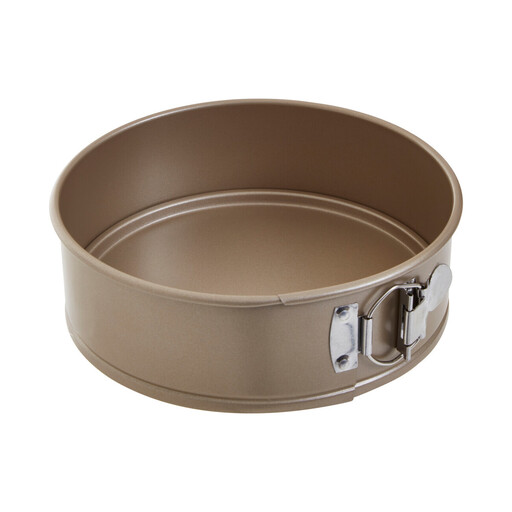
Why This Fits Their Persona: Perfect for someone who enjoys baking cheesecakes or delicate sponges on occasion. The 20cm size is a versatile standard, and the springform design is ideal for bakes that require careful handling.
This tin's springform mechanism is designed for a secure clip, addressing the common pitfall of flimsy latches that can leak or fail.
Made from BPA-free carbon steel for even heat distribution and features a reliable non-stick coating for easy release and cleanup.
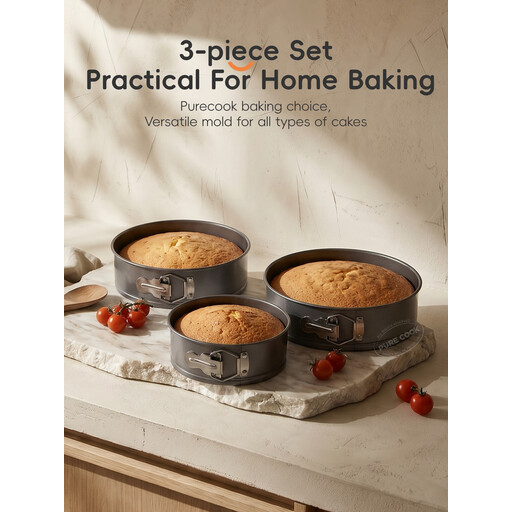
Why This Fits Their Persona: For the baker who loves creating multi-layered celebration cakes or needs different sizes for various recipes. This set provides excellent value and versatility.
The adjustable metal buckles are designed to lock the seams tightly, specifically to prevent the batter leakage that plagues lesser-quality springform tins.
This 3-piece set (18cm, 20cm and 24cm) offers great flexibility. The carbon steel construction ensures even heat conductivity for consistent results across all sizes.
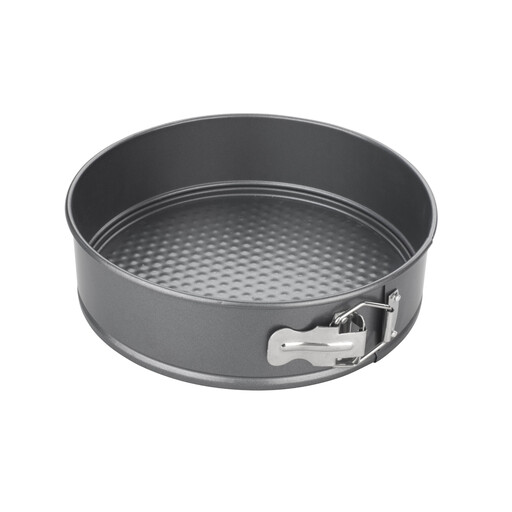
Why This Fits Their Persona: Ideal for those who prioritise safety in the kitchen. This tin provides confidence that the non-stick surface is made without common chemicals of concern, making it suitable for family baking.
It directly addresses the pitfall of questionable non-stick coatings by using a Goldflon coating that is explicitly stated to be free from PFAS, PTFE and BPA.
Extremely convenient, as it is dishwasher, fridge and freezer safe. The durable carbon steel construction ensures reliable, even baking.
We have compiled a complete, real-time list of products that fully satisfy these strict selection criteria and UK safety regulations.
A loose base cake tin has a solid ring and a separate bottom piece that you push up to release the cake. A springform cake tin has a side wall that unlatches and expands, allowing you to lift the ring away from the cake and base. Springforms are generally preferred for very delicate items like cheesecakes, while loose base tins are excellent all-rounders for most other cakes.
Leakage is a common issue, especially with thinner batters or when using a water bath (bain-marie). First, ensure you are buying a tin with a well-made, tight-fitting latch. As an extra precaution, you can wrap the outside of the tin's base and sides with a large, single piece of heavy-duty aluminium foil before adding the batter. This creates a waterproof barrier.
While some modern non-stick bakeware is labelled as dishwasher safe, hand washing is almost always the recommended method for extending its life. The high heat and harsh detergents in a dishwasher can degrade the non-stick coating over time. For best results, wash your carbon steel cake pan in warm, soapy water with a soft sponge and dry it thoroughly before storing.