
24/7 Customer Support

Free returns

Same-day & Next-day Delivery

Quality Guaranteed

Unlock Your Welcome Offers: FREE Delivery | Up to 80% OFF | Free 30-day JoyPlus trial
Download the APP
Navigating the world of bakeware can feel overwhelming. With shelves lined with tins of every shape, material and price, it is easy to make a purchase that disappoints. As the Joybuy Product Recommendation Officer, my role is to help you identify the practical features that matter, so you can choose cake tins that perform reliably for your baking projects.
Many bakers find their cupboards cluttered with tins that failed to live up to their initial promise. Before you buy another piece of bakeware, let's look at a few common pitfalls that lead to wasted money and baking frustration.
springform cake tin is a brilliant invention for delicate cheesecakes and tortes. Yet, a poorly designed latch or a warped rim creates gaps that allow thinner batters to leak out, causing a mess in your oven and ruining your dessert.To ensure your next purchase is a lasting one, focus on these fundamental parameters. Understanding them will help you select the right tool for the job, whether you need a simple round cake tin or a full cake mould set.
The material of your tin is the single most important factor affecting its performance and longevity.
Carbon Steel: This is the traditional choice for a reason. It offers excellent and even heat conductivity, which is crucial for a uniform bake. Look for tins described as having a good weight or thickness, as this indicates they are less likely to warp. Most carbon steel tins come with a non-stick coating; it is wise to check care instructions, as many are not suitable for dishwasher use or metal utensils, which can damage the surface. This material is the foundation of most high-quality non-stick bakeware, from a loaf tin to a square cake tin.
Silicone Baking Moulds: Highly flexible, silicone baking moulds make releasing cakes, especially those with intricate designs, incredibly simple. They are typically heat resistant to high temperatures (e.g., 230°C), freezer-safe and easy to clean. Their flexibility means they should be placed on a solid baking tray before going into the oven for stability. They are an excellent choice for novelty cakes, muffins and children's baking kits.
The mechanism for removing your cake is just as important as the material.
Springform Cake Tin: This design features a latched collar that expands and lifts away from the base. It is the go-to option for bakes that cannot be inverted, such as cheesecakes or flourless chocolate cakes. A secure, tight-fitting latch is non-negotiable to prevent leaks.
Loose Bottom Cake Tin: This style has a solid, separate base that can be pushed up through the sides. It is a sturdy and reliable choice for deep-dish tarts, quiches and rich fruit cakes, offering a clean release without the potential leak points of a springform.
To help you match the right product to your needs, here are a few options suited to different types of bakers in the UK.
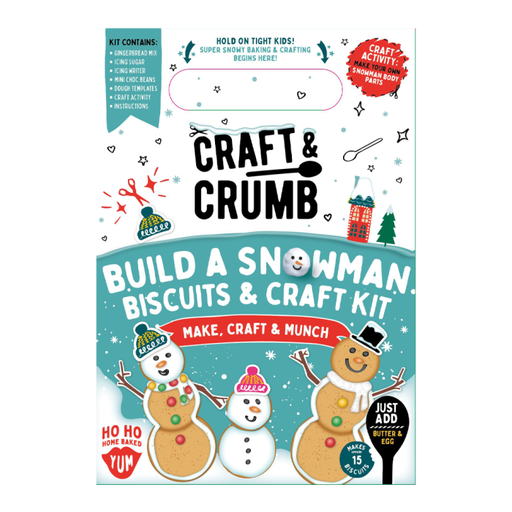
Why This Fits Their Persona: This is more than just bakeware; it's a complete activity. It is ideal for a weekend or holiday project with children, taking the guesswork out of baking and focusing on the fun of creating and decorating together.
This kit sidesteps the durability pitfall by being a single-use baking experience. It provides everything needed, including templates, so you don't need to invest in specific tins for a one-off creative bake.
Includes pre-measured dry ingredients and decorations, making it accessible for all skill levels. It's an all-in-one solution for a fun, hands-on activity.
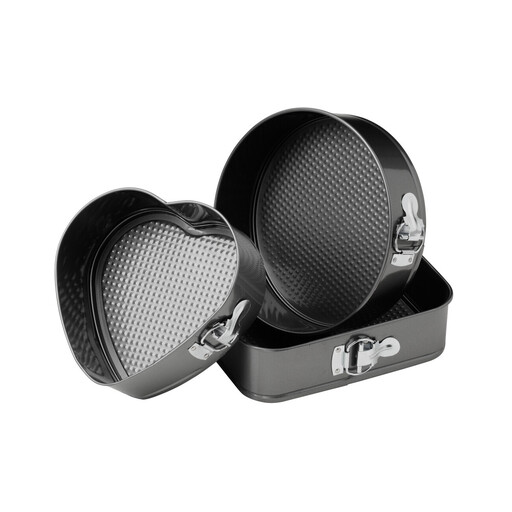
Why This Fits Their Persona: For the baker who enjoys making everything from a classic Victoria sponge to a birthday cheesecake. This set provides three of the most popular shapes, all with a springform mechanism for maximum versatility.
This set directly addresses the "leaky latch" concern by providing dedicated springform tins designed for easy release. The carbon steel construction offers better heat distribution than flimsy alternatives.
A cost-effective way to acquire three different shapes (round, square, heart) in one purchase. The non-stick coating and detachable bases simplify both baking and cleaning.
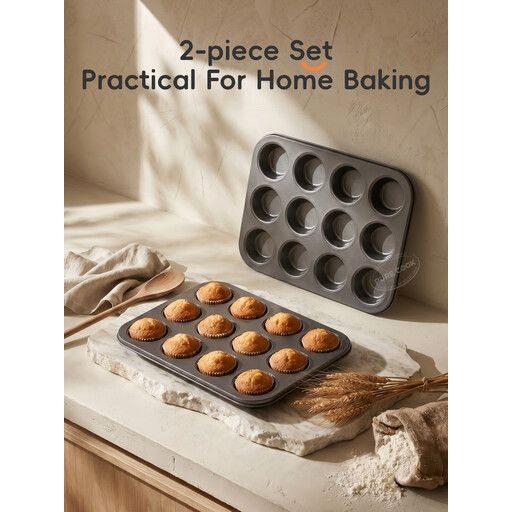
Why This Fits Their Persona: This is for the baker who values efficiency. It is perfect for making multiple small cakes, brownies or muffins for a party, bake sale or small commercial order. The two-piece set allows for a high-volume workflow.
This `muffin tray` is made from carbon steel, which provides the rigidity needed to prevent warping (Pitfall 2) during baking, ensuring all 12 cakes cook evenly. The non-stick coating is designed for easy release of multiple items.
Allows for baking 12 uniform small cakes at once, saving time and energy. The stackable design is convenient for storage in busy kitchens.
We have compiled a complete, real-time list of products that fully satisfy these strict selection criteria and UK safety regulations.
A common method is to wrap the outside of the tin's base and sides with a large, single piece of heavy-duty aluminium foil before pouring in the batter. This creates an external waterproof barrier. For very thin batters, some bakers also find it helpful to line the inside base with a circle of baking parchment.
It is generally not recommended. Metal knives, spatulas or whisks can easily scratch and damage the non-stick coating, reducing its effectiveness and lifespan. Always opt for silicone, wood or nylon utensils when working with non-stick surfaces.
They serve different purposes well. Metal tins, particularly those made from carbon steel, excel at conducting heat, which helps create crisp, brown edges on cakes and breads. Silicone moulds are superior for their flexibility, allowing for easy release of intricate shapes without breaking them. For stability, always place silicone moulds on a metal baking sheet before filling and baking.