
24/7 全天候客户支持

免费退货

当日/次日达

品质保障

开启新人专享福利: 全场免邮 | 低至 2 折 | 免费试用 30 天 JoyPlus 会员
下载 Joybuy
As a parent or carer, seeing your little one distressed by a fever or pain is one of the most challenging experiences. In those moments, you want a reliable solution, and you want it fast. However, the aisle of children's medicines can be confusing. Choosing the right infant paracetamol suspension involves more than just grabbing a familiar box. This guide, from your Joybuy Product Recommendation Officer, will help you navigate the important details to ensure you're making a safe and suitable choice for your child.
When you're in a hurry, it's easy to make small mistakes that can have big consequences. Here are two common pitfalls to avoid:
To ensure you're selecting the right product, focus on these non-negotiable details. They are far more important than packaging or marketing claims.
The active ingredient in products like Calpol Infant Suspension is paracetamol. For infant formulas, the standard concentration is typically 120mg of paracetamol per 5ml of liquid. This specific concentration is designed for the small bodies of infants and young children. Checking this ensures you can follow dosage instructions accurately and safely. Using a product with a different concentration by mistake could lead to under-dosing or over-dosing.
Always check the label for the approved age range. A quality infant paracetamol suspension will clearly state it is suitable for pain relief for babies 2+ months. However, for infants between 2 and 3 months, there's an additional safety check: they must weigh over 4kg and not have been born prematurely. This is a critical safety standard in the UK to protect the most vulnerable infants.
A gentle formula is key. Look for products that are explicitly sugar-free Calpol and colour-free to minimise the risk of upsetting a little tummy. Furthermore, a reliable product will always include a double-ended measuring spoon (usually 2.5ml and 5ml). Using the provided spoon is essential for accurate Calpol dosage for infants, as household teaspoons vary greatly in size.
We've filtered the options based on the critical parameters above. Here are our recommendations matched to common parenting needs in the UK.
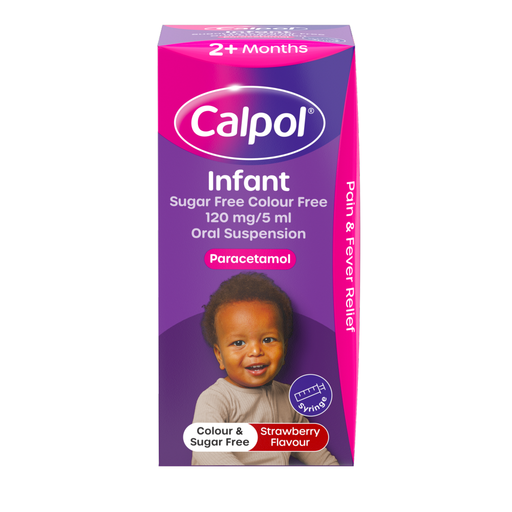
Why This Fits Their Persona: This is an ideal choice for parents navigating the first two years. It's specifically formulated for young babies from 2 months (over 4kg) and is a go-to for common issues like Calpol for teething, post-immunisation fever and general aches. The strawberry flavour helps with administration to a fussy baby.
Its sugar-free and colour-free formula is gentle on sensitive tummies. The packaging provides clear, separate dosage instructions for post-vaccination fever in 2-3 month olds, preventing confusion.
According to the manufacturer, it starts to work on fever in just 15 minutes. The included measuring spoon ensures accurate dosing for the 2+ month age group.
Why This Fits Their Persona: For families with children in the 2-6 year age bracket, this product offers consistency and value. It covers a wide age range, meaning you don't need to buy different products as your child grows. It's a reliable staple for the fevers, sore throats and earaches common in nursery and school-age children.
Using this single, familiar product prevents accidental purchase of 'Six Plus' formulas, which have double the paracetamol concentration and are not suitable for younger children. This simplifies the medicine cabinet.
It offers versatile dosage options (from 5ml to 10ml) to suit a growing child, all administered with the same included spoon. It's a cost-effective solution for the whole family's needs up to age 6.
We have compiled a complete, real-time list of products that fully satisfy these strict selection criteria and UK safety regulations.
Here are answers to some common questions parents have about using infant paracetamol suspension.
For post-vaccination fever in babies aged 2-3 months, the guidance is very specific. A single 2.5ml dose is usually recommended. A second 2.5ml dose can be given 4-6 hours later if needed. No more than two doses should be given. This is different from the dosage for other types of pain or fever, so always check the packaging. If you are still concerned, you should speak to your doctor or pharmacist.
Yes, an infant paracetamol suspension like Calpol is suitable for relieving the pain associated with teething in babies from 2 months old. It can help to soothe your child's discomfort and reduce any associated mild fever.
You should not give this medicine to your child for more than 3 days without speaking to a doctor or pharmacist. If your child's symptoms persist or worsen, it is important to seek medical advice promptly. Always follow the dosage instructions and do not exceed four doses in any 24-hour period.