Overhead tutorial makers
You need to show small card details while keeping the whole work area in frame. Your lens, mounting height and screen position matter alongside the camera body.


For a recorded overhead lesson, choose a camera you can frame and monitor from your teaching position, then check that its lens covers the work area from your available mounting height. USB webcam capability matters more if you teach live; 4K/60p and advanced recording controls are worth considering if you will use them in editing. Test the intended camera settings under your actual artificial lights before filming a full lesson, because a camera specification cannot guarantee flicker-free footage.
You need to show small card details while keeping the whole work area in frame. Your lens, mounting height and screen position matter alongside the camera body.
You need a workable camera-to-computer connection and a way to check framing, focus and narration while demonstrating a technique.
You may make more use of higher-frame-rate footage, recording controls, external audio or longer continuous takes than someone filming an occasional short lesson.
Start with the overhead shot and the lights you will actually use. Then decide whether live teaching or a more demanding editing workflow calls for additional camera features.
| Concern | What to check when buying | Who this matters to |
|---|---|---|
| Overhead framing and detail | Measure the work area and mounting height; check the intended lens view and whether you can see the screen while teaching. | I want the whole mat and my hands in shot without losing the small card details. Around 36% of consumers put overhead framing first. |
| Artificial-light consistency | Record under the intended lights, including dimmed settings, and inspect the clip for banding, colour and exposure changes. | If the light changes on video while I work, a full lesson may be difficult to use. Artificial-light consistency comes first for around 29% of consumers. |
| Live teaching and narration | Confirm the webcam connection with your computer and platform; test spoken audio from the overhead position. | I need viewers to see the demonstration live and hear my instructions over handling noise. Around 21% of consumers make that workflow their primary concern. |
| Editing and long takes | Check the exact recording modes and continuous-recording conditions against the way you plan to edit or teach. | When I slow down intricate steps or record a workshop in one take, those recording options matter most. They are the first priority for around 14% of consumers. |
4K recording does not tell you whether the lens will fit the mat, hands and tools into the frame at your available mounting height.
Measure the work area and test the intended lens and support position before committing to the setup.
A lens that cannot cover the area, or an arm that cannot reach the required position, may mean changing the lens or mount.
Light type, dimmer position and camera settings can change how artificial lighting appears in footage.
Film a short clip with the final lights and camera position, then review it on a larger display for bands, colour shifts and changes in exposure.
An overhead camera may be far from your voice while paper handling and room sound remain close to its microphone.
Record narration from your teaching position and check the result. If needed, confirm which microphone and monitoring connections the camera supports.
A separate microphone may also need a suitable cable or mounting accessory.
4K/60p can serve slow-motion editing, and log recording can serve a colour-grading workflow, but neither replaces sound framing, lighting and audio.
Decide whether your lessons need those modes before making them a condition of purchase.
Higher-specification footage can add storage and editing demands.
Canon offers interchangeable-lens options for recorded lessons and USB-connected live classes.
The Sony ZV-E10 II offers an APS-C interchangeable-lens route for a dedicated overhead setup.
The Nikon Z 30 is worth considering when a long, uninterrupted demonstration is a priority.
The compact LUMIX G100D kit combines a 12–32 mm lens with a 4K/30p recording option.
These cameras offer different starting points for recording a card-making lesson, from interchangeable-lens models to compact cameras. Check each one against your overhead mount, artificial lights and any live-teaching requirements before choosing.
 No image available
Consider this kit if you plan to edit detailed demonstrations or use higher-frame-rate footage. Its title specifies an APS-C interchangeable-lens camera, 4K/60p video and a 16–50 mm f/3.5–5.6 kit lens. Check whether that lens fits the whole work area from your overhead height, and test the footage under your lights.
 No image available
This interchangeable-lens kit is an option for a recorded lesson if its 16–50 mm lens frames your work area from the planned height. Test the shot and artificial lighting; if you also teach live, confirm the webcam connection with your computer and platform.
 No image available
This compact camera may suit a recording setup where you can secure and frame it above the desk. The listed variant specifies 4K/120fps video and an included microphone. Test the lens view, mounting arrangement, narration and artificial-light footage before relying on it for a lesson.
 No image available
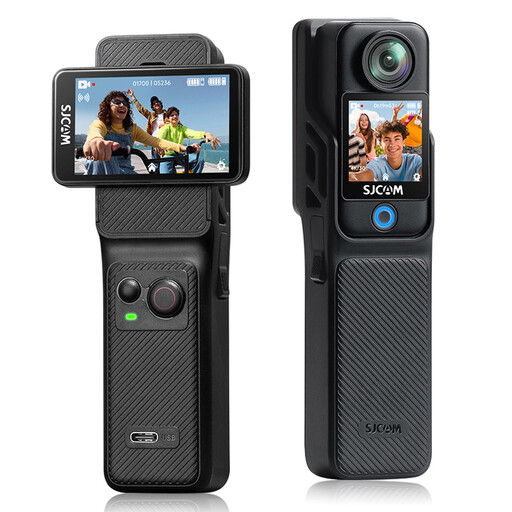
Consider this action camera only if its view works for close overhead card work. Its title specifies dual touchscreens and a 154° wide-angle view; check how the card looks across the frame, as well as the mounting, narration and artificial-light result. Confirm compatibility separately if live teaching is essential.
No: 4K/30p can suit a normal-speed overhead demonstration if the framing, focus and lighting work for your setup. Canon specifies 4K/30p for the EOS R50, Nikon for the Z 30 and Panasonic for the G100D; Sony specifies 4K/60p for the ZV-E10 II and Canon for the EOS R50 V if you want to slow down fine movements in editing.
Record a short clip with your final lights, brightness settings and overhead position, then inspect it for moving bands, exposure pulsing and colour shifts. If you see a problem, test the camera's available exposure, frame-rate and shutter settings or adjust the lighting; no model specification guarantees the result with your lights.
Yes, if the particular camera's connection method works with your computer and teaching platform. Canon states that the EOS R50 can act as a webcam over USB and that the EOS R50 V offers webcam use; test the complete connection alongside overhead framing and narration.
Not necessarily, but an overhead camera may be too far from your voice for clear narration. Make a spoken test from your teaching position; if it falls short, check microphone and accessory compatibility. Canon specifies a 3.5 mm microphone jack for the EOS R50, Nikon describes external-microphone support for the Z 30, and Canon describes audio-monitoring options for the EOS R50 V.