Fine-detail craft sellers
If individual cuts, grain or raised details must be visible in close crops, consider the lens’s magnification alongside stable support and a way to manage the shallow depth of field at close range.


Choose the lens and focusing setup around the size of the detail you need to show: a standard zoom may suit a whole-ornament image, while tiny cuts that must fill the frame call for a lens with the required close-up magnification. Deep relief also needs careful focus and stable support; light directed onto the carving matters more than the dark backdrop alone when deciding how to expose it.
If individual cuts, grain or raised details must be visible in close crops, consider the lens’s magnification alongside stable support and a way to manage the shallow depth of field at close range.
For repeatable images of complete ornaments against black card or fabric, concentrate on where the light falls, where you focus and how you expose the ornament against its background.
A supplied zoom can be a starting point for whole-object photographs. Check its exact model and the mount’s compatible close-focus lens options if detailed crops may become important later.
Decide whether the photograph needs to show the whole ornament or reproduce tiny carved features at a large size. That choice determines which lens and focusing checks matter most.
Choose when: Small grooves or tool marks must fill the frame; look for a stated 1:1 maximum magnification if life-size reproduction on the sensor is required.
Allow for: The separately chosen lens, a workable distance for positioning light, and narrow depth of field that may call for several focused frames.
Choose when: The aim is a photograph of the complete ornament and it fits in the frame at the supplied lens’s focusing distance.
Allow for: A standard zoom’s close-up magnification may not meet the needs of very small carvings; check the exact lens before relying on it for detail crops.
| Concern | What to check | Who this matters to |
|---|---|---|
| Fine detail and depth | Check maximum lens magnification and working distance. For deep relief, assess focus bracketing or a manual multi-frame workflow. | I need nearby ridges and deeper cuts to remain clear in a close crop, even if that takes a stationary setup. Around 42% of consumers put detail and depth control first. |
| Subject and background exposure | Check available exposure controls and whether you can position light on the ornament separately from the dark backdrop. | If the carving blends into black fabric, I need its edges and texture lit without brightening the whole set. Roughly 33% of consumers make this tonal control their primary concern. |
| A system that can expand | Confirm the supplied lens and mount, then check compatible macro-lens options for later close-up work. | I want to photograph complete ornaments now without closing off a later move into detail shots. For about 25% of consumers, that manageable route into an expandable system comes first. |
A kit zoom is not automatically a 1:1 macro lens. Its magnification and working distance determine whether it can frame the small detail you have in mind while leaving room to position light.
Check the exact lens model, its stated maximum magnification and its close-focusing distances before choosing the body-and-lens combination.
Close-range depth of field can leave one ridge sharp and another soft; increasing image resolution does not bring the soft area into focus.
Plan a stable setup and decide whether several focus positions, taken manually or with bracketing, are needed for the ornament’s depth.
A dark background does not mean the ornament must remain in low light. Lighting direction helps reveal its relief and separate its edges from the set.
Position light on the carving, take a test frame and adjust exposure for the subject while keeping the backdrop as dark as intended.
The EOS R50 is an RF-mount APS-C option for buyers considering deliberate focusing and an additional close-up lens.
The Z50II offers a Z-mount route for buyers considering viewfinder use in changing light and a dedicated macro lens.
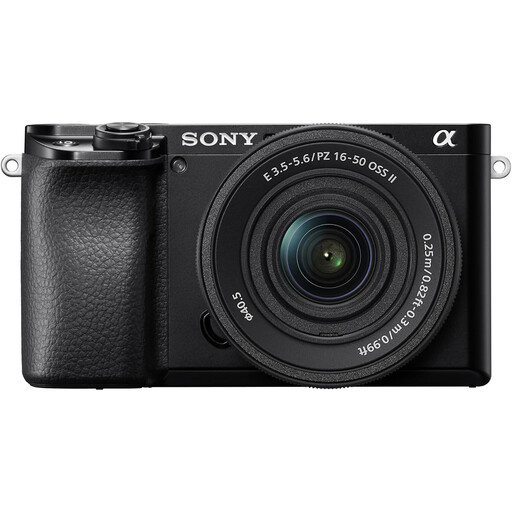
The E-mount ILCE-6400 is an APS-C option for whole-object images, with the possibility of choosing a different lens for closer detail.
These cameras are listed with zoom lenses for photographing complete ornaments when the subject can be framed at the lens’s focusing distance. For close crops of tiny cuts, check the supplied lens’s maximum magnification and consider whether a separate macro lens is needed.
 No image available
Consider this full-frame camera and zoom-lens combination for whole-ornament framing. If small cuts must fill the frame, check the supplied lens’s maximum magnification and working distance; also confirm the focusing workflow you need for deep relief.
 No image available
The supplied zoom makes this APS-C kit an option for whole-ornament images. Sony lists RAW and RAW+JPEG capture for the ILCE-6400; check the supplied lens’s magnification and working distance before planning close crops.
 No image available
This APS-C camera and supplied zoom are relevant when the complete ornament is the subject. Check the lens’s close-up magnification for smaller details, and confirm the required manual-focus or multi-frame options before planning a deep-relief workflow.
 No image available
The APS-C camera and supplied zoom offer a starting combination for whole-ornament photographs. Before choosing it for close crops, check the lens’s maximum magnification and working distance, along with any focusing options your setup requires.
Choose a macro lens if tiny carved details need to fill the frame; a standard zoom may be sufficient for photographs of the complete ornament. Sony defines 1:1 magnification as reproducing a subject at full size on the sensor, so check the exact lens’s stated magnification against the detail you need to capture.
Depth of field becomes narrow at close range, so one focused ridge may be sharp while relief in front of or behind it is soft. For a stationary ornament, stable support and several frames focused at different points can help; Canon and Nikon describe focus stacking as a way to extend apparent depth of field.
Not necessarily: the backdrop can remain dark while you light the ornament deliberately. In a controlled tabletop setup, position light to reveal the carving, then set exposure for the subject rather than choosing a camera solely because the background is black.
Contact the seller about the fault and keep your order record and product description. GOV.UK states that consumer rights cover faulty goods; the appropriate remedy under the Consumer Rights Act 2015 depends on the circumstances, so check the applicable guidance rather than treating a retailer’s change-of-mind policy as the limit of those rights.
Check the electrical-equipment collection or take-back options available for your camera and area. GOV.UK explains that UK waste electrical and electronic equipment rules encourage recovery, reuse and recycling; a retailer or local authority can identify the applicable collection route.