For whole-bowl photographs in a controlled setup, start with a camera and lens that give you the framing you need, then pay close attention to lighting, reflections and a stable camera position. A compatible macro lens becomes more relevant when glaze texture or maker’s marks are essential images; magnification alone will not control reflections, and a short working distance can leave little room for lights.
Who is this setup for?
Ceramic sellers creating catalogue images
If you photograph several bowls for listings, consistent framing, lighting and background placement matter across the set. Adobe recommends a controlled environment, good lighting and a clean background for product photography; plan your required angles before settling on a lens.
Makers documenting glaze and maker’s marks
Small marks, rim details and surface texture call for close framing. Nikon UK, Sony UK and Canon UK each specify dedicated macro lenses with stated magnification, giving you a more relevant lens specification to check than camera-body speed or video features.
First-time home-studio photographers
An interchangeable-lens camera lets you begin with whole-bowl views and consider a compatible macro lens later. Depending on the model, a movable screen, viewfinder preview or RAW capture can help you review a fixed tabletop composition.
What matters when choosing?
Decide whether your main image is the whole bowl or a small surface detail, then check the lens and lighting space needed to make it. Keep the camera position stable while assessing exposure and reflections against the dark background.
| Concern |
What to check |
Who this matters to |
| Reflections and consistency |
Check exposure controls and whether your setup has room for stable support and controllable lighting. |
If I make several catalogue images, I need the bowl’s glaze and background to look consistent from shot to shot. Around 42% of consumers put that control first. |
| Close ceramic detail |
Check the exact lens mount, maximum magnification and working distance for the detail you intend to frame. |
When a maker’s mark or glaze texture is the subject, I need to get close without crowding out the lights. Roughly 33% of consumers prioritise close-detail capture. |
| A usable starting kit |
Check whether a lens is included, which lens it is and what compatible macro options you could add later. |
If I am starting with whole-bowl photographs, I want a lens I can use for those views before deciding on specialist close-ups. About 25% of consumers make that starting route their primary concern. |
Buying pitfalls
-
Choosing the camera body but overlooking the rest of the setup
A dark background does not remove the need to light the bowl. Adobe identifies controlled lighting and a clean background as central to product photography, while a body-only listing leaves the lens to be chosen separately.
Check whether the camera includes a suitable lens, and plan where the camera, lights and reflection-control materials will go.
A tripod, lighting, modifiers or flags, a memory card and possibly a macro lens may be needed for the intended workflow.
-
Assuming a kit zoom has macro capability
A general zoom should not be treated as a 1:1 macro lens without an explicit specification. Nikon UK and Sony UK state 1:1 magnification for their cited macro lenses; Canon UK specifies 1.4x for its RF 100mm macro lens.
If small marks are essential, check maximum magnification and focusing distance for the exact lens, as well as its compatibility with the camera.
-
Relying on high ISO to handle a dark background
The background can be dark while the bowl is deliberately lit. Raising ISO does not position lights or control reflections in a glossy glaze.
Keep the camera steady, shape the light and review the bowl’s exposure, reflections and focus before changing ISO.
-
Overlooking a short macro lens’s working distance
Sony UK specifies a 2.4 cm minimum working distance for the E 30mm F3.5 Macro. At very close framing, that can restrict where lighting and diffusion sit around a reflective bowl.
Check the space available at your intended framing distance before choosing a short macro lens; consider whether a longer macro focal length better accommodates your lighting arrangement.
Brands to consider for this setup
Canon
An RF-system route if you want an APS-C body for general bowl photographs and the option of a dedicated macro lens later.
- Canon UK lists the EOS R50 body with a 24.2 MP APS-C sensor and vari-angle touchscreen. Its RF 100mm F2.8L Macro IS USM is specified for 1.4x magnification.
- The cited EOS R50 listing is body-only, so choose a compatible lens for your initial photographs. The RF macro lens is a separate, detail-led choice, not a requirement for every full-bowl image.
Nikon
A Z-system route that pairs a general zoom kit for whole-bowl framing with a separate close-detail lens option.
- Nikon UK lists a Z50II kit with a NIKKOR Z DX 16–50 mm f/3.5–6.3 VR lens and describes a viewfinder preview of setting changes. Its NIKKOR Z MC 50mm f/2.8 is specified for 1:1 macro photography.
- The included 16–50 mm lens is a general zoom; do not assume it provides the dedicated macro lens’s 1:1 magnification.
Sony
An E-mount route with an APS-C camera for general stills and a dedicated lens option for small ceramic details.
- Sony UK specifies a 24.2 MP APS-C sensor and 14-bit RAW capture for the α6400. Its E 30mm F3.5 Macro is specified for 1:1 magnification.
- Sony UK gives the E 30mm F3.5 Macro a 2.4 cm minimum working distance. Check whether your lights and reflection-control materials will fit around the bowl at the framing you need.
Joybuy camera choices
These interchangeable-lens cameras are choices to assess for whole-bowl photographs in a controlled setup. Check the exact supplied lens and its close-focusing ability before relying on any kit for maker’s marks or tight glaze details.
 No image available
Sony Alpha ZV-E10 II K with 16–50 mm f/3.5–5.6 Power Zoom
Consider this supplied-zoom kit for framing whole bowls in a fixed tabletop setup. The product name specifies a 26 MP APS-C camera; check whether the zoom focuses closely enough for the detail crops you need.
View on Joybuy
 No image available
Sony A6400 with 16–50 mm Power Zoom Lens
The supplied zoom makes this an option to assess for whole-bowl catalogue views. Sony UK specifies a 24.2 MP APS-C sensor and 14-bit RAW capture for the matching ILCE-6400 model; confirm the kit lens’s close-focusing ability if small marks matter.
View on Joybuy
 No image available
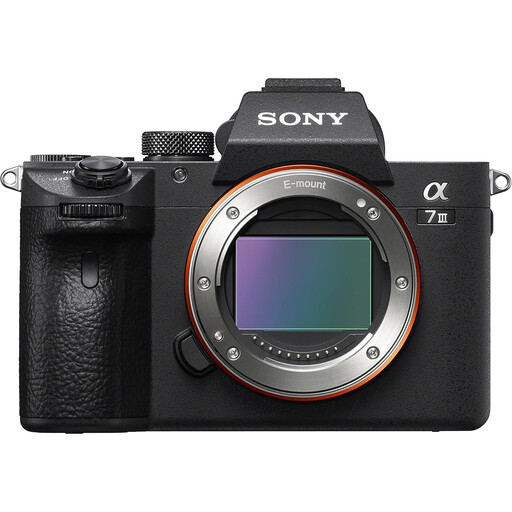
Sony Alpha 7 III Full-Frame Camera — Body Only Listing
Consider this listing if you intend to choose a lens for your bowl photography rather than rely on a kit zoom. Confirm the box contents before ordering: the body-only title conflicts with a description that lists a 28–70 mm lens.
View on Joybuy
 No image available
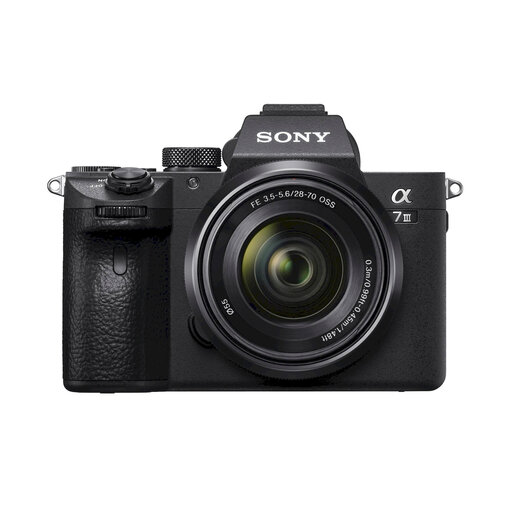
Sony Alpha 7 III with 28–70 mm Zoom Lens
This full-frame camera and supplied standard zoom are an option to assess for whole-bowl framing. Check the lens’s close-focusing specification before planning tight photographs of glaze or maker’s marks.
View on Joybuy
 No image available
Sony A6700 APS-C Camera with 16–50 mm Lens
The supplied zoom offers a starting lens to assess for whole-bowl views, while the product name specifies a 26 MP APS-C camera. For close ceramic details, check the exact lens’s focusing and magnification specifications.
View on Joybuy
Common questions
Do I need a full-frame camera to photograph ceramic bowls against a dark background?
No: full frame is not a requirement established for this controlled product-photography task. Canon UK and Sony UK both specify 24.2 MP APS-C camera options, while Adobe emphasises controlled lighting and a clean background; a larger sensor will not itself remove reflections from glaze.
When should I choose a macro lens instead of a kit zoom?
Choose a compatible macro lens when small surface details or maker’s marks are essential photographs; use a kit zoom for whole-bowl views if it frames the bowl as required. Nikon UK and Sony UK specify 1:1 magnification for their cited macro lenses, while Canon UK specifies 1.4x for its RF 100mm macro lens. Check the mount and working space as well as magnification.
How can I make photographs of several bowls look consistent?
Keep the camera, background and lighting positions repeatable, then review exposure, focus and glaze reflections as you change bowls. Adobe recommends a controlled environment with good lighting and a clean background for product photography; decide which angles and marks you need to show before shooting.
How should I check disposal options for an old camera?
Ask your retailer and local authority which collection or take-back arrangements apply where you live. GOV.UK says battery-powered products can fall within electrical and electronic equipment guidance, but the practical collection route needs to be checked locally.


