Hands-and-materials lesson filmmakers
You need an overhead or angled view that shows hands, clay and tools clearly, rather than only a wide shot of the room.


For a fixed overhead or angled clay lesson, start by considering an APS-C interchangeable-lens camera: you can choose a lens to suit the work surface and plan an external microphone where needed. Consider a full-frame camera if the room is often dim and you can accommodate the lens choice, or an integrated-lens camcorder if changing between wide and close views without swapping lenses matters more. None of these choices removes the need to test the bright-window exposure, secure the camera and check speech at the intended recording position.
You need an overhead or angled view that shows hands, clay and tools clearly, rather than only a wide shot of the room.
You teach beside a window and need to see how changing daylight affects the work surface and any bright background in the shot.
If pupils or participants can be identified, plan how footage and sound will be captured, stored and used alongside the camera setup. The Department for Education treats identifiable images and video in schools as personal data.
Fix the camera position and the area of clay work you need to show before choosing a lens or recording mode. Then test the window in the composition and plan how the tutor’s voice will be recorded.
| Concern | What to check when buying | Who this matters to |
|---|---|---|
| Window-light exposure | Check exposure controls and the recording mode you intend to use; test hands and clay with the window in the actual composition. | If the window is much brighter than my work surface, I need to see the clay clearly without assuming the camera will balance both areas for me. Around 31% of consumers put exposure control first. |
| Close framing and detail | Check the lens’s field of view and minimum focus distance at your mounting height, including any crop in the chosen video mode. | When I demonstrate a small change in the clay, the shot needs to include my hands and tools while keeping that detail visible. Roughly 31% of consumers make workable framing their primary concern. |
| Understandable speech | Check the available microphone connection or accessory route and whether you can monitor sound during recording. | With the camera mounted away from me, I need spoken steps to remain clear over the sounds of handling tools and clay. About 23% of consumers prioritise lesson audio. |
| Unattended lesson operation | Check recording-duration guidance, power and media requirements, and a secure mounting method for the selected mode. | If I am teaching without a camera operator, I need a setup I can leave recording while I work. Around 15% of consumers put straightforward long-session operation first. |
A sensor specification does not establish how hands and clay will look when a bright window is also in frame. The exposure still depends on the composition and camera settings.
Record a short test from the teaching position at the time of day you normally film. Decide whether the window needs to appear, then check the work surface before recording a lesson.
Resolution alone will not keep the whole tabletop in view or ensure the lens focuses at your mounting distance. Nikon specifies that the Z50II’s 4K 60p mode is cropped, which can narrow a fixed composition.
Measure the camera-to-table distance, check the proposed lens and test the exact frame rate you plan to use.
A useful overhead position may put the camera microphone well away from the tutor. A tripod supplied with a kit also does not, by itself, establish a safe overhead mounting arrangement.
Plan the camera support and microphone together, then rehearse at normal teaching volume while handling the actual tools.
For schools in England, the Department for Education says identifiable photos and videos are personal data and that schools need a valid lawful basis before taking, using or sharing them.
Confirm the school’s filming purpose, policy and applicable communication process before recording. Consider whether a hands-only view meets the approved purpose without showing faces.
Sony’s creator-oriented interchangeable-lens models include the APS-C ZV-E10 II and full-frame ZV-E1.
Canon’s interchangeable-lens options include the video-focused APS-C EOS R50 V and full-frame EOS R8.
The HC-X2 is an integrated-lens camcorder to consider when you want to change framing without changing lenses.
The APS-C Z50II is a hybrid option for tutors who also want still photographs and direct microphone and headphone connections.
These choices cover interchangeable-lens cameras and compact video kits that could be positioned around a clay work surface. Compare the included lens or kit contents with your planned framing, support and audio arrangement; the camera type alone cannot settle those checks.
 No image available
Consider this APS-C kit if you want to test different framings for a fixed overhead or angled lesson position.
The named kit includes a 16–50 mm f/3.5–5.6 lens; Sony specifies a 26.0-megapixel APS-C sensor and oversampled 4K up to 60p for the ZV-E10 II.
Check the lens’s close-focus distance at your mounting height, and plan secure support and speech capture separately.
 No image available
Consider this compact kit if you can place it securely where its view covers the clay workspace.
The product title specifies a 1-inch CMOS sensor, 4K video up to 120 fps, three-axis stabilisation and an included microphone.
Test close framing and speech from the intended position; check the power arrangement and recording guidance for a full lesson.
 No image available
This APS-C lens kit is worth checking if you want an interchangeable-lens camera with a zoom lens for initial tabletop framing.
The product name identifies a supplied 16–50 mm Power Zoom lens.
Confirm that the lens focuses closely enough for the clay work, and check the recording mode and audio connections you intend to use.
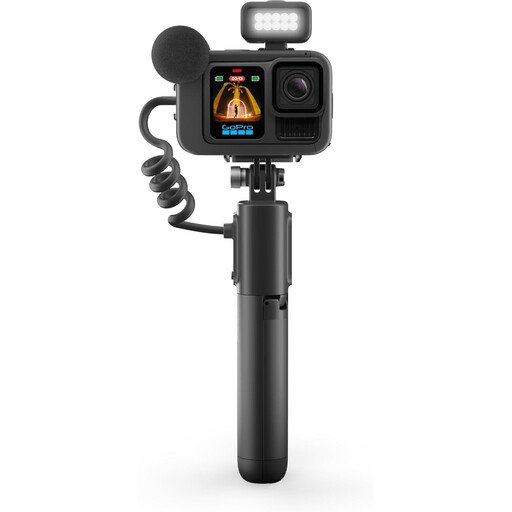 No image available
This Creator Edition is an option to assess if you want a compact camera kit for a self-operated lesson.
Check its close-focus distance and view from your intended mount before relying on it to show fine clay detail.
Test exposure with the window in frame, and confirm that your planned support is secure for the camera position.
 No image available
Consider this full-frame kit if that camera route suits your lesson setup and the supplied lens covers your work surface from the planned position.
The product name specifies a full-frame camera with a 28–70 mm zoom lens.
Check close focus, the required video mode and audio connections, and test exposure with the real window and clay in view.
No: the lens must also cover the work area and focus at the mounting distance. Test a shot containing both hands, the clay and the tools in your chosen mode; Nikon specifies that the Z50II crops its 4K 60p view.
Choose the lens as part of the camera decision, whether it comes in a kit or is bought separately. For an interchangeable-lens camera, check that it covers the work surface and focuses at the planned camera-to-table distance before deciding on a body-only option.
If the camera sits well away from the tutor, assess an external microphone rather than assuming camera-mounted sound will be clear. Test normal speech alongside tool and clay-handling noise, and check the connections and monitoring options of the exact camera.
A school should establish its filming purpose and lawful basis before taking, using or sharing identifiable footage. The Department for Education treats identifiable school photos and videos as personal data; follow the school’s arrangements for transparency, storage and sharing as well as its filming policy.
Purely personal or household activity falls outside data-protection law, according to the Information Commissioner’s Office, but that does not automatically cover public posting. A school’s photography or safeguarding policy may also apply when filming takes place in a school.