Small-detail accessory sellers
If clasps, stones, embroidery or miniature pieces need to fill the frame, the lens’s close-focus capability is central to your choice. Nikon and Sony each specify 1:1 magnification for the macro lenses discussed below.


Choose the lens around the smallest detail you need to photograph: a 1:1 macro lens is the more direct route when a clasp, stone or miniature piece must fill the frame, while a less specialised lens may meet the needs of larger accessories and full-item views. An interchangeable-lens camera lets you choose a close-up lens later, but check the mount, what comes in the kit and whether the lens leaves enough room to light your white-background setup.
If clasps, stones, embroidery or miniature pieces need to fill the frame, the lens’s close-focus capability is central to your choice. Nikon and Sony each specify 1:1 magnification for the macro lenses discussed below.
If you need full-item views now and closer detail as your catalogue develops, an interchangeable-lens body gives you a way to select a lens for each task. Check the mount and the lens supplied with any kit.
If you mostly photograph whole accessories with occasional detail shots, compare your smallest required crop with the lens’s magnification. Canon specifies up to 1:2 for its RF 35mm F1.8 Macro IS STM; that is not the same as 1:1.
For white-background accessory photos, settle the required close-up framing before comparing camera bodies. These camera-and-lens routes serve different detail needs; none removes the need to check your lighting space.
Consider it: When life-size views of small details are a priority; Nikon specifies 1:1 magnification for this Z-mount lens.
Allow for: Nikon says the lens front can be about 5 cm from the subject at close focus, so check the room available for your lights.
Consider it: When you want a Sony APS-C body paired with a lens that Sony specifies at 1:1 magnification.
Allow for: Sony specifies a 2.4 cm minimum working distance for the lens; check whether lights can be placed around reflective pieces at that spacing.
Consider it: When full-item views and moderately close details matter more than life-size macro; Canon specifies up to 1:2 magnification for this lens.
Allow for: The RF 35mm lens does not reach 1:1, so check how your smallest detail fits in the frame before choosing it for close-up work.
| Concern | What to check | Who this matters to |
|---|---|---|
| Close-up detail | Check the chosen lens’s maximum magnification and its fit with the camera mount; decide whether your smallest detail calls for 1:1 rather than 1:2. | If a tiny clasp or stone needs to fill the frame, I would make lens magnification my primary concern. Around 42% of consumers put that close-up need first. |
| System flexibility | Check the body’s native lens mount and whether the supplied kit lens covers your current framing needs before selecting another lens. | When a catalogue needs full-item photographs now and closer views later, I want a system that lets me choose a lens for each. For around 33% of consumers, that flexibility is the main concern. |
| Wider product views | Check that the supplied lens frames your larger accessories and can focus close enough for the occasional detail you need. | If most listings show the whole accessory, I would avoid choosing around life-size detail I rarely use. Straightforward full-item framing comes first for around 25% of consumers. |
Close-focus capability depends on the specific lens. Canon specifies up to 1:2 magnification for the RF 35mm F1.8 Macro IS STM, while Nikon and Sony specify 1:1 for the macro lenses discussed here.
Choose the smallest detail you must show, then check the exact lens’s maximum magnification and mount compatibility before ordering.
At close focus, the space between lens and accessory can constrain light placement. Sony specifies a 2.4 cm minimum working distance for its E 30mm F3.5 Macro.
Set out the accessory, white background and intended lights at the lens’s close-focus spacing to see whether shadows or reflections obstruct the shot.
Cancellation of an eligible online order cannot establish whether a particular body, lens and supplied kit will frame your accessories as intended.
Confirm the lens model, mount and kit contents before ordering. If you later need to cancel, check the applicable terms and handle the equipment with care.
The EOS R50 and RF 35mm F1.8 Macro IS STM are an RF-system combination to consider for full-item views and moderately close detail.
The NIKKOR Z MC 50mm f/2.8 is a Z-mount route for buyers prioritising life-size close detail.
The ZV-E10 II and E 30mm F3.5 Macro offer an APS-C E-mount body-and-lens route for small accessories.
These camera kits include zoom lenses for planning full-item accessory views. If tiny details must fill the frame, check the supplied lens’s close-focus specifications and the compatible lens options before choosing a kit.
 No image available
Consider this APS-C interchangeable-lens kit if you need full-item accessory views and may select a different lens for close detail later.
Check whether the supplied 16–50mm lens can frame your smallest required detail.
 No image available
Consider this APS-C interchangeable-lens kit for full-item views if you want to choose a separate close-up lens when needed.
The stated kit lens is a 16–50mm f/3.5–5.6 power zoom. Check its close-focus specifications against your smallest accessory.
 No image available
Consider this APS-C interchangeable-lens kit if full-item accessory framing is your starting point.
Its stated 16–50mm power zoom should be checked for the close-focus framing your smallest details require.
 No image available
Consider this interchangeable-lens kit for full-item views if its framing suits the space available around your white background.
Check the supplied 28–70mm lens’s close-focus specifications before relying on it for small clasps or stones.
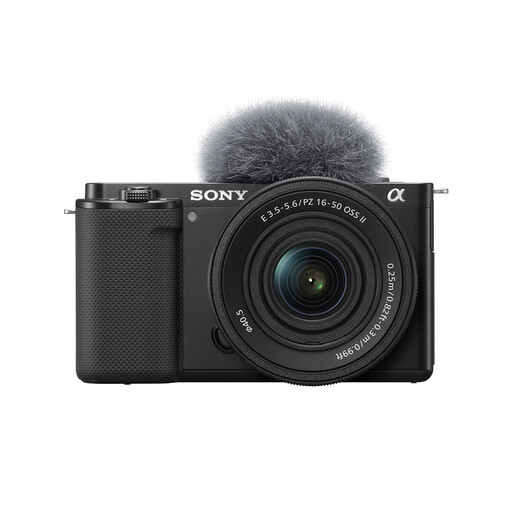 No image available
Consider this interchangeable-lens kit when you mainly need whole-accessory photographs and want the option to select another lens later.
Check whether the supplied 16–50mm power zoom focuses closely enough for the detail shots in your catalogue.
A 1:1 macro lens is worth considering when your smallest details must fill the frame; it is not automatically necessary for larger, full-item views. Nikon and Sony specify 1:1 for the lenses discussed here, while Canon specifies up to 1:2 for its RF 35mm F1.8 Macro IS STM. Choose against the smallest area you need to show.
Working distance affects the room available between the lens and accessory for lighting. Sony specifies a 2.4 cm minimum working distance for its E 30mm F3.5 Macro; Nikon says the front of its NIKKOR Z MC 50mm f/2.8 can be about 5 cm from the subject at close focus. Check the spacing with your backdrop, lights and most reflective accessory.
That depends on the exact lens supplied and how large the detail needs to appear in the frame. Check its maximum magnification and minimum focus distance rather than assuming that an interchangeable-lens camera or bundled zoom provides 1:1 macro framing.
Eligible online orders may be cancelled within the applicable period, but cancellation is not a substitute for checking the lens, mount and kit contents before purchase. GOV.UK distinguishes cancellation of an online order from remedies when goods are faulty, damaged or misdescribed; check the terms that apply to your order and handle any equipment you may return with care.