Choose the lens capability before the camera body. A 1:1 macro lens is the more relevant route when tiny clasps or textures need to fill the frame; for complete accessories and wider arrangements, a less magnified close-up lens may be enough. Check the space available around your table, the exact lens supplied and whether you also need to record video.
Who is this for?
Detail-first accessory sellers
If clasps, stones or surface texture need to occupy much of the photograph, compare lens magnification before choosing a body. Sony, Nikon and Canon specify different close-up magnifications for the lenses discussed below.
Small-table product photographers
If you mainly photograph complete accessories, flat lays or grouped arrangements, you need to fit the composition into the space available. A screen you can view from a high camera position may also matter.
Photo-and-video catalogue creators
If you photograph accessories and record occasional demonstrations, consider the body’s video features alongside the lens needed for close-up stills. Nikon and Sony describe video-oriented features on the Z50II and ZV-E10 II respectively.
What matters when choosing?
Start with the smallest detail or widest arrangement you must photograph, then check whether the lens and your available camera-to-table distance can accommodate it. Body handling and video features come next.
| Concern |
What to check |
Who this matters to |
| Small details |
Compare the exact lens’s maximum magnification and focusing distance. Sony and Nikon specify 1:1 for the cited macro lenses; Canon specifies up to 1:2 for its cited RF 35mm lens. |
If clasps or texture must take up much of my image, close-up capability is my priority. Around 36% of consumers put small-detail framing first. |
| Whole-item framing |
Check whether the complete arrangement fits at your available camera-to-table distance, and whether you can view the screen from your intended camera position. |
When I photograph a complete necklace or several accessories together, I need room to compose the whole scene. Roughly 29% of consumers prioritise whole-item framing. |
| Repeatable setup |
Consider screen position and confirm that the chosen lens fits the camera mount and your planned working distance. |
If I return to the same tabletop arrangement for successive items, practical camera placement matters more to me than the greatest possible enlargement. About 21% of consumers put a manageable, repeatable setup first. |
| Stills and video |
Check the body’s video and focus features separately from the lens’s close-up specifications. |
I want to photograph accessories and make occasional demonstration clips with the same system. Around 14% of consumers prioritise that combined stills-and-video use. |
Buying pitfalls
-
Choosing by megapixels or body name alone
The lens determines the specified close-up magnification and focusing distance. A camera body’s resolution does not tell you how large a tiny clasp will appear in the frame.
Identify the smallest detail you need to show, then compare those specifications for the exact lens in the bundle.
If the supplied lens cannot give you the framing you need, you may need a separate macro lens.
-
Assuming every lens labelled macro gives the same enlargement
Sony and Nikon specify 1:1 magnification for the macro lenses discussed here, while Canon specifies up to 1:2 for the RF 35mm F1.8 Macro IS STM.
Compare the numerical magnification specification. Choose 1:1 when life-size reproduction is necessary for your smallest details.
-
Overlooking space around the subject
Sony specifies a 2.4 cm minimum working distance for its E 30mm F3.5 Macro. That leaves little room between the lens and an accessory at closest focus.
Lay out your intended camera angle and lights on the table before committing to a close-focusing lens.
A cramped position may require you to rearrange your lighting or camera support.
-
Assuming charging accessories are included
Canon’s cited UK store listing for an EOS R50 bundle states that a USB-C charger is not included. Package contents can affect what you need before you can use a camera.
Check the contents and charging requirements of the exact bundle you intend to buy.
Brands to consider
Sony
Sony’s E-mount offers an interchangeable-lens route for tabletop stills and occasional video. Sony describes the ZV-E10 II as an approximately 26-megapixel APS-C camera and specifies 1:1 magnification for the separate E 30mm F3.5 Macro lens.
- The cited E-mount macro lens offers 1:1 magnification for small details.
- Its stated 2.4 cm minimum working distance calls for a check of lighting clearance.
Nikon
Nikon’s Z-mount route pairs an APS-C body with a separate close-up lens: Nikon presents the Z50II for stills and video and specifies 1:1 magnification for the NIKKOR Z MC 50mm f/2.8.
- The cited lens provides Nikon’s specified life-size 1:1 macro capability.
- Nikon states that it gives a 75 mm angle of view on a DX body; check whether larger arrangements fit at your available distance.
Canon
Canon’s RF-mount route includes the EOS R50 APS-C body with a vari-angle touchscreen and the separate RF 35mm F1.8 Macro IS STM close-up lens. Canon specifies magnification of up to 1:2 for that lens.
- The cited body and lens provide a screen for varied camera positions and a close-up option for accessories.
- The cited lens does not reach 1:1, so check its framing against the smallest detail you need to show.
Joybuy product choices
These Sony camera-and-zoom kits are options for tabletop stills alongside occasional product video. If tiny details must fill the frame, check the supplied lens’s close-up specifications before relying on either kit for that task.
 No image available
Sony Alpha ZV-E10 II K with 16–50 mm f/3.5–5.6 Power Zoom lens
Consider this APS-C interchangeable-lens kit if you want accessory stills and occasional video from one camera system.
The product title specifies 26 megapixels and 4K60p video. Check the supplied lens’s maximum magnification and minimum focusing distance before choosing it for tiny accessory details.
Joybuy
 No image available
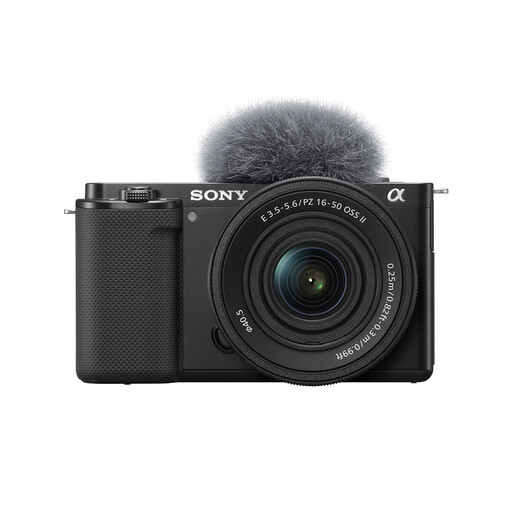
Sony ZV-E10K with 16–50mm Power Zoom lens
Consider this interchangeable-lens camera if you want to frame tabletop accessories and also make occasional video clips.
The bundle names a 16–50mm Power Zoom lens. Check that lens’s maximum magnification and minimum focusing distance against your smallest accessory before buying for detailed close-ups.
Joybuy
Common questions
Do I need a 1:1 macro lens for costume accessories?
Choose a 1:1 lens if minute features need to occupy much of the image. Sony and Nikon specify 1:1 for the cited lenses; Canon specifies up to 1:2 for its cited RF 35mm lens, which may be sufficient when you mainly photograph larger accessories or wider arrangements.
Should I choose the camera body or lens first?
Choose the close-up capability you need first, then find a compatible body that suits your camera placement and video plans. Check the lens mount as well as its magnification and focusing distance.
Will a kit lens photograph tiny jewellery details?
Check the exact kit lens before depending on it for tiny details. Compare its stated maximum magnification and minimum focusing distance with the framing you need for your smallest item; the camera body name cannot answer that question.
How should I dispose of an old camera or rechargeable battery?
Use an appropriate electrical-waste or battery collection point rather than household rubbish for items bearing the crossed-out wheelie-bin symbol. GOV.UK gives this advice for electrical products and batteries.


