Who is this for?

Leisure photographers who visit different locations

If you want footage from trips, walks or family days out, consider where you normally fly before choosing a drone. Low weight does not remove airspace restrictions: the UK Civil Aviation Authority says they apply to drones up to 250g too.

Landscape and travel shooters focused on framing

If camera options matter more to you than a lightweight setup, compare the shots each model can provide alongside the flying conditions that apply to its weight and class mark. DJI lists different camera configurations for its Mini 4 Pro and Air 3S.

Activity videographers seeking simpler capture

If you want to film family activities or outdoor recreation, compare control methods and bundle contents as well as camera features. HOVERAir presents its X1 PRO for family shooting; that positioning does not establish how it will perform in your intended setting.

What to check before buying

Concern Buying checks Who this matters to
Fit for your flying locations Check take-off weight with the intended battery, the aircraft’s class mark and the rules for your usual locations. The UK Civil Aviation Authority says airspace restrictions apply even below 250g. If I film on trips or family outings, I need a drone I can use at the places I actually visit, rather than assuming its low weight permits every flight. About 36% of consumers put location and legal fit first.
Image and framing options Compare the exact model’s cameras, recording modes and stabilisation, then check whether its weight and marking suit your intended flights. For planned landscape footage, I might value a choice of focal lengths more than a compact aircraft. Image and framing options are the primary concern for about 29% of consumers.
Shooting continuity Check the included battery count and charging equipment. Treat a stated maximum flight time as a manufacturer figure, not a promised outdoor duration. When filming over a longer outing, I want to know how battery changes and charging will fit the session. About 21% of consumers make shooting continuity their main priority.
Simple self-filming Check the bundle’s control method and camera-recording controls, including how you will avoid filming others intrusively. If I mainly want activity or family clips, I care whether the controls suit that kind of filming more than having every manual framing option. Ease of self-filming comes first for about 14% of consumers.

Buying mistakes to avoid

  • Assuming that under 250g means no IDs

    For outdoor UK use, the UK Civil Aviation Authority requires a Flyer ID for a drone weighing 100g or more and an Operator ID for one weighing 100g or more if it has a camera.

    Check the weight of the configuration you intend to fly and whether it has a camera before arranging the applicable IDs.

  • Relying on a class-mark claim in a listing

    The UK Civil Aviation Authority says new drone models placed on the UK market from 1 January 2026 must have a UK class mark. A model description alone does not identify the mark on the aircraft supplied to you.

    Confirm the physical mark and documentation for the exact aircraft before deciding which flying category applies.

  • Choosing a larger drone before checking your usual locations

    A heavier aircraft’s camera features do not determine where it can be flown. Its weight, class marking and intended flight location all affect the operating route.

    List the places where you expect to film, then check the applicable UK Civil Aviation Authority guidance against the exact aircraft.

  • Planning a session around maximum flight time

    Manufacturer flight-time figures are stated maximums under test conditions, not a guarantee for an outdoor filming session.

    Check the supplied batteries and charging equipment, and allow a margin rather than scheduling flights to the stated maximum.

Brands to consider for these drone types

DJI

DJI’s Mini and Air lines provide examples of portable and larger conventional camera drones.

  • DJI lists the Mini 4 Pro below 249g and the Air 3S at 724g; their stated camera configurations give shoppers different framing options to compare.
  • Check the supplied aircraft’s configuration and class mark rather than assuming a model-level specification settles where you may fly it.

HOVERAir

HOVERAir presents the X1 PRO for family and activity-oriented shooting.

  • Its UK product range includes bundles with additional batteries and different control accessories.
  • Compare the exact bundle and aircraft weight; the brand’s intended-use description is not evidence of tracking performance or permission to fly at a particular location.

Potensic

Potensic’s ATOM is a folding camera-drone option for shoppers considering a sub-250g model.

  • Potensic lists the ATOM below 249g with an EU C0 mark, 4K video and a 3-axis gimbal.
  • Check the mark on the supplied aircraft and the IDs required for its camera-equipped configuration. Potensic’s stated flight-time maximum is measured in low-altitude, windless conditions.

Joybuy camera-drone selections

These DJI Air 3S configurations are options for planned outdoor photos and video when you want to compare camera framing and included equipment. Check the supplied aircraft’s class mark and your intended flying locations before choosing either one.
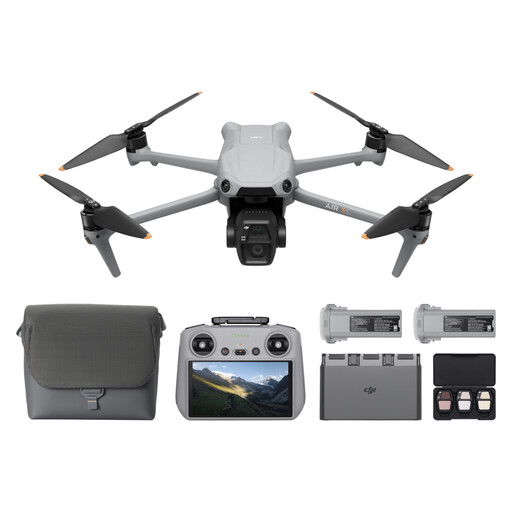
DJI Air 3S Fly More Combo with RC 2 controller

DJI Air 3S Fly More Combo (RC 2)

Consider this bundle if you want wide-angle and medium-tele framing for planned filming, with three batteries listed for the package. Its title specifies a 1-inch CMOS wide-angle camera, 4K/60fps video and an RC 2 screen controller.

DJI lists the Air 3S model at 724g. For outdoor UK use, a camera drone at that weight requires a Flyer ID and an Operator ID; confirm the supplied aircraft’s class mark and flight category before buying.

View on Joybuy
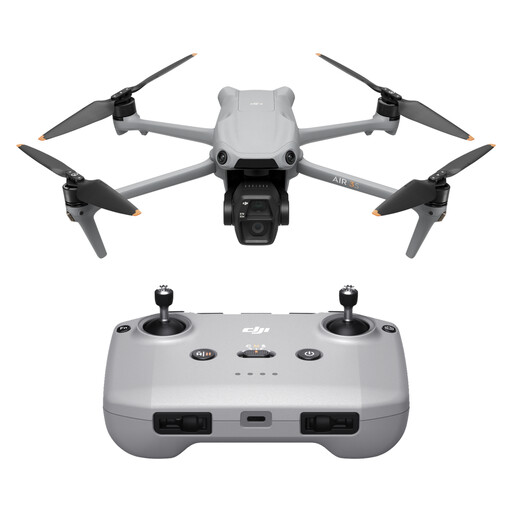
DJI Air 3S with RC-N3 controller

DJI Air 3S (RC-N3)

Consider this configuration if you want the Air 3S’s dual-lens framing with an RC-N3 controller. Its title specifies a 1-inch CMOS wide-angle camera, 4K/60fps HDR video and a stated maximum flight time of 45 minutes; that maximum is not a guaranteed outdoor duration.

DJI lists the Air 3S model at 724g. A camera drone at that weight requires both UK IDs for outdoor use; confirm the supplied aircraft’s class mark, bundle contents and charging equipment before buying.

View on Joybuy

Common questions

Does a camera drone below 250g need UK IDs?

Yes, if it weighs 100g or more: for outdoor use, the UK Civil Aviation Authority requires both a Flyer ID and an Operator ID at that weight when the drone has a camera. Check the weight of the configuration you will fly, not just a headline model weight.

Can I fly a drone below 250g anywhere in the UK?

No. The UK Civil Aviation Authority says airspace restrictions apply to all drones, including those up to 250g. Check the location and applicable operating rules before each flight.

What class mark should I check when buying?

Check the mark and documentation on the exact aircraft supplied. The UK Civil Aviation Authority says any new drone model placed on the UK market from 1 January 2026 must have a UK class mark; the aircraft’s marking, weight and intended use matter when checking its permitted flying category.

Is insurance compulsory for leisure drone flying?

The UK Civil Aviation Authority says insurance is optional when flying only for recreation, sport or as a hobby. If your intended use extends beyond that scope, check the insurance requirements for that activity rather than assuming the leisure rule applies.

What if my drone footage includes other people?

Plan your filming with other people’s privacy in mind. The UK Civil Aviation Authority warns that photos or recordings in which people can be identified may be subject to data-protection rules, including when their appearance in the footage was unintentional.