For photographs of complete embroidered patches, choose a camera and lens that can frame the patch closely, then give as much attention to stable positioning and controlled lighting as to the camera body. If individual stitches, raised thread or tiny lettering must fill the image, check whether a compatible macro lens is needed; getting more of a close-up subject sharp may also take several focus positions and extra editing.
Who is this for?
Patch-detail sellers
If listing photographs need to show borders, small lettering and raised stitches in close crops, prioritise the lens’s close-focus and magnification specifications. A camera body’s resolution alone will not tell you how large the detail can appear in the frame.
Repeatable catalogue photographers
If you photograph many patches, consistent framing, light and background matter across the collection. Adobe’s product-photography guidance recommends controlled lighting and a clean background; a stable tabletop position helps you repeat the setup.
Flexible maker-content creators
If you need whole-patch photographs alongside occasional process clips, consider both still-image needs and video features. Check the supplied lens separately: a screen or video mode cannot establish whether it will frame a small patch closely enough.
What matters when choosing?
Decide how much of the patch must fill the image before choosing a lens and camera body. That distinction separates occasional whole-patch photographs from repeatable catalogue work and close inspection of individual stitches.
An existing phone
Consider it when: Occasional whole-patch images already look sharp enough at the framing and output size you need.
Trade-off: Check its close-up framing before relying on it for tiny lettering or stitch-level crops.
Interchangeable-lens camera with a close-focusing kit lens
Consider it when: You mainly photograph complete patches and want the option to change lenses later.
Trade-off: Canon UK specifies 0.25x maximum magnification for the RF-S 18-45mm lens; that is not 1:1 macro magnification.
Interchangeable-lens camera with a macro lens
Consider it when: Individual stitches, edge finish or small lettering must appear large in the photograph.
Trade-off: A stable setup takes more preparation, and focus stacking adds capture and editing work when more of the raised embroidery needs to look sharp.
| Concern |
What to check |
Who this matters to |
| Stitch detail |
Check the exact lens’s minimum focus distance and maximum magnification; consider a compatible macro lens for larger stitch-level images. |
I need small lettering and raised stitches to remain clear in close crops, not just the patch’s overall shape. Around 32% of consumers put stitch detail first. |
| Catalogue consistency |
Plan for stable positioning, controlled lighting and a neutral background; check the camera controls you intend to use for exposure and white balance. |
When photographing a batch, I want thread colours and framing to stay consistent from one patch to the next. Catalogue consistency is the main concern for around 31% of consumers. |
| Getting started |
Compare the exact body-only and kit contents, including the lens and charger; check whether the lens reaches your required framing. |
I want to start taking whole-patch photographs without assuming that every accessory or a macro lens comes in the box. For around 25% of consumers, getting started with the right kit is the priority. |
| Stills and video |
Check the model’s screen and video modes alongside the lens needed for your still photographs. |
I photograph finished patches but also want to record occasional making or packing clips. Around 12% of consumers primarily need that mixed stills-and-video workflow. |
Common buying mistakes
-
Choosing by megapixels alone
Resolution does not replace the close framing needed to show stitch detail. Canon UK specifies a 15 cm minimum focus distance and 0.25x maximum magnification for its RF-S 18-45mm lens; neither figure describes the camera body’s pixel count.
Check the specifications of the exact lens in the bundle, especially maximum magnification, before deciding whether a dedicated macro lens is necessary.
Moving to macro work may also mean arranging a stable camera support and lighting.
-
Photographing a catalogue under changing light
Changing light and background conditions can make patches look inconsistent between photographs. Adobe recommends controlled lighting and a clean background for product photography, and notes that neutral white matte paper can reduce reflections and colour casts.
Set up a repeatable tabletop position and lighting arrangement before replacing a camera body solely to address inconsistent images.
Changing conditions can mean extra retakes and editing.
-
Assuming every kit has the same contents
Nikon UK offers the Z50II in body-only and 16-50mm kit configurations, so the lens depends on which version you select. Its body-only listing also states that a charger is not included.
Read the box contents of the exact configuration and check what you need for your tabletop setup before ordering.
-
Confusing a warranty with consumer rights
A voluntary warranty does not replace rights relating to faulty or misdescribed goods. Citizens Advice distinguishes those legal rights from the additional cover a warranty or guarantee may provide.
Keep the listing and proof of purchase, and check both the seller’s details and the warranty terms for the camera you choose.
Relevant brands to consider
Canon
An EOS R route to consider if you want a documented close-focusing kit lens for whole-patch photographs.
- Canon UK lists the EOS R50 with a 24.2 MP APS-C sensor and vari-angle touchscreen, and specifies 15 cm minimum focus distance and 0.25x maximum magnification for the RF-S 18-45mm lens.
- The RF-S 18-45mm lens’s 0.25x specification is not 1:1 macro magnification; check another lens if stitches must fill much more of the frame.
Nikon
A Z-mount route to consider when comparing body-only and compact kit-lens configurations.
- Nikon UK lists a Z50II kit with the Z DX 16-50mm lens and specifies a 0.2 m minimum focus distance for that lens.
- Minimum focus distance alone does not tell you how large a stitch will appear in the image; check magnification for the detail you need.
Sony
An E-mount route to consider if manual focus adjustment is important for stationary close-up subjects.
- Sony UK describes Focus Magnifier on the α6400 as an aid to fine focus adjustment, including for macro shots.
- That focusing aid does not establish the close-focus or magnification capability of a particular supplied lens.
Fujifilm
An X-mount interchangeable-lens route for photographers assessing still-image features alongside their lens choice.
- Fujifilm X Series UK lists the X-M5 with a 26.1 MP APS-C sensor and X mount.
- Those body specifications do not establish close-up framing; assess the exact lens selected for patch photographs.
Joybuy camera choices
These interchangeable-lens camera bundles are relevant to whole-patch photographs and, for the ZV-E10 II K, a mixed stills-and-video workflow. Before choosing one for stitch-level images, check the close-focus and magnification specifications of its exact supplied lens.
 No image available
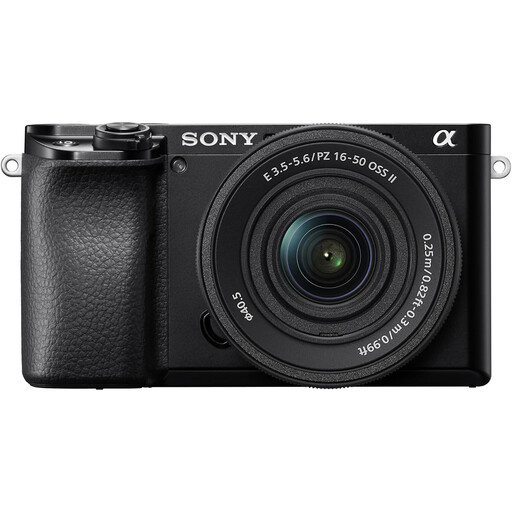
Sony A6400 with 16–50mm Power Zoom lens
Consider this bundle for whole-patch stills if you also want the α6400’s focus-adjustment aid for stationary subjects. Sony UK documents Focus Magnifier for the α6400; check the supplied lens’s minimum focus distance and maximum magnification against your required patch detail.
View on Joybuy
 No image available
Sony Alpha 7 III with 28–70mm zoom lens
Consider this full-frame camera and zoom bundle for whole-patch photographs if it meets your wider camera-system needs. Check the supplied 28–70mm lens’s maximum magnification before relying on it for close stitch detail.
View on Joybuy
 No image available
Sony A6700 with 16–50mm lens
Consider this APS-C interchangeable-lens bundle for whole-patch stills with the option to choose a different lens later. Check the supplied 16–50mm lens’s minimum focus distance and maximum magnification if small lettering or stitches must fill the frame.
View on Joybuy
 No image available
Sony Alpha ZV-E10 II K with 16–50mm Power Zoom kit lens
Consider this APS-C bundle if you photograph finished patches and also record process clips. The product title specifies a 16–50 mm f/3.5–5.6 kit lens and 4K60p video; check the lens’s close-focus specifications separately for stitch-level stills.
View on Joybuy
 No image available
Sony A6100 with 16–55mm zoom lens
Consider this APS-C camera bundle for whole-patch stills if an interchangeable-lens system suits your plans. Confirm the exact supplied zoom lens and check its minimum focus distance and maximum magnification before buying it for close detail.
View on Joybuy
Frequently asked questions
Do I need a macro lens to photograph embroidered patches?
Not necessarily for photographs of complete patches: a lens that focuses closely enough for your framing may meet that need. For images in which individual stitches or tiny lettering occupy much of the frame, check a dedicated macro lens’s magnification; Nikon UK explains that focus stacking can extend sharpness across a close-up subject by combining photographs focused at different points.
What should I change before replacing my camera body?
Start with the lighting, background and camera position if patch photographs look inconsistent. Adobe recommends a controlled environment with good lighting and a clean background, and notes that neutral white matte paper can reduce reflections and colour casts.
Does a camera warranty replace my rights if there is a fault?
No. Citizens Advice says warranties and guarantees add to legal rights rather than replacing them, and identifies rights where goods are faulty, not fit for purpose or not as described. Keep your proof of purchase and the product listing, and check the seller’s warranty terms separately.


