Colour-critical catalogue makers
If you photograph a range of swatches, repeatable fabric colour and neutral background whites matter more than resolution alone. Plan for consistent lighting, a neutral reference and an editable image workflow.


Choose the lens for the smallest fabric detail you need to photograph, then choose a camera body and colour workflow to suit the finished images. A close-focusing lens may be enough for larger swatches, while frame-filling images of fibres or small weave areas call for a compatible 1:1 macro lens; higher resolution is most relevant when you need substantial crops or detailed master files. Keep lighting consistent and use a neutral reference under the same lights when repeatable fabric colour matters.
If you photograph a range of swatches, repeatable fabric colour and neutral background whites matter more than resolution alone. Plan for consistent lighting, a neutral reference and an editable image workflow.
If fibres, stitching or small surface defects must fill the frame, check the lens’s stated magnification and the space it leaves for lighting the fabric.
If you routinely crop far into a texture photograph or retain detailed master files, a higher-resolution body is more relevant than it is for swatches photographed at their final framing.
Decide how small an area must fill the frame and how consistently its colour must reproduce before paying attention to extra resolution. A camera body’s pixel count cannot establish what its included lens can capture up close.
| Concern | What to check | Who this matters to |
|---|---|---|
| Consistent colour and whites | Check the still-image editing workflow and whether you can photograph a neutral reference under your actual lighting. | When photographing many swatches, I need the fabric colours and background whites to stay consistent between setups. Around 42% of consumers put colour consistency first. |
| Small weave and fibre details | Compare the exact lens’s maximum magnification and working distance, including room for lights. | If tiny fibres or stitching must fill the frame, I need sufficient close-focus capability without blocking the light. Close detail is the main concern for around 33% of consumers. |
| Crops and detailed master files | Check recorded image dimensions and distinguish a normal exposure from a multi-shot resolution mode. | I need room to crop one photograph into detailed views while retaining a useful master file. For around 25% of consumers, crop latitude takes priority. |
Canon UK specifies 0.5x magnification for its RF 24mm F1.8 Macro, while Nikon UK specifies 1:1 for the NIKKOR Z MC 50mm f/2.8. Those figures describe different close-up capabilities; a camera body alone does not settle whether a small weave area will fill the frame.
Identify the smallest area you need to show, then check the exact included or planned lens’s magnification, focusing distance, working distance and mount compatibility.
A separately chosen close-focusing or macro lens may be needed for the framing you want.
Changing light can alter how a camera reproduces white, as Calibrite explains. A white-looking backdrop alone does not establish that the fabric colour is repeatable across photographs.
Photograph a neutral reference in the same light as the fabric and keep the lighting and editing workflow consistent across the range.
Using a reference target adds a shot and an editing step to each changed lighting setup.
High magnification helps with small details, but Nikon UK notes that depth of field becomes extremely narrow. Sony UK specifies a 2.4cm minimum working distance for its E 30mm F3.5 Macro, which also leaves little clearance for lighting at that setting.
Reserve 1:1 framing for details that need it. For a whole swatch, choose a framing distance and aperture that keep the required fabric area acceptably sharp.
Fujifilm explains that the X-T5’s 160MP Pixel Shift mode moves the sensor 20 times. It is a different process from an ordinary single-shot image and calls for a static setup.
Judge routine work by the camera’s normal still-image output; consider Pixel Shift only when the fabric and camera can remain fixed throughout the capture.
Canon’s EOS R system offers an APS-C body and RF close-focusing lens options. Canon UK specifies a 24.2MP APS-C sensor for the EOS R50 and 0.5x magnification for the RF 24mm F1.8 Macro.
Nikon Z is worth considering when a compatible dedicated macro lens is central to the setup. Nikon UK specifies 1:1 magnification for the NIKKOR Z MC 50mm f/2.8.
Sony’s APS-C E-mount range includes the 26.0MP α6700 and the E 30mm F3.5 Macro, which Sony UK specifies as a 1:1 lens.
Fujifilm’s X-T5 is relevant when crops and detailed master files are the priority. Fujifilm lists 40.2MP output and a separate 160MP Pixel Shift Multi-Shot mode.
These interchangeable-lens cameras come with zoom lenses for framing fabric photographs. Before relying on either kit for frame-filling weave or fibre shots, check the included lens’s close-focus specifications; a compatible macro lens may be the more relevant purchase for that work.
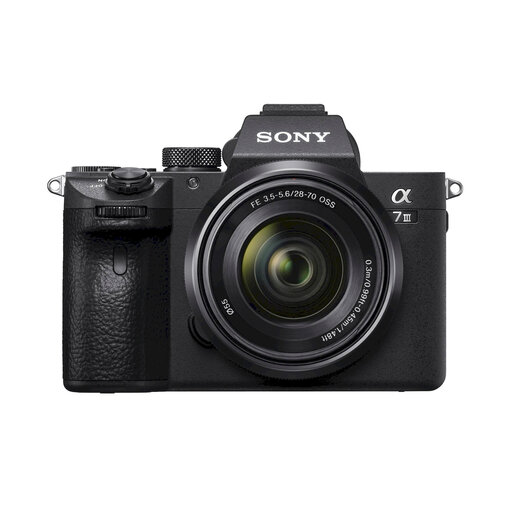 No image available
A full-frame mirrorless kit to consider for fabric photographs where you want adjustable framing. Check the included 28–70mm lens’s maximum magnification and focusing distance before choosing it for small weave details.
 No image available
An APS-C mirrorless kit to consider for fabric photographs when zoom framing suits the work. Its title specifies 26 megapixels and an included 16–50mm f/3.5–5.6 lens; check that lens’s magnification and focusing distance before relying on it for close weave views.
Check the lens first if small fibres, stitching or weave sections must fill the frame: the body’s resolution cannot make a lens focus closer. Compare the exact lens’s magnification and working distance, then choose a compatible body with the image output you need.
Do not rely on it alone when photographs need consistent colour across changing setups. Calibrite explains that lighting changes affect white reproduction; photograph a neutral reference under the light used for each setup and apply a consistent editing workflow.
The X-T5 is worth considering when substantial crops or detailed master files are part of the job. Fujifilm lists a 7728 × 5152-pixel large image size; its separate 160MP Pixel Shift mode combines multiple captures and is suited to a static setup rather than routine single-shot work.
Keep your order record and contact the seller about the fault rather than assuming a manufacturer warranty is your only route. GOV.UK states that items bought in a sale retain the same refund rights as full-price items; a change-of-mind return is a separate question from a remedy for faulty goods.
Use an appropriate electrical-waste route rather than putting it in ordinary household waste. GOV.UK provides guidance on electrical equipment and retailer take-back responsibilities; check the retailer’s arrangements or your local authority’s collection options.