For stationary folded textiles, choose a camera and compatible lens that suit a fixed shooting position, and prioritise controllable white balance and a repeatable lighting setup. RAW capture gives you more room to adjust files when consistent fabric colour matters; action autofocus and burst speed are less relevant to this task. Check the exact lens and accessories included before choosing a body.
Who is this for?
Colour-critical textile sellers
If fabric shades and neutral whites need to look consistent across listings, controllable white balance and a RAW editing workflow matter more than burst speed. Nikon UK explains the roles of white balance and RAW files in adjusting colour.
Small-batch catalogue photographers
If you photograph many folded items from a fixed position, a repeatable arrangement of camera support, lighting and exposure can help you keep the setup consistent between products.
Occasional online listers
If you photograph items only occasionally, assess the lens, kit contents and space needed for a simple fixed setup before paying for features aimed chiefly at moving subjects.
What matters when choosing?
Work out how you will light and position the textile, then choose a camera, lens and file workflow that you can use consistently.
| Concern | What to check | Who this matters to |
|---|
| Fabric colour and neutral whites |
Check white-balance controls and RAW capture; plan to keep the lighting consistent. |
If fabric shades must stay believable across listings, I want to correct colour without relying on a creative preset. Around 29% of consumers put colour consistency first. |
| Even white background |
Plan stable camera support and separate checks of background and textile exposure. |
When photographing pale fabric, I need the backdrop to look white without losing detail in the folds. A further roughly 29% of consumers prioritise background consistency. |
| Weave, seams and edges |
Check lens choice and framing at the intended shooting distance; review focus on a test image. |
If buyers need to inspect stitching or texture, I care most about showing those details clearly. About 24% of consumers place visible textile detail first. |
| Repeatable workflow |
Compare exact kit contents and confirm that your chosen file format fits your editing routine. |
For a batch of similar items, I want to set up once and handle the files consistently. Around 18% of consumers chiefly value a manageable workflow. |
Buying pitfalls
-
Buying the body before planning the shooting station
A camera alone will not make the backdrop evenly white or keep fabric colours consistent. Canon UK’s high-key lighting guidance distinguishes lighting the background from lighting the subject, while Nikon UK explains the role of white balance.
Plan stable support, lighting, a background and a test textile before settling on a body and compatible lens.
Support, lights, stands, storage and editing tools may need to be arranged separately.
-
Leaving white balance unchecked between batches
Changing light can change the apparent colour of white and coloured fabrics.
Set white balance under the lighting you will use, recheck it when that lighting changes and retain RAW files if later colour adjustments are important.
-
Assuming a body listing is a complete kit
Canon UK’s EOS R50 body listing says a USB-C charger is not included; Nikon UK’s Z50II body listing also says a charger is not included.
Check the contents of the exact listing, particularly the lens and charger, before deciding whether it is ready for your setup.
-
Treating a creative colour profile as a colour reference
A styled image can look appealing without faithfully representing a textile shade. Nikon’s Picture Controls offer rendering choices, not proof of accurate fabric colour.
Use a restrained workflow when colour matters, photograph a known reference and review the exported image before publishing.
Relevant brands to consider
Canon
The EOS R50 is an APS-C interchangeable-lens option for a compact product-photo setup.
- Canon UK lists a 24.2 MP APS-C sensor, vari-angle touchscreen and Wi-Fi/Bluetooth for the EOS R50 body.
- Canon UK says the listed body does not include a USB-C charger; check the lens and other contents of the exact kit.
Nikon
The Z50II is an APS-C option for photographers who value a viewfinder preview and a RAW editing workflow.
- Nikon UK says its electronic viewfinder previews the effect of setting changes.
- Picture Controls are not a substitute for checking fabric colour under your lighting. Nikon UK’s listed Z50II body does not include a charger.
Sony
The Alpha 6400 is an APS-C E-mount option worth considering if you already own compatible lenses.
- Sony UK describes autofocus and tracking features on the Alpha 6400.
- For motionless folded textiles, decide whether compatible lenses and the shooting workflow matter more to you than action-oriented features.
Joybuy camera choices for a fixed textile setup
These interchangeable-lens cameras offer different lens-bundle and body options for photographing stationary textiles. Whichever you consider, plan the lighting and camera support separately and check the exact kit contents.
 No image available
Sony Alpha 7 III Full-Frame Camera with 28–70mm Zoom Lens
Consider this lens-equipped option if zoom framing suits your fixed textile setup. The product title specifies a full-frame camera and 28–70mm zoom lens; confirm the controls and accessories needed for your colour workflow.
View on Joybuy
 No image available
Sony Alpha ZV-E10 II K APS-C Camera with 16–50 mm f/3.5–5.6 Power Zoom
The included zoom gives you a lens option to assess for framing folded items. The title specifies a 26 MP APS-C camera and 16–50 mm f/3.5–5.6 lens; check exposure controls and the exact box contents if you need a repeatable batch setup.
View on Joybuy
 No image available
Sony A6700 APS-C Camera with 16–50mm Lens
Consider this lens-equipped camera if the zoom covers your intended framing distance. Its title specifies an APS-C body and 16–50mm lens; confirm white-balance and exposure controls for your textile workflow.
View on Joybuy
 No image available
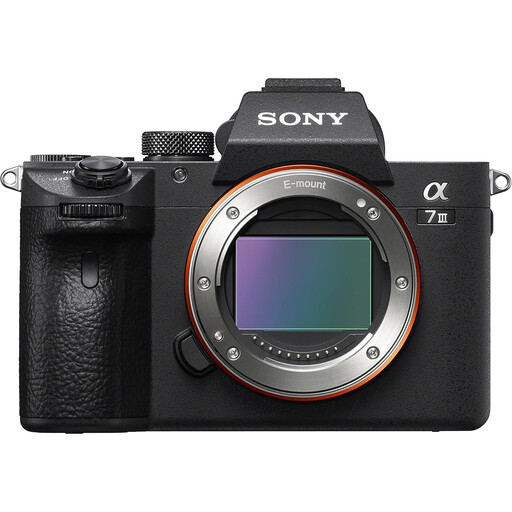
Sony Alpha 7 III Full-Frame Camera, Body-Only Listing
This listing may suit someone arranging a separate compatible lens for a fixed setup. Its title says body only, while its description mentions a 28–70 mm lens; confirm exactly what is included before buying.
View on Joybuy
 No image available
Sony A6400 APS-C Camera with 16–50mm Power Zoom Lens
This lens-equipped E-mount option is relevant if you want to work within a Sony lens setup. The title specifies an APS-C camera and 16–50mm power zoom; confirm RAW, white-balance and exposure controls if consistent catalogue colour is essential.
View on Joybuy
Frequently asked questions
Do I need an action-focused camera for folded textiles?
No action-focused feature is essential for a stationary textile. Prioritise lighting, a suitable lens, stable positioning and consistent exposure and white balance before comparing burst rates or tracking features.
Should I use RAW or JPEG for fabric listings?
Use RAW if you need room to adjust colour and exposure across a catalogue and can accommodate the editing workflow. Nikon UK explains that RAW retains unprocessed sensor data; JPEG can be more convenient when you need a ready-to-use file.
How can I keep the background white without washing out the fabric?
Set white balance for stable lighting and test the background and textile exposures separately. Canon UK’s high-key lighting guidance describes lighting a backdrop more brightly than the subject; check a test image to make sure folds and pale fabric still retain visible detail.
What should I check before ordering a camera kit online?
Confirm the exact model and variant, lens compatibility and what is included in the box, especially the lens and charger. Also review the seller’s delivery and returns information for that order rather than assuming two similarly named body and kit listings contain the same items.


