What matters when buying
Start with the size of the folded item and the space above your table, then decide whether colour-consistent stills, close detail or video place additional demands on the setup.
| Concern |
What to check |
Who this matters to |
| Consistent colour |
Check your lighting and file workflow; photograph familiar fabric colours in a repeatable setup. |
If my catalogue images vary in colour between sessions, buyers may struggle to judge the fabric. Around 36% of consumers put repeatable colour first. |
| Whole-item framing |
Measure your largest folded item and camera-to-table height, then check the proposed lens’s field of view at that distance. |
I need the whole fold, its edges and its proportions in one image without moving the camera beyond my available space. For around 29% of consumers, full-item framing is the primary need. |
| Fabric detail |
Check the exact lens’s minimum focus distance, magnification and camera-mount compatibility. |
Stitching or weave may be the detail a buyer needs to inspect, so an overall image alone will not do. Roughly 21% of consumers prioritise close detail. |
| Stills and demonstrations |
Decide whether you need video, and assess the screen and focusing behaviour in your planned demonstration setup. |
If I also show how an item folds or handle it on camera, the setup must work for moving subjects as well as stills. Around 14% of consumers put this combined use first. |
Joybuy camera options
These interchangeable-lens camera packages provide starting points for overhead textile stills, with video options if you also make demonstrations. Check each included lens against your item size, shooting height and need for close detail.
 No image available
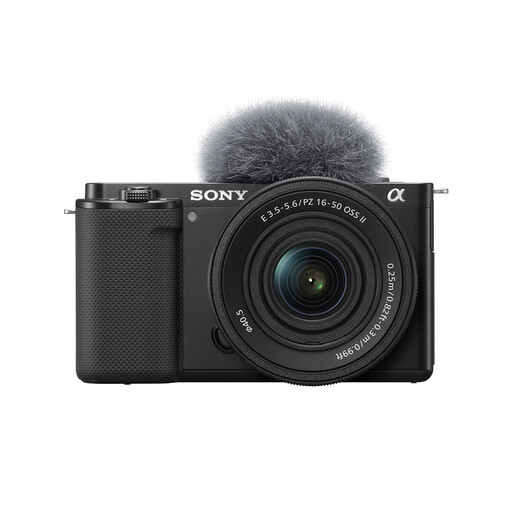
Sony Alpha ZV-E10 II K with 16–50 mm f/3.5–5.6 Power Zoom lens
Consider this APS-C kit if you want to test varied tabletop framing with an included zoom and also make video. Its stated 26-megapixel resolution does not determine textile colour accuracy. Check that the lens covers your largest folded item from your mounting height and focuses closely enough for any stitch or weave images.
View on Joybuy
 No image available
Sony Alpha 7 III full-frame camera with 28–70 mm zoom lens
The included zoom gives you a lens with which to assess full-item framing before considering other lenses. Check its field of view at your available overhead height and its close-focus capability if construction details are part of the shot list. Keep lighting and colour handling consistent across sessions.
View on Joybuy
 No image available
Sony A6700 APS-C camera with 16–50 mm lens
This kit offers an included zoom for initial overhead-framing tests. Check whether the 16–50 mm lens includes your largest item at the available camera height and can focus close enough for fabric details. If you intend to edit RAW stills, confirm the file options for the exact camera offer.
View on Joybuy
 No image available
Sony A6400 APS-C camera with 16–50 mm Power Zoom lens
The included zoom is a starting point if you need a complete folded-item view from above. Test its framing at your shooting height, and check its minimum focus distance before relying on it for weave or stitch close-ups. Confirm the still-file options if RAW editing is part of your workflow.
View on Joybuy
 No image available
Sony ZV-E10K with 16–50 mm Power Zoom lens
Consider this interchangeable-lens kit if demonstrations will accompany your textile stills. Check whether its included zoom frames the whole folded item from your chosen height and provides the close focus needed for detail images. Confirm still resolution and file-format options if cropping or RAW editing matters to you.
View on Joybuy
Frequently asked questions
Do I need a 26MP camera for folded-textile photographs?
No particular megapixel figure settles the choice. Canon UK specifies 24.2MP for the EOS R50 and Sony UK specifies 26.0MP effective still resolution for the ZV-E10 II, but assess resolution alongside the lens, your intended cropping, overhead framing and lighting. Adobe UK identifies clarity, colour accuracy and context as important to product images.
Should I buy a macro lens as well as a standard zoom?
Plan for a close-focusing lens if you need distinct images of fibres, stitching or weave; do not assume the lens used for the whole folded item will also capture those details. Check the exact lens’s minimum focus distance, magnification and compatibility with your camera before buying another lens.
Can I cancel a UK online camera order if the setup does not suit me?
For eligible UK distance sales, GOV.UK says consumers can cancel up to 14 days after delivery without giving a reason. Check whether an exception applies and follow the seller’s cancellation instructions for your order. Change-of-mind cancellation is separate from remedies for faulty, damaged or misdescribed goods.
What should I do with an old camera or battery in the UK?
Do not put end-of-life electrical products or batteries in household rubbish. GOV.UK advises using appropriate electrical and battery recycling routes; check the collection options available to you and follow the relevant battery-handling instructions.


