For folded textiles in a home studio, an interchangeable-lens camera with a standard zoom is a starting point if it frames both the whole item and the details you need. Choose a closer-focusing lens when weave, stitching or labels must fill the frame; for static shots, prioritise repeatable lighting and stable support over action-focused features.
Who needs this setup?
Online textile sellers making repeatable catalogue images
Photographing many folded items against the same backdrop calls for consistent framing and a file workflow that allows colour adjustments. Check whether your chosen camera and lens cover both the full item and any crops needed for listings.
Makers documenting texture and workmanship
If weave, seams, embroidery or labels need their own images, the lens’s close-focus distance and magnification matter alongside camera resolution.
Small studios making photos and product videos
When the same setup also records demonstrations, check the video format and audio connections you will use without overlooking the lens, lighting and support needed for still photographs.
What matters when choosing?
Camera with a standard zoom kit
Choose when: You need full folded-item photographs and occasional detail views that the supplied lens can frame.
Trade-off: A kit zoom’s close-focus figures may not give stitches or fibres enough prominence in the frame.
Camera with a separately chosen close-focusing lens
Choose when: Small swatches, weave or labels regularly need to occupy much of the photograph.
Trade-off: You must choose a lens in the correct mount and allow for another item to store and set up.
| Concern | What to check | Who this matters to |
|---|
| Consistent colour and exposure |
Check RAW capture and manual exposure controls; plan a repeatable lighting and white-balance process. |
If I photograph many items for listings, I want their colours and exposure to remain consistent from one session to the next. Around 36% of consumers put that consistency first. |
| Close textile detail |
Check the exact lens’s minimum focus distance and maximum magnification, as well as the resolution needed for your crops. |
When stitches or weave must be clearly visible, I need to know how tightly the lens can frame them. Detail and cropping are the main concern for around 29% of consumers. |
| Small-studio setup |
Check the body-and-lens size, storage arrangement and framing at your available working distance. |
If I put the equipment away after each session, I want a manageable kit that still fits the whole folded item in shot. Around 21% of consumers prioritise a simple setup in limited space. |
| Photos and video |
Check the recording format and audio connections needed for the demonstrations you plan to make. |
If I also film demonstrations, I need video features that match those clips rather than features chosen solely for still listings. Making both photos and video comes first for around 14% of consumers. |
Buying pitfalls
-
Choosing by megapixels while ignoring the lens
Resolution can help with cropping, but it does not determine how large a small textile detail appears in the original frame. Canon UK specifies 15 cm close focus and 0.25× magnification for its RF-S 18-45mm lens; Sony UK specifies 0.215× maximum magnification for its E PZ 16-50mm OSS II.
Decide how small a detail you need to show, then check the selected lens’s minimum focus distance and maximum magnification.
If the kit zoom cannot frame that detail tightly enough, you may need a separate close-focusing lens.
-
Prioritising action autofocus for a static subject
Product-review focusing features can help with demonstrations, but folded textiles remain still. They do not replace a stable camera position or controlled lighting.
Choose autofocus and video features for the clips you intend to make; for still photographs, establish the lens, lighting and support you need first.
-
Expecting RAW files to fix inconsistent lighting
RAW capture gives you more editing flexibility, but changing light and white balance can still make a series of textile images inconsistent.
Keep the lighting and white-balance process repeatable, then use editing to refine the photographs.
A RAW workflow also takes editing time and may call for colour-management tools.
Relevant brands to consider
Canon
The EOS R50 with an RF-S standard zoom is one compact interchangeable-lens route for whole-item photographs and moderate detail views.
- Canon UK lists the EOS R50 at approximately 375 g with card and battery, and specifies 15 cm close focus and 0.25× magnification for the RF-S 18-45mm lens.
- Check whether that magnification frames your smallest textile details closely enough.
Nikon
The Z50II and Z DX standard zoom are relevant when textile stills may be joined by product demonstrations.
- Nikon UK lists Product Review Mode and external microphone and headphone sockets for the Z50II, and a 0.2 m minimum focus distance for the NIKKOR Z DX 16-50mm lens.
- A minimum focus distance alone does not show how large a small stitch will appear in the frame; check the lens’s magnification for your intended shot.
Sony
The Alpha 6400A and E-mount standard zoom illustrate a route for editable stills alongside video.
- Sony UK specifies 24.2-megapixel stills, 14-bit uncompressed RAW and PAL 4K modes for the Alpha 6400A. It specifies 0.215× maximum magnification for the E PZ 16-50mm OSS II lens.
- For photographs dominated by very small fibres or stitches, compare a closer-focusing lens in the same mount.
Fujifilm
The X-M5 is a compact APS-C body option when you want to choose an X-mount lens separately for your framing needs.
- Fujifilm specifies 26.1 million effective pixels for the X-M5; its UK shop lists an approximate body weight of 355 g.
- Those body specifications do not establish close-up capability. Check the particular lens you intend to use.
Joybuy camera options
These interchangeable-lens cameras include standard-zoom configurations for folded-item photographs, with video options on some models. Check the supplied lens’s close-focus capability before relying on any kit for prominent weave or stitch images.
 No image available
Sony Alpha ZV-E10 II K with 16–50 mm f/3.5–5.6 Power Zoom
This APS-C kit is relevant if you make folded-item stills and also plan to record product video. Its title specifies 26 megapixels and 4K60p recording; check the supplied lens’s close-focus figures for weave and label shots.
Check the memory card needed for your intended recording, as one is listed as not included.
View on Joybuy
 No image available
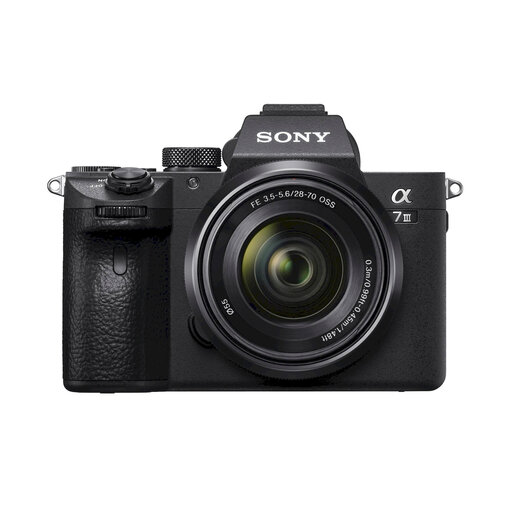
Sony Alpha 7 III Full-Frame with 28–70 mm Zoom
The supplied zoom offers a range for planning full-item compositions. Before choosing this full-frame kit for small fabric details, check the lens’s maximum magnification against the framing you need.
View on Joybuy
 No image available
Sony A6400 APS-C with 16–50 mm Power Zoom
This standard-zoom kit is a candidate for general folded-item views. Check the supplied lens’s close-focus distance and magnification if small textile details are important, and confirm the file options for your editing workflow.
View on Joybuy
 No image available
Sony A6700 APS-C with 16–50 mm Lens
The supplied zoom makes this a candidate for full folded-item compositions. Confirm its minimum focus distance and magnification before planning close stitch images, and check the file options if RAW editing is part of your workflow.
View on Joybuy
 No image available
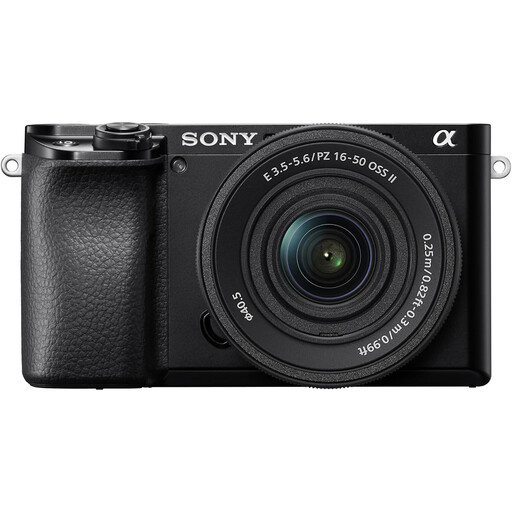
Sony A6100 APS-C with 16–55 mm Zoom Lens
This camera-and-zoom option is relevant to general folded-item framing. Confirm the exact bundled lens model and its close-focus specifications before choosing it for textile details; also check its file options if you intend to edit RAW images.
View on Joybuy
Common questions
Do I need a full-frame camera for folded textiles?
Not necessarily: an APS-C camera may meet your required image size and cropping needs. Sony UK specifies 24.2-megapixel stills for the Alpha 6400A, while Fujifilm specifies 26.1 million effective pixels for the X-M5; neither figure tells you whether your lens can frame a small fabric detail closely enough.
Will a kit lens photograph textile close-ups?
A kit lens may cover some detail views, but check its figures against the smallest subject you need to show. Canon UK specifies 15 cm close focus and 0.25× magnification for the RF-S 18-45mm; Sony UK specifies 0.215× maximum magnification for the E PZ 16-50mm OSS II. If weave or stitches must dominate the frame, compare a compatible close-focusing lens.
Should I buy the camera body or a lens kit?
A kit is a starting point when its supplied zoom covers your full-item framing and the detail shots you plan to make. If you already need a particular close-focusing lens, check its mount compatibility and consider the body and lens together before choosing a bundle.
How should I look after a home-studio camera setup?
Keep the camera and lenses dry, and follow the model’s manual when cleaning lens or sensor surfaces. Fujifilm lists an ultrasonic-vibration sensor-cleaning system for the X-M5, but you should still use its model-specific cleaning instructions.


