What to check when buying
Decide how you will control the window light and how close the lens must focus before deciding whether a different sensor format or more resolution would serve your images.
| Concern |
What to check |
Who this matters to |
| Consistent window-light images |
Check the exposure and white-balance controls you intend to use, and whether you can frame the bowl from your preferred tabletop angle. |
I photograph bowls on different days and want their glaze and shape to remain recognisable as the light changes. Around 42% of consumers put repeatable window-light results first. |
| Close detail and depth of field |
Check the exact lens’s minimum focus distance and magnification; test aperture and focus placement for the parts of the bowl that must stay sharp. |
If a maker’s mark or glaze texture is the point of the photograph, I need to get close without losing the detail to soft focus. For around 33% of consumers, close detail is the primary concern. |
| Flexible home setup |
Confirm the supplied lens and its mount, and check how the screen moves for overhead or low-angle framing. |
I need to fit a camera around a tabletop setup and would like the option to change lenses as my subjects change. Flexible framing and an expandable kit come first for around 25% of consumers. |
Joybuy camera options for window-lit bowls
These interchangeable-lens camera kits offer APS-C and full-frame starting points for photographing bowls at home. Compare their supplied lenses against the whole-bowl and close-detail shots you intend to make; a camera kit is not automatically a macro setup.
 No image available
Sony Alpha 7 III with 28–70mm zoom lens
A full-frame kit to consider if you also want the camera for photography beyond stationary bowls.
The named bundle has a 28–70mm zoom lens. For glaze texture or maker’s marks, check that lens’s magnification and whether it frames the detail closely enough.
View on Joybuy
 No image available
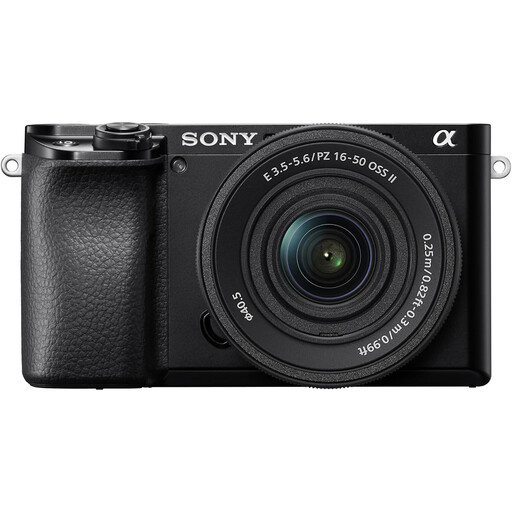
Sony A6400 with 16–50mm power zoom lens
An APS-C kit to assess for whole-bowl photographs and general home use.
The named lens is a 16–50mm power zoom. Check its close-focus specifications for small ceramic details, along with the exposure and white-balance controls your workflow requires.
View on Joybuy
 No image available
Sony Alpha ZV-E10 II K with 16–50mm f/3.5–5.6 power zoom
An APS-C kit to consider if you photograph bowls and also plan to make video.
The named variant has a 26MP camera and a 16–50mm f/3.5–5.6 power zoom lens. Check the lens’s minimum focus distance and magnification before relying on it for close glaze detail.
View on Joybuy
 No image available
Sony A6700 with 16–50mm lens
An APS-C option for an interchangeable-lens tabletop setup, provided the exact kit suits the photographs you intend to take.
The product name identifies a 16–50mm lens. Confirm the camera-and-lens configuration before ordering, then check the lens’s close-focus ability for texture and maker’s marks.
View on Joybuy
 No image available
Sony A6100 with 16–55mm zoom lens
An APS-C starting kit to assess if you want to photograph whole bowls now and choose lenses for other subjects later.
The product name lists a 16–55mm zoom lens. Confirm the supplied lens and its minimum focus distance and magnification if close ceramic detail matters to you.
View on Joybuy
Frequently asked questions
Do I need a macro lens to photograph a whole bowl?
Not necessarily: a lens that frames the whole bowl from a workable position may meet that need. A macro or other close-focusing lens becomes more relevant for glaze texture and maker’s marks; check the exact lens’s minimum focus distance and magnification. Canon describes macro lenses as intended for close detail, typically at 1:2 magnification or better.
What should I do about harsh reflections from the window?
Try changing the bowl’s and camera’s positions relative to the window before changing camera bodies. Nikon School explains that window light is directional and that subject placement affects the image; test the position until the reflections show the shape and glaze as intended.
Which aperture should I use to keep a bowl sharp?
Test a narrower aperture when the rim, interior and exterior all need to look sharp, then inspect those areas in the image. Nikon School gives f/16 as an example for deeper depth of field, but the usable setting depends on the camera angle, focus distance and available window light.
Can I use any close-focusing lens with an interchangeable-lens camera?
No: check the lens mount and the exact body-and-lens combination before buying. Nikon specifies Z-mount lenses for the Z5II and notes that F-mount lenses need an adapter and may be subject to restrictions; other systems have their own compatibility requirements.
What should I check if I am replacing an old camera?
Check how you will recycle the old camera and whether the seller offers an electrical-waste take-back arrangement that applies to your purchase. You can also check local recycling options before disposing of it.


