Choose the lens around the smallest detail you need to show. A camera with a suitable zoom lens is a starting point for photographs of complete craft tools, while a compatible 1:1 macro lens is the clearer choice when engravings, fine teeth or tiny components need to fill much of the frame. A macro lens also changes how much room you have to position the camera and lights.
Who is this setup for?
The useful distinction is whether your photographs mainly show complete tools, small features or a mix of stills and demonstrations.
Craft sellers photographing complete tools
If listings or records need views of whole tools, kits and workbench scenes, start with framing and a lens that suits your shooting space. A movable screen can help when the camera is above or beside the workbench.
Detail-focused makers and restorers
When maker’s marks, edges, fasteners or surface wear need to occupy much of the image, check the lens’s stated maximum magnification. Nikon, Sony and Fujifilm each specify a 1:1 option in the systems discussed below.
Makers producing photos and demonstrations
If you also record assembly steps or tool demonstrations, screen movement and video features matter alongside still photography. Choose the lens for your close-up photographs separately; video features do not establish its magnification.
What should you prioritise?
Camera with a standard or close-focus lens
Choose when: Most photographs show complete tools, sets or workbench scenes, with only occasional closer views.
Trade-off: Check magnification before counting on the lens for tiny features. Canon specifies up to 0.5x (1:2) for its RF 35mm F1.8 Macro, rather than life-size reproduction.
Camera with a 1:1 macro lens
Choose when: Engravings, fine teeth, small hardware or texture need to fill much of the photograph.
Trade-off: Close working room varies by lens. Sony specifies a 2.4 cm minimum working distance for its E 30mm F3.5 Macro, so plan where the lights and camera support will go.
| Concern |
What to check |
Who this matters to |
| Small tool details |
Check the exact lens’s maximum magnification and close working room. A stated 1:1 lens reproduces a subject at life size on the sensor. |
If I need a maker’s mark or a tiny fastener to fill the image, lens magnification comes before extra body features. Around 44% of consumers put close detail first. |
| Whole-tool framing |
Check which lens comes with the camera and whether the screen moves into a useful position for your workbench. |
For listings of complete tools and kits, I need to frame each object without making extreme close-ups the main requirement. Whole-tool workflow is the first concern for around 33% of consumers. |
| Stills and process video |
Check the video modes and screen design only if you will record demonstrations; choose a compatible lens for any close-detail requirement. |
When I photograph finished tools but also show assembly steps, one camera needs to handle both kinds of content. Around 23% of consumers place that photo-and-video combination first. |
Buying pitfalls
-
Assuming every lens called “macro” reaches 1:1
Canon specifies 0.5x (1:2) maximum magnification for the RF 35mm F1.8 Macro. Nikon’s NIKKOR Z MC 50mm f/2.8, Sony’s E 30mm F3.5 Macro and Fujifilm’s XF30mmF2.8 Macro are each specified at 1:1. The label alone does not tell you which level of magnification you are buying.
Read the maximum-magnification specification for the exact lens and match it to the smallest feature you need to photograph.
If life-size close-ups are essential, a separate compatible 1:1 lens may be needed.
-
Ordering a body before checking what comes with it
A body-only package does not provide a lens for the first shoot. Canon lists an EOS R50 body-only option, while Nikon’s Z50II listing says a charger is not included.
Check the exact package for a compatible lens and confirm how you will charge the battery. Include the memory card and camera support you intend to use in your pre-shoot checklist.
-
Overlooking space for lights at close focus
A lens that focuses very close can leave little room between the camera and a tool. Sony specifies a 2.4 cm minimum working distance for its E 30mm F3.5 Macro; Nikon specifies a 0.16 m minimum focus distance for its NIKKOR Z MC 50mm f/2.8. Those measurements describe different distances and should not be treated as directly interchangeable.
Check the lens’s stated working distance where available, then consider whether your lights, diffuser and camera support can fit around the tool.
Camera-system brands to consider
These systems offer different body-and-lens routes for the same home-studio task. Check the exact mount and lens combination rather than treating a brand name as a guarantee of close-up capability.
Canon
Canon’s EOS R50 and RF lens range provide a route for whole-tool photographs with occasional closer views.
- Canon UK specifies a 24.2 MP APS-C sensor and vari-angle touchscreen for the EOS R50.
- The RF 35mm F1.8 Macro reaches up to 0.5x (1:2), not 1:1 magnification.
Nikon
Nikon’s Z50II is a stills-and-video body that can be paired with a Z-mount lens specified for life-size close-ups.
- Nikon UK specifies 1:1 magnification for the NIKKOR Z MC 50mm f/2.8.
- Check whether a 50mm macro lens also gives you enough room to frame complete tools in your studio.
Sony
Sony E-mount offers an APS-C body route alongside a dedicated lens for small tool details.
- Sony UK specifies 1:1 magnification for the E 30mm F3.5 Macro.
- Its specified 2.4 cm minimum working distance calls for careful placement of lights near the subject.
Fujifilm
Fujifilm X provides a movable-screen body option and a separate 1:1 macro lens for detailed tool photographs.
- Fujifilm UK specifies a 26.1 MP sensor and vari-angle screen for the X-S20, while the XF30mmF2.8 Macro is specified at 1:1.
- Check the macro lens’s 10 cm minimum focus distance against your intended framing and lighting arrangement.
Joybuy camera kits for whole-tool photography
These camera-and-zoom-lens kits are options to assess for photographs of complete craft tools and wider workbench scenes. If small markings must fill the frame, check the supplied lens’s close-focus specifications and a compatible 1:1 macro-lens option before choosing a kit.
 No image available
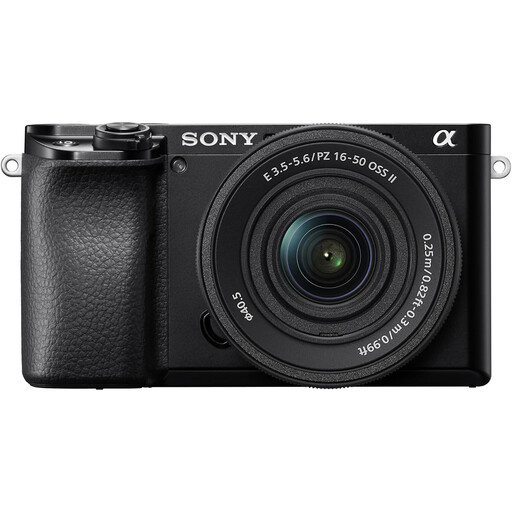
Sony A6400 with 16–50mm Power Zoom Lens
A camera-and-zoom-lens kit to consider when complete-tool photographs are the main task.
The product title identifies an APS-C mirrorless camera and a supplied 16–50mm Power Zoom lens. Check that lens’s magnification and minimum focus distance before relying on it for tiny details.
View on Joybuy
 No image available
Sony A6700 with 16–50mm Lens
This APS-C mirrorless camera-and-lens kit is another option for framing complete tools.
The product title specifies a supplied 16–50mm lens. Confirm its close-focus specifications if photographs of small markings are part of your plan.
View on Joybuy
 No image available
Sony Alpha ZV-E10 II K with 16–50mm Power Zoom Lens
Consider this kit if you photograph whole tools and also want to record process demonstrations.
The product title specifies an APS-C camera, a 16–50 mm f/3.5–5.6 Power Zoom kit lens and 4K60p video. Check the lens’s magnification and focusing distance for close-up work.
View on Joybuy
 No image available
Sony A6100 Zoom-Lens Kit
The camera-and-zoom-lens combination is worth assessing for photographs of complete tools.
Confirm the exact lens supplied with this kit before ordering, as its stated zoom range differs between product descriptions. Check that lens’s close-focus specifications separately if small details matter.
View on Joybuy
 No image available
Sony Alpha 7 III with 28–70mm Zoom Lens
This full-frame camera-and-zoom-lens kit is an option to assess for complete-tool photographs.
The product title specifies a supplied 28–70mm zoom lens. If fine marks or components are central to your work, check its close-focus specifications and the compatibility of any separate macro lens.
View on Joybuy
Common questions
Do I need a 1:1 macro lens to photograph craft tools?
Choose a 1:1 macro lens when small marks, fine teeth or components need to occupy much of the frame; it is not the starting requirement for every whole-tool photograph. Canon specifies up to 0.5x (1:2) for its RF 35mm F1.8 Macro, while the Nikon, Sony and Fujifilm macro lenses discussed here are specified at 1:1.
Can I buy the camera body and choose a lens later?
Yes, if you already know which compatible lens will cover your first photographs and how you would add close-up capability later. Before ordering, check whether the particular listing is body-only or includes a lens; Canon lists an EOS R50 body-only package, and Nikon offers separate Z50II body and kit options.
Should I prioritise resolution or a macro lens for fine details?
Prioritise the lens’s magnification and focusing distance when a small tool feature must fill the image. A body’s resolution does not give a non-macro lens 1:1 reproduction; check the exact body-and-lens combination rather than choosing on megapixels alone.


