Styled-product and craft sellers
If you photograph complete dried-flower bundles, wreaths or arrangements for listings, repeatable framing and a workable tabletop setup matter more than action-oriented shooting features.


For photographs of whole dried-flower arrangements, start with a camera and lens that can frame the complete subject at your available tabletop distance. If individual petals or seed heads must fill the frame, the lens’s close-focus capability matters more than burst speed: consider a specified 1:1 macro lens, while allowing room for lighting and using stable support for the stationary subject.
If you photograph complete dried-flower bundles, wreaths or arrangements for listings, repeatable framing and a workable tabletop setup matter more than action-oriented shooting features.
If petals, stems or seed heads need to fill the frame, compare lenses by maximum magnification and working distance. A specified 1:1 macro lens offers a clearer route to life-size detail on the sensor than an unspecified kit zoom.
If whole arrangements are your immediate subject but you may photograph other things later, consider a camera system whose lenses suit both uses. Check the supplied lens now and the compatible macro-lens choices before committing to a mount.
Choose when: You mainly need photographs of whole arrangements and do not need life-size detail.
Trade-off: A supplied zoom should not be assumed to focus closely enough for tiny botanical features.
Choose when: Small petals, seed heads or textures are central to the photographs; Nikon and Sony each specify 1:1 lenses in their ranges.
Trade-off: Very close camera-to-subject positioning can restrict space for lights, so check the particular lens’s working distance.
Choose when: Your intended details call for more than 1:1 magnification; Canon specifies 1.4x for its RF 100mm F2.8L Macro IS USM.
Trade-off: This specialist lens may be more equipment than you need for photographs of complete arrangements.
For stationary dried flowers on a white background, decide how much detail must fill the frame, then plan how you will hold the framing and whether you want to add lenses later.
| Concern | What to check | Who this matters to |
|---|---|---|
| Close-up detail | Check the exact lens’s maximum magnification and working distance; 1:1 means life-size projection on the sensor. | If tiny petals or seed heads must fill my photographs, I need a lens that focuses close enough without obstructing the lighting. Roughly 42% of consumers put this detail-first need ahead of the other concerns here. |
| Repeatable tabletop framing | Check whether the screen position suits your camera angle and plan stable support for the stationary subject. | When I photograph several arrangements against the same backdrop, I want to keep my framing consistent. For around 33% of consumers, that controlled setup is the primary need. |
| Room to expand | Check what lens the package includes and which macro lenses fit the chosen mount. | If I mostly photograph complete arrangements now, I want a straightforward camera choice without closing off detailed work later. That flexibility comes first for roughly 25% of consumers. |
Sensor resolution does not establish how large a small flower detail can appear in the frame. Maximum magnification is a specification of the lens.
Check the supplied lens’s maximum magnification and minimum focusing distance. If life-size detail is essential, compare it with a specified 1:1 macro lens.
A dedicated macro lens may need to be obtained separately.
At macro distances, shallow depth of field can leave only a small part of a dried flower in focus.
Support the camera, test several apertures and inspect which parts of the flower remain sharp before settling on a setting.
Sony UK specifies a 2.4cm minimum working distance for its E 30mm F3.5 Macro lens. At that distance, the lens and camera can get in the way of lights or reflectors around a tabletop subject.
Compare working distance as well as magnification, and check whether your planned lighting fits around the flower at the framing you need.
Canon’s EOS R system offers an APS-C body route for whole arrangements and a separate specialist RF macro-lens route for close detail.
Nikon Z is worth considering if you want a mirrorless camera system with a specified life-size macro-lens option.
Sony E-mount offers APS-C camera bodies as well as a dedicated APS-C macro-lens option.
These Sony interchangeable-lens cameras are options to assess for dried-flower photography, particularly whole-arrangement framing. Check the exact lens and its close-focus specifications if small botanical details are your main subject; confirm the A6700 package contents before planning around its advertised zoom.
 No image available
Consider this APS-C kit for framing complete arrangements before deciding whether you need a separate macro lens. The listing names a 26MP camera and an f/3.5–5.6 zoom; check the supplied lens’s magnification and working distance for close-up work.
 No image available
For dried-flower compositions, choose the lens alongside this interchangeable-lens body rather than assuming the advertised zoom is supplied. Confirm the package contents before ordering, then check the intended lens’s close-focus specifications if you need petal detail.
No image available
This APS-C camera and zoom are worth considering for photographs of whole arrangements. Sony UK specifies a 24.2MP sensor for the Alpha 6400; check the supplied zoom’s maximum magnification for small details and the camera’s mounting arrangements if you plan to use a tripod.
 No image available
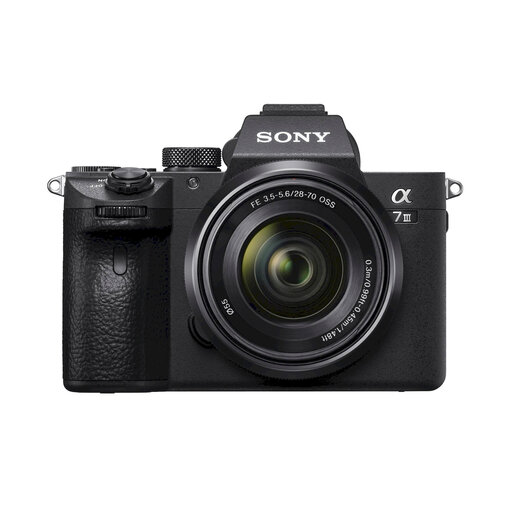
Consider how the listed full-frame camera and zoom would frame your whole arrangements at the distance available on your tabletop. Check the lens’s close-focus specifications before choosing it for small details, and confirm how you will support the camera for repeatable compositions.
Not necessarily for whole bunches or larger arrangements, provided your lens focuses close enough for the composition. If tiny petals or seed heads need to fill the frame, compare the exact lens’s maximum magnification with a specified 1:1 macro option.
Yes, particularly when you want repeatable framing of a stationary tabletop subject. Nikon School notes that tripod support allows lower ISO settings and potentially slower shutter speeds in plant macro photography; check that the support fits your planned camera position.
Test several apertures and inspect how much of the flower is in focus. Close-up depth of field can be shallow, while Nikon School cautions that diffraction can soften an image when stopping down too far; the useful setting depends on your magnification, lighting and intended result.
For a faulty or misdescribed item, GOV.UK says the seller must offer a full refund; it also identifies items that do not do what they are supposed to. A change-of-mind return is a separate question: check the applicable online cancellation conditions and the retailer’s process rather than treating its voluntary policy as the limit of your rights for a fault.