For full-card photographs, choose a camera and lens that frame the entire card at your available overhead height, with a screen you can see while the camera is mounted. Consider a macro lens when tiny embellishments or paper texture need to fill the frame, but check its working distance: very close focusing can leave little room for lighting.
Who is this setup for?
Handmade-card sellers taking repeatable listing photos
If you photograph a collection of cards, consistent overhead framing and a convenient way to review or transfer images matter. A screen you can view from above can make a fixed setup easier to compose; check that your chosen lens includes the whole card at the height your support allows.
Makers showing fine paper-craft detail
Embossing, layered die-cuts, stitching and small embellishments call for a closer look at lens magnification and working distance. Nikon and Sony specify 1:1 reproduction for the macro lenses discussed below, while Canon specifies up to 1:2 for its RF 35mm F1.8 Macro IS STM.
Makers recording tutorials as well as stills
If you also demonstrate a card-making process, consider the screen position and video connections you will use. Nikon documents Product Review Mode on the Z50II; Canon documents video and USB webcam functions for the EOS R50. Neither replaces checking the lens and lighting for still photographs.
What matters when choosing?
Camera with a general-purpose zoom
Choose it when: Complete cards and styled overhead photographs are your main output, and you want to adjust framing without changing lenses.
Trade-off: Check the supplied lens’s closest-focus capability before relying on it for tiny details.
Camera with a 1:1 macro lens
Choose it when: Small embellishments or surface textures need to occupy much of the photograph.
Trade-off: Closest-focus shots can leave limited space for lights; step back and check framing for complete-card images.
| Concern |
What to check |
Who this matters to |
| Repeatable full-card framing |
Check the lens’s field of view at your overhead height and whether you can view the screen or compose remotely. |
When photographing a collection for listings, I want each complete card framed consistently without disturbing the setup. Roughly 40% of consumers would put repeatable full-card composition first. |
| Fine detail |
Check maximum magnification and the space between lens and subject at close focus. |
If embossing or a small embellishment must fill the image, I need enough magnification without blocking my lights. Around 30% of consumers would make close-detail reproduction their primary concern. |
| Stills and process video |
Check the video functions and connections you will use, alongside lens suitability for card photographs. |
For listings and demonstrations from one camera, I need it to handle both kinds of shot. About 20% of consumers would prioritise this combined workflow. |
| Manageable starter setup |
Check the exact kit contents, screen movement and compatible lens options for later close-ups. |
If I mainly need a dedicated camera for occasional card photos, I want a setup I can manage without choosing specialist close-up equipment straight away. Roughly 10% of consumers would place that simpler starting point first. |
Buying pitfalls
-
Choosing the body without checking the lens
A camera body alone does not establish how closely you can photograph embossing or small decorations. Canon specifies up to 1:2 magnification for its RF 35mm macro lens; Nikon and Sony specify 1:1 for the macro lenses discussed here.
Decide how small a detail must fill the photograph, then check the particular lens’s maximum magnification and whether it can also frame the whole card at your shooting height.
If the supplied lens cannot show the detail you need, an additional compatible lens may be necessary.
-
Using maximum magnification for every shot
Closest focus may leave little room to position lights around raised or reflective details. Sony specifies a 2.4 cm minimum working distance for the E 30mm F3.5 Macro at its closest setting; Nikon specifies about 5 cm from the front of its NIKKOR Z MC 50mm f/2.8 to the subject at closest focus.
Plan detail shots around the available lighting space, and move back when photographing the complete card.
-
Assuming every kit contains the same accessories
Package contents depend on the exact bundle. Nikon says its cited Z50II two-lens kit does not include a charger, while the cited Canon EOS R50 bundle lists a charger, memory card and spare battery.
Check the precise product listing for the lens, battery, charger and memory card rather than relying on the camera model name.
Accessories absent from the particular bundle may need to be obtained separately.
-
Overlooking the charging setup
The Health and Safety Executive advises checking that electrical equipment is suitable for its supply and that equipment, plugs and cables are in good condition.
Before use, check the charger and power accessories supplied with your exact kit, and do not use damaged plugs or cables.
Relevant brands to consider
Canon
The EOS R50 is an APS-C RF-mount option for overhead card photographs, with a vari-angle screen. Canon also specifies up to 1:2 magnification for the separate RF 35mm F1.8 Macro IS STM lens.
- Canon documents a 24.2 MP sensor and vari-angle touchscreen for the EOS R50.
- The cited RF 35mm lens does not provide 1:1 reproduction; check whether its 1:2 limit covers your smallest details.
Nikon
The Z50II offers a vari-angle screen and Product Review Mode for makers who also demonstrate their work. Nikon specifies 1:1 reproduction for the separate NIKKOR Z MC 50mm f/2.8 lens.
- Nikon specifies about 5 cm between the lens front and subject at the macro lens’s closest focus.
- Nikon describes a 75 mm angle of view for that lens on a Z DX camera; check whether your overhead height allows a whole card to fit in frame.
Sony
Sony offers APS-C E-mount cameras and specifies 1:1 reproduction for its separate E 30mm F3.5 Macro lens, providing a close-detail lens option to assess alongside whole-card framing.
- Sony lists the E 30mm F3.5 Macro at 138 g and specifies 1:1 magnification.
- Its stated 2.4 cm minimum working distance at closest focus leaves limited room immediately in front of the lens; check your lighting arrangement.
Joybuy camera choices
These camera choices include interchangeable-lens zoom kits to consider for whole-card framing and a compact fixed-lens option. Check each lens against your available overhead height and close-detail requirements; a camera’s inclusion here does not establish that it can frame your particular card or reproduce tiny details.
 No image available
Sony A6700 with 16–50mm lens
Consider this APS-C zoom kit if you want to adjust framing for complete-card photographs. Check whether the lens includes your whole card at the available overhead height and focuses closely enough for the details you plan to show.
View on Joybuy
 No image available
Sony Alpha ZV-E10 II K with 16–50 mm power zoom kit lens
Consider this APS-C kit if you make card photographs alongside process videos. Its stated 26-megapixel stills and 4K60p video do not establish close-up suitability: check the supplied lens’s focus capability and whole-card framing at your shooting height. Check the bundle’s storage contents before use.
View on Joybuy
 No image available
Sony A6400 with 16–50mm power zoom lens
This APS-C zoom kit is relevant if you need focal-length choices for card compositions. Before choosing it for an overhead support, check that the screen is visible from your camera position and that the lens covers the whole card; assess close-focus capability separately.
View on Joybuy
 No image available
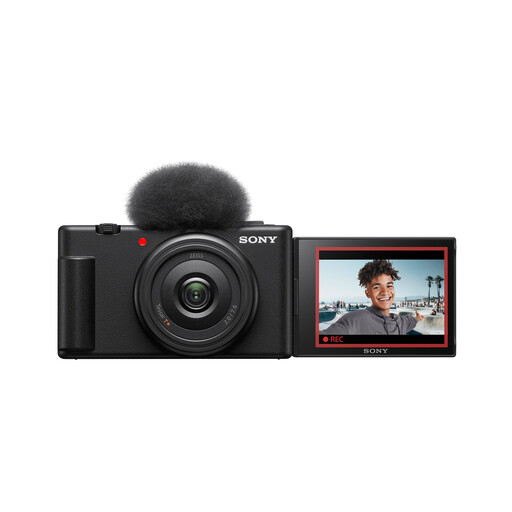
Sony ZV-1F compact camera with 1-inch sensor
Consider this compact fixed-lens camera if complete-card images are your main aim and you prefer not to choose an interchangeable-lens kit. Check how its wide lens frames your card at the available height and whether its close-focus capability meets any detail-shot needs.
View on Joybuy
 No image available
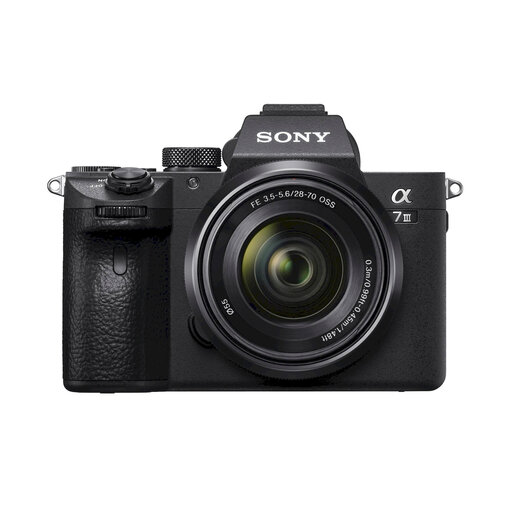
Sony Alpha 7 III with 28–70mm zoom lens
This full-frame zoom kit is another option to assess for complete-card compositions. Check whether the supplied 28–70mm lens frames your card at the available overhead height and provides enough close-up capability for small embellishments; the sensor format alone does not answer either question.
View on Joybuy
Frequently asked questions
Do I need a 1:1 macro lens for handmade cards?
No, not if complete-card photographs are your main output. Consider 1:1 reproduction when tiny embellishments or texture need to fill the frame; Nikon and Sony specify 1:1 for their cited macro lenses, while Canon specifies up to 1:2 for the RF 35mm F1.8 Macro IS STM. Check working distance as well as magnification.
What should I check for overhead card photographs?
Check that your support holds the camera securely and that the chosen lens frames the whole card at the height available. A screen you can see from the mounted position or a suitable remote-composition option can help you keep the setup in place between shots. Canon documents a vari-angle screen and phone-based control for the EOS R50.
Can one camera handle card listings and process videos?
Yes, if its video functions suit the demonstrations you plan to make and its lens still meets your card-photography needs. Canon documents video and USB webcam functions for the EOS R50; Nikon documents Product Review Mode and external mic and headphone connections for the Z50II. Check overhead framing and close focus independently of those video features.
What should I check about a camera kit’s charger?
Confirm whether the exact bundle includes a charger and whether the supplied charging equipment suits your electrical supply. Nikon states that its cited Z50II two-lens kit excludes a charger, so a camera model name alone cannot establish package contents. The Health and Safety Executive advises checking that electrical equipment is suitable for its supply and in good condition.


