Card makers photographing finished work
If you photograph cards for listings, commissions or print reference, consistent framing and lighting help you compare images across a collection. Reflective finishes also make light placement important.


For handmade cards in a shared workshop, choose a camera and lens that can frame a whole card and show the smallest details you need, while leaving space for stable positioning and adjustable lighting. A compact kit is easier to put away, but a kit zoom’s close-focusing distance alone does not tell you whether tiny lettering or embellishments will fill the frame.
If you photograph cards for listings, commissions or print reference, consistent framing and lighting help you compare images across a collection. Reflective finishes also make light placement important.
Embossing, foil, layered paper, stitching and small lettering may call for closer photographs than a whole-card image. Check the chosen lens’s focusing distance and magnification as well as the camera body.
If equipment must be carried in, set up and cleared away, consider the space needed for the camera, support and lights. A movable screen can also help when the camera is above the card or at an awkward angle.
Decide how you will keep whole-card photographs consistent, then check whether the exact lens can show your smallest details. Finally, consider how the complete setup will fit and move around the shared space.
| Concern | What to check | Who this matters to |
|---|---|---|
| Consistent colour and controlled glare | Check manual exposure controls and allow space for a tripod and adjustable side lighting, particularly for foil or glossy finishes. | If my cards have reflective finishes, I need lighting I can position consistently so glare does not hide the design. Around 36% of consumers put repeatable colour and glare control first. |
| Close detail | Compare the exact lens’s minimum focusing distance and maximum magnification against the smallest feature you need to show. | When I photograph small lettering or layered details, I need them to occupy enough of the image to be useful. Close-detail capture comes first for around 36% of consumers. |
| Shared-space setup | Consider the camera and lens alongside tripod clearance and light placement; check screen movement if you plan to shoot from above. | If I must clear the table after each session, I need equipment I can set up and put away without disrupting other work. Roughly 28% of consumers prioritise that shared-space routine. |
Sensor resolution does not establish how large a tiny embellishment will appear in the frame; that also depends on the lens. A standard zoom may suit whole cards without meeting your close-detail requirement.
Compare the exact lens’s closest-focusing distance and maximum magnification with the details you intend to photograph.
If the kit lens cannot reproduce those details at the required size, you may need a separate close-focusing lens.
Foil, glossy varnish and acetate can reflect light towards the lens, hiding parts of the finish. Amateur Photographer’s artwork-photography guidance emphasises lighting and colour accuracy.
Try adjustable lights to the sides and inspect a test image at the shooting angle before photographing the full set of cards.
Discovering reflections after a session can mean repositioning the lights and photographing the cards again.
Reducing camera shake does not keep the camera square to the card or preserve the same framing from one photograph to the next.
For a repeatable series, use a stable support and mark the camera and card positions once the composition works.
A camera kit also needs space for its support and lighting. People may enter the frame, creating a separate consideration if identifiable images will be used by a business or organisation.
Plan where the equipment will stand and be stored, frame around the card where practical, and check the workshop’s arrangements before using images that identify people.
The EOS R50 and RF-S 18-45mm starter-lens route is relevant if you want a vari-angle screen for composing cards at different camera positions.
The Z50II with a Z DX 16-50mm kit lens is a route to consider when equipment needs to be moved and stored between workshop sessions.
The X-M5 system is relevant if you plan to select a lens separately and edit the resulting card photographs.
The Alpha 6400 E-mount system is relevant to buyers choosing a separate close-focusing lens for an editing-oriented workflow.
These camera-and-zoom listings are options to examine for whole-card photographs and a movable workshop setup. Check the exact lens and bundle before relying on any of them for small details.
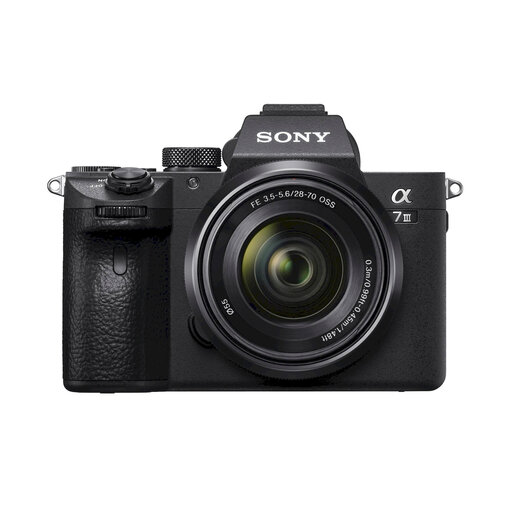 No image available
Consider this camera-and-zoom combination for whole-card framing if you have room for a stable support and separate lighting.
The listing names a full-frame body and 28–70 mm zoom lens. Check the supplied lens’s magnification against any small lettering or embellishments you need to show.
 No image available
Consider this listing if you want an APS-C camera to examine for a workshop setup, but confirm the complete kit before choosing it.
The title names a 16–50 mm f/3.5–5.6 power zoom, while the supplied-parts information does not consistently confirm the lens. Check what is included and whether that lens meets your close-detail needs; the listing says a memory card is not included.
 No image available
This APS-C listing may be worth examining if you want a camera-and-zoom arrangement that can be put away after a card-photography session.
The title names a 16–50 mm lens, but the supplied-components information does not consistently confirm it. Verify the bundle and the exact lens’s close-focusing specifications before buying for detail shots.
 No image available
Consider this camera-and-zoom listing if a lens that packs down is useful in your shared workspace.
The listing identifies an APS-C camera and a 16–50 mm power zoom. Check the supplied lens’s closest-focusing distance and magnification if small text or embellishments must fill the frame.
No: lighting, colour consistency and stable positioning also affect whether card photographs are useful. Amateur Photographer’s artwork-photography guidance emphasises lighting and colour accuracy; a camera body cannot remove glare caused by poorly placed light.
It may handle whole cards and some closer views, but suitability for tiny details depends on the exact lens and the size you need in the frame. Canon UK lists 0.20 m closest autofocus focus and 0.14x maximum autofocus magnification at 18mm for the RF-S 18-45mm; Nikon UK lists 0.20 m minimum focus for its Z DX 16-50mm. Compare magnification before deciding whether a separate close-focusing lens is needed.
Start by moving adjustable lights away from the camera’s position and testing them from the sides. Reflections depend on the card and shooting angle, so inspect the image and reposition the lights before photographing the rest of the batch.
Check the exact lens and supplied accessories, then plan where a tripod and adjustable lights will fit. If considering Nikon’s UK Z50II + 16-50mm kit, Nikon says its voluntary extended lens warranty requires registration within 90 days of purchase; check the current terms for the exact kit.
Keep identifiable people out of card photographs where practical, and check the workshop’s process before using images that include them. For organisational processing of personal data in the UK, GOV.UK identifies the UK GDPR and Data Protection Act 2018 as the governing framework; the requirements depend on how the images will be used.