Detail-focused toy maker
If listing images or pattern documentation need to show stitches, embroidered features and tiny accessories, pay particular attention to the lens’s close-focus distance and magnification.


For knitted toys photographed on a shared workshop table, choose an interchangeable-lens camera around the smallest detail you need to show, rather than body specifications alone. A close-focusing kit zoom can suit whole-toy images and moderate details; a 1:1 macro lens offers a route to frame-filling stitch details, but a very short working distance leaves less room to position lights.
If listing images or pattern documentation need to show stitches, embroidered features and tiny accessories, pay particular attention to the lens’s close-focus distance and magnification.
If the camera station must share a bench and be put away afterwards, consider the size of the body-and-lens combination and whether you can see the screen from your usual shooting angles.
If several toys need consistent listing images, plan how you will keep lighting and white balance repeatable when the workshop light changes.
Decide whether your images must show an entire toy or fill the frame with individual stitches before choosing a lens. Then check how the camera, lighting and background will fit on the table you actually use.
Choose it for: Whole-toy images and moderate close-ups when a compact setup needs to be cleared away after shooting.
Trade-off: Close focusing does not by itself mean 1:1 macro magnification, so check the smallest feature you need to frame.
Choose it for: Stitch, embroidery or miniature-accessory details that need to occupy much more of the image.
Trade-off: A short working distance can crowd the toy and lights; check the available clearance before committing to a lens.
| Concern | What to check | Who this matters to |
|---|---|---|
| Stitch detail | Compare the exact lens’s magnification, minimum focus distance and working distance against your smallest subject detail. | If small stitches or embroidered faces must fill the image, close-up framing takes priority over a general-purpose view of the toy. Around 42% of consumers put detail first. |
| Tabletop positioning | Check the combined body-and-lens size and whether the screen is viewable from your intended camera angles. | When the background and lights already occupy a shared bench, I need to reposition the camera without taking over the workspace. Compact positioning comes first for around 33% of consumers. |
| Consistent yarn colour | Check the white-balance controls you intend to use and test representative yarn under the workshop lighting. | For a batch of listing images, changing light makes a repeatable colour workflow my main concern. Roughly 25% of consumers prioritise that consistency. |
Canon UK specifies 0.25x magnification for the RF-S 18-45mm, while Sony UK specifies 1:1 for the E 30mm F3.5 Macro. Those figures describe different close-up framing capabilities.
Decide whether you need whole-toy images, moderate close-ups or frame-filling stitch details, then compare the specifications of the exact lens you intend to use.
Smaller details may require a separate compatible close-focusing or macro lens later.
Light that changes during a batch can change how yarn colours appear from one photograph to the next. Adobe documents colour-balance adjustments in Camera Raw, but editing is still part of a repeatable workflow rather than a substitute for one.
Keep the lighting position and white-balance process consistent, and photograph representative yarn colours before starting a full batch.
Sony UK specifies a minimum working distance of 2.4 cm from the front of its E 30mm F3.5 Macro lens. At close range, the lens can occupy space needed to light the toy.
Check the clearance between the toy, lens and lights on your workshop table.
You may need to rearrange the lights or use smaller lighting modifiers.
A voluntary warranty is separate from remedies for faulty or misdescribed goods. GOV.UK describes the seller’s obligations when goods are faulty, not as described or do not do what they are supposed to do.
Keep the order confirmation and bundle description, and contact the seller if the supplied body or lens is faulty or differs from the listing. Check change-of-mind return terms separately.
The EOS R50 with an RF-S kit zoom is one compact APS-C route for whole-toy photographs and moderate close-ups.
The Z50II and NIKKOR Z DX 16-50mm offer another compact camera-and-kit-zoom route for a temporary tabletop setup.
The APS-C E-mount α6400 and E 30mm F3.5 Macro illustrate a body-and-lens combination to consider for detailed toy images.
These interchangeable-lens camera kits are options for photographing toys on a shared table. Choose among them by checking the supplied lens and your intended framing; a kit’s zoom range alone does not establish how closely it can photograph stitches.
 No image available
Consider this kit if you need an interchangeable-lens camera for whole-toy photographs and want to assess closer-focusing lenses later.
The listed kit has an APS-C camera, 26 megapixels and a 16–50 mm f/3.5-5.6 Power Zoom lens. Check that lens’s close-focus distance and magnification against the smallest details you need to show.
 No image available
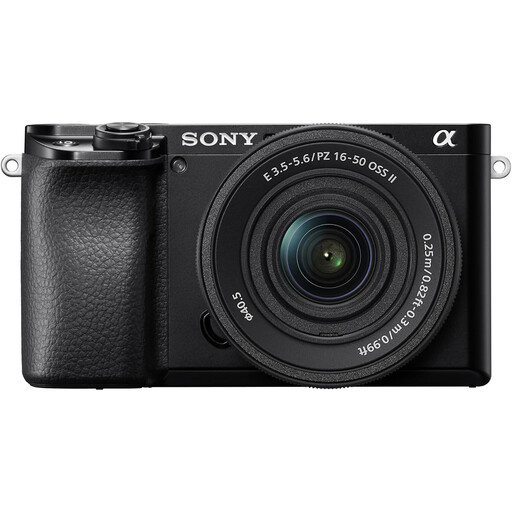
Consider this kit when camera placement changes around the tabletop: Sony UK specifies a 180-degree tiltable screen on the α6400.
The camera has a 24.2MP APS-C sensor and is listed with a 16–50mm Power Zoom lens. Check the supplied lens’s magnification and close-focus distance before relying on it for stitch-level images.
 No image available
Consider this interchangeable-lens kit for whole-toy images if you may also investigate a different lens for smaller details.
The listing identifies an APS-C camera supplied with a 16–50mm lens. Confirm the exact supplied lens model, its close-focus distance and its magnification for your intended close-ups.
 No image available
Consider this interchangeable-lens kit for general toy photographs if you are willing to check the lens needed for closer detail separately.
The listed camera is APS-C and the bundle name specifies a 16–55mm zoom lens. Confirm the supplied lens’s exact model, minimum focus distance and magnification before planning stitch close-ups.
No, not for every image: a close-focusing kit zoom can suit whole toys and moderate details. Canon UK specifies 0.25x magnification for the RF-S 18-45mm; if small stitches must fill the frame, compare that with a dedicated option such as Sony’s E 30mm F3.5 Macro, which Sony UK specifies at 1:1.
Use a repeatable lighting position and white-balance process, then test representative yarn before photographing the full batch. If you use Adobe Camera Raw, its Temperature and Tint controls can help fine-tune colour balance after capture; editing does not guarantee that every yarn will photograph accurately without a controlled setup.
Confirm the exact body, supplied lens model and bundle contents, particularly if close-up photographs depend on that lens. Check the seller’s change-of-mind return terms separately from remedies for faulty or misdescribed goods; GOV.UK describes obligations for goods that are faulty, not as described or do not do what they are supposed to do.