Origami detail documenters
If you need small folds, layered edges and paper texture to remain visible, pay attention to the lens’s close-focus distance and magnification as well as how precisely you can focus.


For photographs of complete origami models, start with an interchangeable-lens camera and a close-focusing kit zoom, then use stable support and check white balance as the window light changes. If tiny folds need to fill the frame, lens magnification matters more than choosing a body by resolution alone; a wider-aperture zoom is chiefly worth considering when you also need to work handheld in dimmer light.
If you need small folds, layered edges and paper texture to remain visible, pay attention to the lens’s close-focus distance and magnification as well as how precisely you can focus.
If you photograph white or coloured paper across changing daylight, white-balance control and a consistent lighting setup help you keep the colours believable. Nikon UK explains that white balance adjusts how whites and other colours appear under the scene’s light.
If you mainly photograph complete models and only sometimes move closer, a camera with an included zoom gives you a starting setup. Check how closely that exact lens focuses before deciding whether you also need a macro lens.
Decide how tightly you need to frame the paper before comparing camera bodies. For static tabletop work, also plan how you will hold the camera steady and keep paper colours consistent as daylight changes.
| Concern | What to check | Who this matters to |
|---|---|---|
| Close framing of folds | Compare the exact lens’s minimum focus distance and maximum magnification. Canon UK specifies 0.25× for the RF-S 18-45mm zoom and 1:2 for the RF 35mm Macro; Sony UK specifies 1:1 for its E 30mm Macro. | If I want a tiny crease or layered edge to fill much of the photograph, I need the lens to frame it closely. Around 42% of consumers would put close detail first. |
| Paper colour in window light | Check the camera’s white-balance controls and whether you can keep the lighting consistent across a series. | When I photograph white or coloured paper at different times of day, I want its colour to stay believable. Colour consistency would be the primary need for around 33% of consumers. |
| Compact starting kit | Confirm the supplied lens and bundle contents, then check whether a suitable close-focusing or macro lens is available for that camera’s mount. | If most of my pictures show whole models, I want a manageable camera-and-lens setup without committing to a dedicated macro lens immediately. Roughly 25% of consumers would prioritise that starting point. |
Body resolution does not tell you how large a small fold can appear in the frame. Canon UK lists 0.25× magnification for its RF-S 18-45mm zoom, while Sony UK lists 1:1 for its dedicated E 30mm Macro.
Consider the smallest detail you want to show, then compare minimum focus distance and maximum magnification for the exact lens you would use.
If the kit lens cannot frame that detail closely enough, you may need a separate macro lens later.
Close-up photographs can have a narrow depth of field, leaving parts of a folded model out of focus. Sony UK’s macro guidance notes that stopping down may be needed to show enough depth.
For a static model, try a smaller aperture with the camera on a tripod or stable support; use a wider aperture when selective focus or handheld exposure is more important.
As window light changes, white or pale paper can appear warmer or cooler. Nikon UK explains that white balance adjusts colour rendering for the light in the scene.
Check white balance under the light you are actually using and keep the setup consistent when photographing a series of models.
A body-only purchase and a lens kit leave you with different equipment for photographing origami. Nikon UK’s Z50II listings also specify that a charger is not included.
Check the exact supplied lens, charging arrangements and any warranty conditions before choosing a bundle. Make sure the lens can frame the details you intend to photograph.
Canon’s EOS R50 and RF lens options are relevant if you want to begin with a close-focusing zoom and consider a more strongly magnifying lens later.
Nikon’s Z50II lens options are relevant if you are weighing a compact zoom against a constant-f/2.8 zoom for handheld work in dimmer window light.
Sony’s APS-C E-mount route is relevant if a dedicated 1:1 macro lens is part of your plan for very small origami details.
These Sony camera-and-zoom kits are starting points for photographing complete origami models near a window. If small folds need to fill the frame, check the supplied lens’s close-focus specifications before choosing a kit, or consider a suitable separate macro lens.
 No image available
A kit to consider for whole-model photographs when adjustable white balance matters to you.
The product information identifies a 26MP APS-C camera, an included 16–50mm f/3.5–5.6 power zoom and manual white-balance adjustment. For tight fold details, check the supplied lens’s minimum focus distance and magnification.
 No image available
An interchangeable-lens kit to consider if you mainly photograph complete models and want the option of choosing another lens later.
Sony UK specifies a 24.2MP APS-C sensor for the α6400. Check the supplied zoom’s close-focus distance and magnification for crease details, and confirm the white-balance controls you need for repeatable paper colour.
 No image available
This included-zoom kit is another option for photographing complete models in a compact home setup.
The product information identifies a 26MP APS-C camera and a 16–50mm lens. Before choosing it for close fold details, confirm that lens’s minimum focus distance and magnification; check white-balance controls if consistent paper colour is a priority.
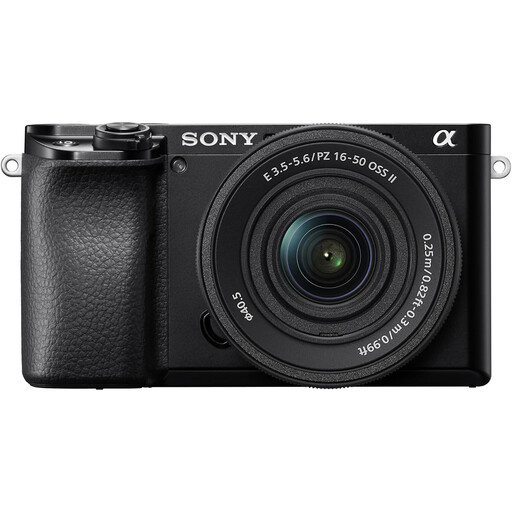 No image available
A supplied-zoom kit to assess for whole-model photographs, provided the exact lens meets your framing needs.
The product information identifies a 24.2MP APS-C camera, but the bundle title and description give different zoom ranges. Confirm which lens is supplied, its close-focus distance and magnification, and the white-balance controls you need.
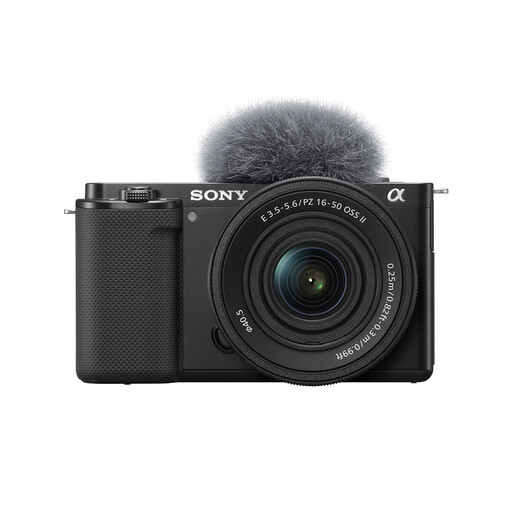 No image available
This interchangeable-lens kit is worth considering if you want to start with a supplied zoom for complete models.
The product information identifies a 16–50mm power zoom and Sony E-mount lens compatibility. For your intended photographs, check the supplied lens’s close-focus specifications, the still-image resolution and the available white-balance controls.
No, a full-frame camera is not a requirement for this tabletop task. Canon UK and Sony UK each specify a 24.2MP APS-C option; choose the lens and close-framing capability you need, then pay attention to focus, stable support and paper colour under the available light.
Start by checking a close-focusing kit lens if you mainly show complete origami models; consider a macro lens when tiny folds need to occupy much more of the frame. Canon UK specifies 1:2 magnification for its RF 35mm Macro, while Sony UK specifies 1:1 for its E 30mm Macro. Match any additional lens to your camera mount.
Check white balance for the light falling on the paper, and use stable support if you need a smaller aperture to keep more folds in focus. Nikon UK explains the role of white balance in rendering whites and other colours; Sony UK notes that close-range work can call for more depth of field and that a tripod can make focusing easier.
Not automatically: a wider aperture helps with handheld exposure in dimmer light, but close-up depth of field can leave parts of the model out of focus. For static origami, consider a smaller aperture and stable support when showing several folds clearly matters more than shooting handheld.
Confirm the exact supplied lens, its close-focus specifications, charging arrangements and applicable warranty conditions. Nikon UK’s Z50II listings, for instance, specify that a charger is not included; check the contents of the particular bundle you intend to buy rather than assuming every kit is equipped alike.