For occasional full-pen photographs, start by improving your white background, lighting and camera support; an existing phone may meet that need. If you need repeatable listing images and tightly framed nib or engraving shots, choose an interchangeable-lens camera around a compatible close-focusing lens. A 0.5× lens offers moderate close-up coverage, while a 1:1 macro lens gives more magnification; either way, close work calls for careful focus and controlled light.
Who this setup suits
Pen sellers making repeatable listings
Consistent full-pen framing and a clean white background matter when photographing a collection. Adobe identifies controlled lighting and a clean background as central to product photography; a stable camera position also helps you repeat a shot.
Collectors documenting small details
Nib engraving, feed texture and barrel materials call for closer focusing than a full-pen photograph. If these details are the main subject, compare lens magnification as well as the space available for lighting around the pen.
Occasional home listers using a phone
For occasional full-pen images, try a clean backdrop, controlled light and stable support before changing cameras. A dedicated lens system becomes more relevant when you need a particular close-up framing repeatedly.
What matters when choosing
Decide whether your hardest shot is the whole pen or a small detail. Then assess the lens and the tabletop setup together: magnification cannot compensate for unwanted reflections, and a white backdrop cannot bring an out-of-focus nib into focus.
| Concern |
What to check |
Who this matters to |
| Nib and material details |
Compare the lens’s maximum magnification and working distance. The cited Canon RF 35mm reaches 0.5×; Nikon’s Z MC 50mm and Sony’s E 30mm Macro reach 1:1, according to the respective brands. |
If I need the engraving or feed to fill more of the frame, close focusing takes priority over features aimed at other kinds of photography. Around 37% of consumers put detail coverage first. |
| Consistent white-background images |
Plan a clean backdrop, controllable lighting and a repeatable camera position; check whether the screen lets you inspect your chosen tabletop angle. |
When I photograph several pens for listings, I want their framing and background to look consistent. Roughly 27% of consumers prioritise that repeatability. |
| Focus in close shots |
Allow for stable support and shallow depth of field. If you plan to combine shots focused at different distances, check the body’s focus-bracketing function. |
For a close nib photograph, I need enough of its surface in focus, even though the subject stays still. Around 18% of consumers make the close-shot workflow their primary concern. |
| A simpler starting setup |
Decide whether full-pen images meet your needs before choosing a camera system; if you upgrade, check the lens and support needed for your intended shots. |
If I list a pen only occasionally, I would rather improve my existing setup before taking on another lens system. Approximately 18% of consumers put simplicity first. |
Buying pitfalls
-
Choosing the body before the lens
Close-up coverage depends on the particular lens: the Canon RF 35mm F1.8 Macro reaches 0.5×, while the cited Nikon and Sony macro lenses reach 1:1. A body choice alone does not settle how tightly you can frame a nib.
List the full-pen and detail shots you need, then check lens magnification and mount compatibility before selecting the body.
A close-focusing lens, stable support and lighting may all be needed for the intended detail-shot setup.
-
Expecting the white backdrop to do all the work
A clean background does not itself control illumination, shadows or reflections on a polished pen. Adobe identifies good lighting and a controlled environment as parts of product photography.
Test the background and lighting with your current camera or phone so you can see which part of the setup needs changing.
Backdrop preparation, lighting adjustments and editing can add time to each batch of photographs.
-
Overlooking space between lens and pen
Sony specifies a 2.4 cm minimum working distance from the front of its E 30mm F3.5 Macro to the subject. At that distance, positioning light around a reflective pen can be awkward.
Compare working distance alongside magnification, and consider whether a less extreme close-up leaves enough room for your lighting.
-
Treating a retailer returns policy as the whole answer
For UK distance sales, GOV.UK states that customers generally have 14 days after receiving an item to tell the seller they wish to cancel. A retailer’s voluntary returns policy is separate from statutory rights.
Check the seller’s cancellation process before ordering, and distinguish a change-of-mind return from a problem with faulty, damaged or misdescribed goods.
Relevant camera brands
Canon
An RF-system option for full-pen images and moderate close-ups, with a body suited to planning static close-focus sequences.
- Canon specifies the EOS R50 as a 24.2 MP APS-C RF-mount body and identifies it as offering focus bracketing.
- Canon specifies up to 0.5× magnification for the RF 35mm F1.8 Macro IS STM, rather than 1:1.
Nikon
A Z-system option when tightly framed pen details are a central part of the work.
- Nikon specifies 1:1 magnification for the NIKKOR Z MC 50mm f/2.8; the Z50II offers a viewfinder and an adjustable screen for composing tabletop shots.
- At close focus, careful lighting, support and depth-of-field management remain necessary.
Sony
An E-mount option that pairs an APS-C camera with a documented 1:1 lens for small pen details.
- Sony specifies a 24.2 MP APS-C sensor for the α6400 and 1:1 magnification for its E 30mm F3.5 Macro.
- Sony specifies a 2.4 cm minimum working distance for that macro lens, leaving little space between its front and the subject at closest focus.
Joybuy camera choices
These Sony cameras include zoom lenses for framing full-pen tabletop photographs. If tightly framed nib or engraving images are essential, check the supplied lens’s close-focus capability and the compatibility of any additional lens before choosing a kit.
 No image available
Sony Alpha ZV-E10 II K with 16–50 mm f/3.5–5.6 power zoom
The included zoom offers a starting point for framing full-pen tabletop photographs.
APS-C mirrorless camera; 16–50 mm f/3.5–5.6 power-zoom kit lens. For tightly framed details, check the lens’s maximum magnification and working distance.
View on Joybuy
 No image available
Sony A6700 with 16–50 mm lens
The included zoom can be used to adjust framing for full-pen photographs from a tabletop position.
APS-C mirrorless camera with a 16–50 mm lens. Check lens magnification and working distance if nib close-ups are a requirement.
View on Joybuy
 No image available
Sony A6400 with 16–50 mm power zoom
The supplied zoom gives you framing choices for whole-pen listing images.
APS-C mirrorless camera with a 16–50 mm power-zoom lens. If you also need close nib photographs, check the supplied lens’s magnification and working distance rather than assuming it matches Sony’s separate E 30mm macro lens.
View on Joybuy
 No image available
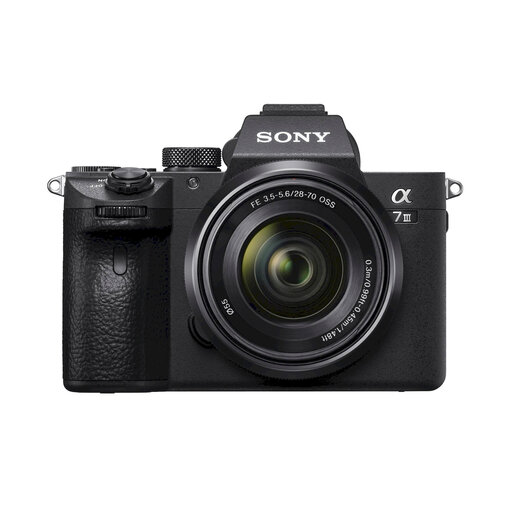
Sony Alpha 7 III with 28–70 mm zoom
The included zoom provides framing flexibility for full-pen photographs.
Full-frame mirrorless camera with a 28–70 mm zoom lens. Check that lens’s close-focus specifications before relying on it for tightly framed engraving or nib images.
View on Joybuy
Frequently asked questions
Do I need a 1:1 macro lens to photograph a whole fountain pen?
No: a lens that focuses closely enough for your intended full-pen framing may be sufficient. If nib engraving or material texture must fill much more of the image, compare its magnification with a 1:1 macro lens; the cited Canon RF 35mm reaches 0.5×, while the cited Nikon and Sony macro lenses reach 1:1.
How can I keep a white-background pen photograph from looking shadowy?
Treat lighting and the backdrop as parts of the setup, not as a feature of the camera body. Adobe recommends a clean background and controlled lighting for product photography; test light placement around the pen’s reflective surfaces before changing camera equipment.
What else should I plan for alongside the camera body?
Start with a compatible lens suited to your closest required shot, then plan stable support, lighting and a clean background. For very close details, check working distance so there is room to arrange light around the pen.
Can I cancel an online camera order in the UK if I change my mind?
For UK distance sales, GOV.UK states that customers generally have 14 days after receiving an item to tell the seller they wish to cancel. Check the seller’s cancellation instructions; a change-of-mind cancellation is distinct from seeking a remedy for faulty, damaged or misdescribed goods.


