What matters when choosing
Decide how closely the smallest feature must be photographed before choosing a lens; then consider how the complete setup fits the shared bench. Treat process video as an additional requirement rather than a substitute for close-focus capability.
| Concern |
What to check |
Who this matters to |
| Close-up detail |
Check the exact lens’s maximum magnification and its compatibility with the camera. A 1:1 lens reproduces a subject life-size on the sensor; 1:2 offers less magnification. |
If tiny stamps or inclusions need to fill my photographs, I would prioritise the lens over the body’s megapixel count. Around 33% of consumers put close-up detail first. |
| Repeatable full-product shots |
Check whether the lens frames whole bars and packaging at your tabletop position, and whether the screen moves for the angles you use. |
When I photograph sets and labels between other workshop activities, I need to recreate my framing without rebuilding the whole setup. For around 27% of consumers, repeatable full-product shots are the primary concern. |
| Stills and process video |
Check the camera’s stated video modes, screen movement and whether the selected lens focuses closely enough for your demonstrations. |
If I film cutting or wrapping as well as finished bars, I need one setup that handles both kinds of framing. Around 20% of consumers chiefly prioritise that combined use. |
| Space and pack-away |
Consider the body and lens together with any tripod or lighting you plan to use. Check working distance if lights or reflectors must fit near the soap. |
When I have to give the bench back after a short session, carrying and clearing the complete setup is my main constraint. That is the primary concern for around 20% of consumers. |
Joybuy camera kits for this work
These camera-and-zoom kits are relevant to whole-bar and packaging photographs; the APS-C models also offer options to consider when filming workshop content. The listed zoom lens for each kit needs its own close-focus check before you rely on it for tiny soap details. The full-frame Alpha 7 III is another zoom-kit option for full-product framing, not a substitute for a confirmed macro lens.
 No image available
Sony Alpha ZV-E10 II K with 16–50 mm f/3.5–5.6 Power Zoom lens
Consider this kit if you need product photographs alongside workshop video. Its title specifies 26 MP stills and 4K 60p recording; check the included lens’s magnification and focusing distance for texture shots.
Check the memory-card requirements before recording. The listing states that a memory card is not included and gives differing warranty descriptions, so confirm the applicable terms with the seller.
View on Joybuy
 No image available
Sony A6700 APS-C camera with 16–50mm lens
The included zoom makes this a kit to consider for whole bars and packaging, while the rotating screen is relevant to changing tabletop angles. Check the lens’s maximum magnification and minimum focusing distance before planning fine-detail photographs.
Confirm which support and lighting equipment you will need for the workbench setup.
View on Joybuy
 No image available
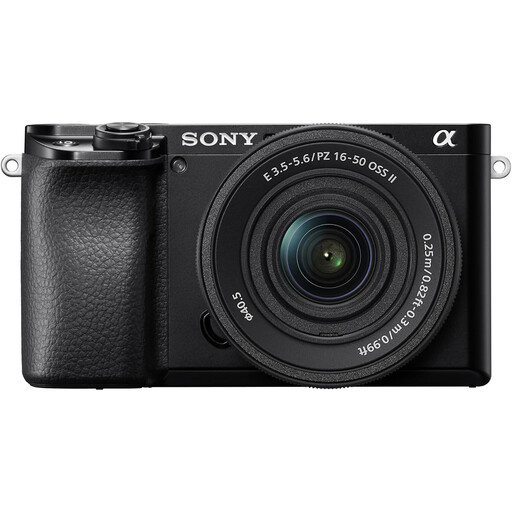
Sony A6400 APS-C camera with 16–50mm Power Zoom lens
This zoom kit is relevant to full-bar photographs and occasional video. Sony specifies a 24.2 MP APS-C sensor, 4K recording and a 180° tilting screen for the α6400; check the supplied lens’s close-focus specifications for small stamps or texture.
View on Joybuy
 No image available
Sony A6100 APS-C camera with advertised 16–55mm zoom lens
Consider this camera for whole-product photographs if the supplied zoom gives you the framing you need. Confirm the exact lens model and its close-focus specifications before ordering, especially if small surface details are part of the job.
View on Joybuy
 No image available
Sony Alpha 7 III full-frame camera with 28–70mm zoom lens
This full-frame zoom kit is relevant if your priority is photographing whole bars and packaging. The listed lens has a 30 cm minimum focusing distance; check its maximum magnification and the resulting framing before choosing it for small soap details.
View on Joybuy
Questions about soap photography
Do I need a true macro lens for handmade soap?
Not for every photograph: a zoom lens may give you the framing you need for whole bars and packaging. If tiny marks must fill the frame, check a true 1:1 macro lens. Nikon describes 1:1 as life-size reproduction on the sensor, whereas Canon specifies up to 1:2 for its RF 35mm F1.8 MACRO IS STM.
Why use a tripod for close-up soap photographs?
A tripod helps keep the camera steady when high magnification makes movement more noticeable. Nikon’s macro guidance recommends one; a fixed position also gives you time to adjust focus, though you will need space to set it up and put it away.
Can one camera take product photos and film the making process?
Yes, provided its video features and chosen lens suit both kinds of framing. Canon specifies 4K recording for the EOS R50, Sony does so for the α6400, and Nikon describes a presenter-to-item Product Review Mode on the Z50II. Check the actual lens’s close-focus capability separately.
What should I check before ordering a camera kit in the UK?
Confirm the seller, exact body and lens models, included accessories, warranty terms and return process. GOV.UK explains that UK consumer law protects purchases made remotely and in person; check retailer terms separately, and seek consumer-rights guidance if goods arrive faulty or misdescribed.


