Detail-led jewellery makers
If photographs need to show a clasp, engraving or stone setting rather than just the whole piece, start with the lens’s maximum magnification. A stable tabletop position also matters when placing focus on a small detail.


Choose the lens system before the camera body. A 1:1 macro lens suits frame-filling photographs of fine settings and clasps, while a lower-magnification close-focus lens may suit wider views of a whole piece. On a small table, leave room for a tripod and diffused lighting: sharp focus and controlled reflections depend on the setup as well as the camera.
If photographs need to show a clasp, engraving or stone setting rather than just the whole piece, start with the lens’s maximum magnification. A stable tabletop position also matters when placing focus on a small detail.
When photographing several pieces for listings, a tripod, a repeatable camera position and diffused light help you maintain consistent framing and manage reflections. Shopify UK identifies the tripod and diffusion as useful parts of a jewellery-photography setup.
If the same camera will also record demonstrations or packing videos, check its video workflow alongside the close-focus lens you intend to use for still photographs. Body features alone do not establish how large a tiny jewellery detail will appear in the frame.
For a small-table jewellery setup, decide how close your photographs need to get, then plan the lighting and camera position around that lens.
| Concern | What to check | Who this matters to |
|---|---|---|
| Fine detail | Check the exact lens’s maximum magnification and its compatibility with the camera. Nikon UK and Sony UK specify 1:1 for their cited macro lenses; Canon UK specifies up to 1:2 for its RF 35mm F1.8 Macro. | If a clasp or setting needs to occupy much of the photograph, I would make close-up scale my priority. Around 37% of consumers put fine detail first. |
| Reflections | Plan space for diffused light or a light tent, and check whether the lens leaves room to position it near the piece. | With polished metal or gemstones, I need to control what reflects in the surface before changing camera bodies. Roughly 27% of consumers prioritise reflection control. |
| Repeatable listings | Consider a tripod position and a backdrop you can keep consistent; confirm how you will compose and edit close-up shots. | When I photograph several pieces for listings, I want each shot framed consistently without rebuilding the table setup. Around 18% of consumers place repeatable production first. |
| Other photo and video work | Check the mount and a suitable close-focus lens alongside the body features needed for your other work. | If I also film demonstrations, the camera has to serve that work without compromising the jewellery stills I need. Approximately 18% of consumers make flexibility their primary concern. |
The word “macro” does not establish a 1:1 magnification ratio. Nikon UK and Sony UK specify 1:1 for the cited lenses, whereas Canon UK specifies up to 1:2 for its RF 35mm F1.8 Macro.
Check the maximum magnification and mount compatibility of the exact lens supplied with a kit, especially if tiny details must fill the frame.
A separate close-focus lens may be needed if the supplied lens cannot produce the crop you want.
A camera-body change does not replace a steady position or control reflections from metal and stones. Shopify UK identifies a tripod and diffused light or a light tent as useful jewellery-photography tools.
Plan where the tripod, background and diffusion will fit on and around the table before settling on the camera setup.
Sony UK specifies a 2.4 cm front-of-lens working distance at the closest setting of its E 30mm F3.5 Macro. That leaves little physical space between lens and jewellery for arranging light.
Check front-of-lens working distance as well as the focusing specification, then consider where a diffuser can sit without obstructing the shot.
Clear images do not replace selling information. GOV.UK guidance covers information to provide before an online order, while the UK Assay Offices of Great Britain explain that precious-metal descriptions can bring hallmarking requirements, subject to exemptions.
If you sell the jewellery in the UK, check the listing information and any hallmarking rules applicable to the particular item and its description separately from the photography.
Nikon Z is worth considering when life-size close-ups are central to the setup. Nikon UK specifies its NIKKOR Z MC 50mm f/2.8 as a 1:1 lens usable with Z-format cameras, including DX bodies.
Sony E-mount offers an APS-C route to life-size detail shots: Sony UK specifies 1:1 maximum magnification for the E 30mm F3.5 Macro.
Canon RF is relevant if wider jewellery compositions and general photography matter alongside close-ups. Canon UK specifies an RF mount and a 24.2 MP APS-C sensor for the EOS R50.
These camera-and-zoom-lens kits suit consumers considering a camera for jewellery stills alongside more general photo or video work. Check the supplied lens’s close-focus magnification before relying on any kit for frame-filling jewellery details, and plan the tripod and lighting separately.
 No image available
Consider this kit if you want an APS-C camera for jewellery photographs and other subjects. The named bundle includes a 16–50mm lens; check that lens’s maximum magnification for your required detail shots and confirm what tabletop accessories are included.
 No image available
This APS-C kit is an option for photographing whole pieces as well as general subjects. Its named bundle includes a 16–50mm Power Zoom lens; check the exact lens’s close-focus capability before choosing it for small settings or clasps.
 No image available
Consider this APS-C kit if jewellery stills will share a camera with video work. Its product name specifies 4K60p recording and a 16–50 mm f/3.5–5.6 Power Zoom kit lens; check that lens’s magnification if fine jewellery details are a priority.
 No image available
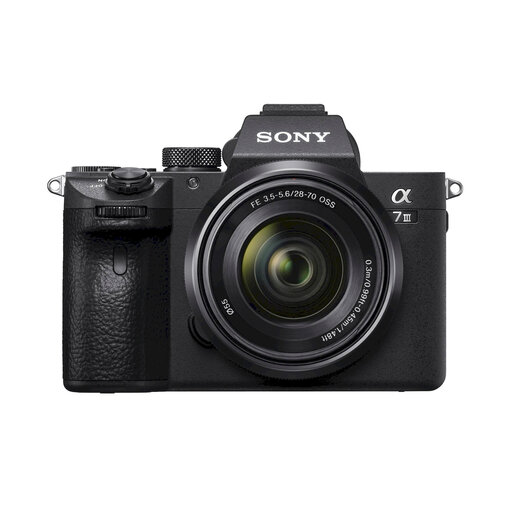
This full-frame kit may suit consumers who also want a camera for general photography. The named bundle includes a 28–70mm zoom lens; check its close-focus magnification and any compatible lens you would need for tighter jewellery crops.
A 1:1 macro lens is worth prioritising when very small details need to fill much of the frame; wider views of a whole piece may not need that scale. Nikon UK and Sony UK specify 1:1 for the cited NIKKOR Z MC 50mm f/2.8 and E 30mm F3.5 Macro, while Canon UK specifies up to 1:2 for its RF 35mm F1.8 Macro.
A body change alone will not control what polished jewellery reflects. Shopify UK recommends diffused light or a light tent for softer reflections, so consider the lighting position and available table space alongside the camera and lens.
Keep the camera steady, place focus on the important detail and consider a higher f-stop. If one exposure does not keep enough of the piece sharp, Shopify UK describes focus stacking as a way to combine exposures; check whether your intended camera or editing workflow supports it.
No. GOV.UK distance-selling guidance says sellers must provide specified information before an online order, including business and contact details, a description of the goods, the price including taxes, and cancellation information. Check the guidance applicable to your listing separately from the photographs.
It may do if it is described as platinum, gold, palladium or silver. Guidance from the UK Assay Offices of Great Britain says articles made of those metals must be hallmarked when described as such, subject to exemptions; check the rules for the particular item and description before listing it.