Close-up craft sellers
If you photograph stitch texture, toy faces or small accessories, the lens’s close-focus specification matters as much as the camera body.


Choose the camera and lens together: for small knitted toys, check whether the exact lens can frame your smallest intended detail at a workable tabletop distance before comparing camera-body features. Canon specifies close-focus figures for its RF-S 18-45mm kit lens, while Nikon’s Z50II offers a video mode for showing items to camera; a body-only Fujifilm X-M5 needs a separate lens choice before it can be used for photographs.
If you photograph stitch texture, toy faces or small accessories, the lens’s close-focus specification matters as much as the camera body.
If you are setting up interchangeable-lens photography on a tabletop, check whether the camera comes with a lens and whether its screen can be positioned for your shooting angle.
If you also record toy demonstrations or tutorials, consider how the camera handles an item presented to it on video, as well as how the lens frames still photographs.
Start with the smallest shot you need to make and the lens that will make it possible. Then check composition, video needs and what is actually included with the camera.
| Concern | What to check | Who this matters to |
|---|---|---|
| Close framing | Check the exact lens’s minimum focus distance and maximum magnification against your smallest planned detail shot. Canon specifies 15 cm and 0.25x for the RF-S 18-45mm lens; Nikon specifies a 0.2 m minimum focus distance for its NIKKOR Z DX 16-50mm lens. | When stitches or tiny accessories need to fill the photograph, I want to know how closely the lens can frame them; around 33% of consumers put close-detail framing first. |
| Tabletop composition | Check whether the screen moves into view at your planned camera angle and whether the listing includes a lens. Canon describes a vari-angle screen on the EOS R50; Fujifilm lists body-only and lens-kit X-M5 options separately. | For repeated shots from a fixed position, I need to see and adjust the framing without continually moving the toy; roughly 27% of consumers prioritise a repeatable still-photo workflow. |
| Photos and video | If you film demonstrations, check the video mode on the exact model and the lens’s framing at your filming distance. Nikon describes Z50II Product Review Mode as shifting focus from a presenter to a showcased item. | I make listing photos but also show a toy to camera, so the filming workflow matters alongside still shots; around 20% of consumers put combined photo-and-video use first. |
| A complete setup | Confirm the box contents, lens mount and exact kit lens before choosing a body-only or kit listing. | If I do not already own a compatible lens, I need the purchase to include what I need to start photographing; approximately 20% of consumers prioritise a complete camera-and-lens setup. |
Camera-body resolution does not establish how closely a lens can frame a stitch or accessory. Canon’s 15 cm minimum focus distance and 0.25x maximum magnification apply to its RF-S 18-45mm lens, not to every EOS R50 lens.
Identify your smallest required shot, then check the specifications of the exact lens you will use and the space available around your tabletop setup.
If that lens cannot make the shot you need, another compatible lens may be necessary.
Fujifilm lists the X-M5 body separately from an X-M5 option with an XC15-45mm lens. The body-only option is not a complete photographing setup.
Read the exact box contents and choose a compatible lens before deciding whether a body-only configuration suits you.
Nikon describes Z50II Product Review Mode for shifting focus towards an item shown during video. That does not establish the magnification available for still photographs.
Consider the mode if you film demonstrations, but assess your still-photo detail shots using the selected lens’s close-focus specifications.
The EOS R50 with an RF-S kit lens is one route into an APS-C interchangeable-lens setup for tabletop photographs.
The Z50II kit is relevant if toy photographs are accompanied by item demonstrations on video.
The APS-C X-M5 is an option for buyers who want to choose a Fujifilm X-mount lens as part of the setup.
These Sony choices include mirrorless cameras supplied with zoom lenses and a compact camera oriented towards video. For knitted-toy photographs, choose by the exact lens arrangement and the close framing you need, not by the camera’s video features alone.
 No image available
Consider this lens-kit camera if you plan to make toy photographs and product videos. Its title specifies a 26-megapixel APS-C camera, a 16–50 mm f/3.5–5.6 power zoom lens and 4K60p video; check the lens’s close-focus distance and magnification for your smallest toy details.
 No image available
This full-frame camera is listed with a 28–70mm zoom lens for a camera-and-lens starting point. Before choosing it for stitch or accessory close-ups, check that lens’s maximum magnification and the framing it allows at your shooting distance.
 No image available
The included 16–50mm power zoom lens makes this an APS-C camera-and-lens option to assess for toy photos. Check the supplied lens’s minimum focus distance and maximum magnification before relying on it for small knitted details.
 No image available
This APS-C camera comes listed with a 16–50mm lens, so assess the combination for your planned tabletop framing. Confirm the included lens’s close-focus distance and magnification before choosing it for stitch-level photographs.
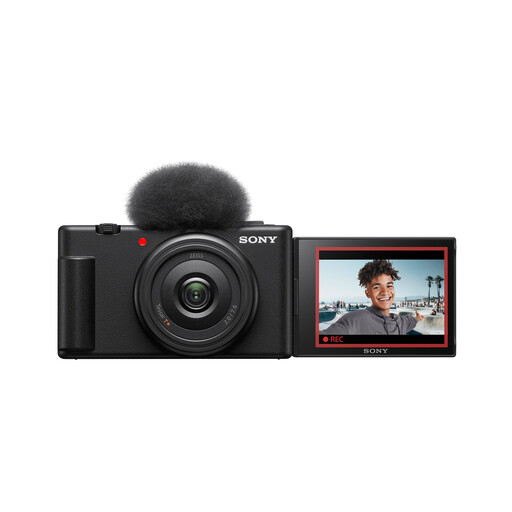 No image available
This compact, video-oriented camera is another option if you also film your toys. Its lens arrangement needs particular care: confirm the exact configuration, minimum focus distance and magnification before choosing it for close toy photographs.
Choose them as a system: the exact lens determines its stated close-focus distance and magnification. Canon specifies 15 cm and 0.25x for the RF-S 18-45mm lens, while Nikon specifies a 0.2 m minimum focus distance for the NIKKOR Z DX 16-50mm lens; check which lens the kit includes and whether it frames your smallest intended detail.
You need a compatible lens as well as the camera body. Fujifilm lists the X-M5 body separately from its option with an XC15-45mm lens, so check the exact configuration and the chosen lens’s close-focus specification.
For goods supplied under a contract, section 9 of the UK Consumer Rights Act 2015 requires satisfactory quality. Keep the order record and the description of the camera and lens bundle so you can identify what was supplied; the appropriate remedy depends on the circumstances of the fault.
Use an appropriate electrical-equipment collection or recycling route rather than ordinary waste. UK government guidance explains that the Waste Electrical and Electronic Equipment Regulations 2013 cover electrical and electronic equipment within their scope when it is placed on the UK market.