Who is this for?

Close-detail documentation makers

If engraved markings, cutting edges or repair details must be readable, start with the lens’s maximum magnification and check how much room remains between lens and tool for lighting. Nikon UK and Sony UK specify 1:1 macro lenses, but both can place the front of the lens close to the subject.

Workshop catalogue and listing photographers

If most images show complete tools, their scale and their bench setting, a wider close-focus lens may suit the work better than starting with the tightest close-up. Canon UK specifies up to 1:2 magnification for its RF 35mm F1.8 Macro IS STM; check whether that also covers the detail shots you need.

Shared-space how-to creators

If you move between benches or show a tool near the camera, consider screen positioning and focus aids alongside the lens. Agree where equipment can stand, and route any cables away from access routes and active work, in line with Health and Safety Executive guidance.

What matters when choosing?

A 1:1 macro system

Choose it when: Small inscriptions, edges or textures need to occupy a large part of the photograph; Nikon UK and Sony UK each specify a 1:1 lens for their respective camera systems.

Allow for: Close lens placement that can make lighting difficult: Nikon UK gives about 5 cm from the front of its MC 50mm lens to the subject, while Sony UK lists 2.4 cm minimum working distance for its E 30mm F3.5 Macro.

A wider close-up system

Choose it when: Complete tools and surrounding bench work are the main subjects, with occasional close-ups; Canon UK specifies a 35 mm lens offering up to 1:2 magnification for its EOS R system.

Allow for: A 1:2 maximum is not the same as 1:1 if a tiny marking must fill the frame.

Concern What to check Who this matters to
Fine detail Check the exact lens’s maximum magnification and working distance, not just the body’s pixel count. Canon UK specifies up to 1:2 for its RF 35mm macro; Nikon UK and Sony UK specify 1:1 for the macro lenses discussed here. If tiny maker’s marks or worn edges must be clearly shown, lens magnification is my primary concern. Around 33% of consumers put this close-detail need first.
Shared-space setup Check whether the screen and focus aids suit your shooting angles, and where supports and cables can safely go. The Health and Safety Executive advises routing cables to minimise trip hazards and mechanical damage. When I have to move around other people’s work, I need a setup I can position without blocking the bench or access route. This is the primary need for around 27% of consumers.
Whole-tool framing Consider focal length alongside close-up capability. Canon UK specifies a 35 mm RF macro lens with up to 1:2 magnification; confirm that the chosen lens can frame both your complete tools and required details. For listings or instructions, I need to show the whole tool and enough of its setting to make the image useful. Around 20% of consumers place that contextual view first.
Consistent images Plan a stable support and controllable lighting for repeated shots of reflective tools; position any stands and cables clear of active work areas. When photographing a series, I want framing and reflections to remain manageable from one tool to the next. Repeatability comes first for around 20% of consumers.

Buying pitfalls

  • Choosing a body before checking the lens

    Pixel count does not establish how large a small marking can appear in the frame. Canon UK specifies up to 1:2 magnification for the RF 35mm F1.8 Macro IS STM, while Nikon UK and Sony UK specify 1:1 for the macro lenses discussed here.

    Identify the smallest detail you must photograph, then check maximum magnification for the exact body-and-lens combination.

    If 1:2 does not meet that requirement, a different macro lens may be needed later.

  • Assuming every 1:1 lens leaves the same lighting space

    Nikon UK says the front of its NIKKOR Z MC 50mm f/2.8 can be about 5 cm from the subject; Sony UK lists a 2.4 cm minimum working distance for its E 30mm F3.5 Macro. Close placement can make it harder to light a reflective tool without casting a shadow.

    Check working distance as well as magnification, and consider where a light or diffuser could fit beside the tool.

  • Setting up as though the workshop were private

    Other users, active work areas and temporary cables affect where a camera, support or light can stand. The Health and Safety Executive advises co-ordinating measures in shared workplaces and routing cables to reduce trip and damage risks.

    Agree the shooting area with other users, keep access routes clear and move equipment away from active work.

  • Overlooking the delivery region on a product listing

    GOV.UK describes different product-marking arrangements for Great Britain and Northern Ireland; a marking should not be treated as a rating of camera performance.

    For an import or marketplace listing, confirm the intended delivery region and the seller’s stated product version and documentation before ordering.

Relevant brands to consider

Canon

An EOS R route for whole-tool photographs and bench context, with an RF close-up lens for occasional details.

  • Canon UK specifies an approximately 375 g EOS R50 body with battery and card, an RF mount, and a compatible RF 35mm F1.8 Macro IS STM lens offering up to 1:2 magnification.
  • That lens’s 1:2 maximum does not provide the 1:1 magnification required for a life-size detail image.

Nikon

A Z-system option for buyers whose tool photographs require 1:1 details and who may also show objects close to the camera in demonstrations.

  • Nikon UK specifies 1:1 magnification for the NIKKOR Z MC 50mm f/2.8 and a vari-angle touchscreen and Product Review Mode for the Z50II.
  • Nikon UK says the lens front can be about 5 cm from the subject, leaving limited room to position lighting at close focus.

Sony

An APS-C E-mount route for precise focus placement and a native 1:1 macro lens.

  • Sony UK specifies a 24.2 MP APS-C sensor, Focus Magnifier and focus peaking for the α6400, and 1:1 magnification for the E 30mm F3.5 Macro.
  • Sony UK lists a 2.4 cm minimum working distance for that macro lens, which can restrict lighting space around a tool.

Joybuy product choices

The Sony ZV-1F is a compact-camera option to consider for wider views of complete tools and bench activity. If small markings are essential, confirm its close-focus capability and lens configuration before choosing it in place of a dedicated macro system.
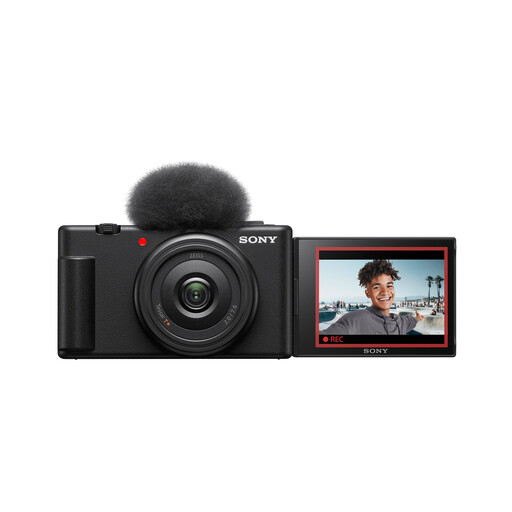
Sony ZV-1F compact vlog camera

Sony ZV-1F Compact Vlog Camera, 1-Inch Sensor

Consider its ultra-wide lens for complete tools and bench context rather than assuming it will fill the frame with tiny markings.

The product name specifies a 1-inch sensor and an ultra-wide lens. Before planning close-detail shots or a lens upgrade, confirm its close-focus capability and exact lens configuration.

View on Joybuy

Common questions

Do I need a macro lens to photograph craft tools?

Not necessarily for complete tools and moderate close-ups, but choose a lens specified for 1:1 magnification if tiny inscriptions or edges must occupy much of the frame. Canon UK specifies up to 1:2 for its RF 35mm macro, while Nikon UK and Sony UK specify 1:1 for the macro lenses discussed here.

How should I set up a camera in a shared workshop?

Agree a shooting area, keep supports out of active work and route cables away from access routes. The Health and Safety Executive advises co-ordinating measures in shared workplaces and minimising cable trip and damage risks; use stable support when repeatable static framing matters.

What should I do about workshop dust?

Avoid unnecessary lens changes in dusty conditions and check photographs for spots. Canon UK warns that dust entering a camera can cause black spots in images and advises professional servicing where maintenance is needed.

What should I check about returns and faulty goods?

Keep your order confirmation and seller details, inspect the camera and lens promptly, and distinguish a fault from a change-of-mind return. GOV.UK explains that consumer rights protect buyers of faulty goods; those statutory remedies are separate from any voluntary retailer returns policy.

Do Great Britain and Northern Ireland use the same product markings?

No: GOV.UK describes recognition of CE marking alongside UKCA under applicable Great Britain rules, while Northern Ireland has separate CE or CE-plus-UKNI arrangements. For an import or marketplace purchase, check the intended regional version and documentation with the seller rather than treating a marking as a camera-performance rating.