What matters when choosing?
Decide whether your portfolio is mainly about complete tools or fine details before comparing camera-body features. A lens labelled Macro does not necessarily provide 1:1 magnification: Canon specifies 0.5x for its RF 35mm F1.8 Macro IS STM, while Fujifilm specifies 1:1 for its XF30mmF2.8 R LM WR Macro.
| Concern |
What to check |
Who this matters to |
| Fine-detail reproduction |
Compare maximum magnification and the space available to light a tool at close focus. Fujifilm explains that 1x reproduces a subject life-size on the sensor; 0.5x reproduces it at half that size. |
If small engravings or moving parts must fill the frame, I need a lens that can reproduce them closely without blocking the light. Around 31% of consumers put fine detail first. |
| Consistent whole-tool images |
Check whether the lens frames complete tools and work surfaces, and whether the screen suits your tabletop angles. Keep the camera position steady between shots. |
When I photograph a series of complete tools, I want repeatable framing rather than maximum close-up magnification. Whole-tool presentation comes first for around 31% of consumers. |
| Stills and process video |
Check the video options, screen movement and audio connections you would use; assess the lens’s close-focus ability separately. |
If I also film how a tool is made or handled, I need a workable video setup alongside my stills camera. Around 23% of consumers make that combined workflow their primary concern. |
| Portable, manageable setup |
Consider the camera and lens together for carrying and set-up, and check whether the lens you plan to use covers most of your shots. |
When I move between a workbench and other locations, I want a setup I can carry and put to use regularly. A simpler, portable kit is the main priority for around 15% of consumers. |
Joybuy camera choices
These cameras are choices to examine for whole-tool photographs and portfolios that also include video. If tiny markings or textures must fill the frame, check the chosen lens’s magnification and close-focus distance before deciding whether the setup meets that need.
 No image available
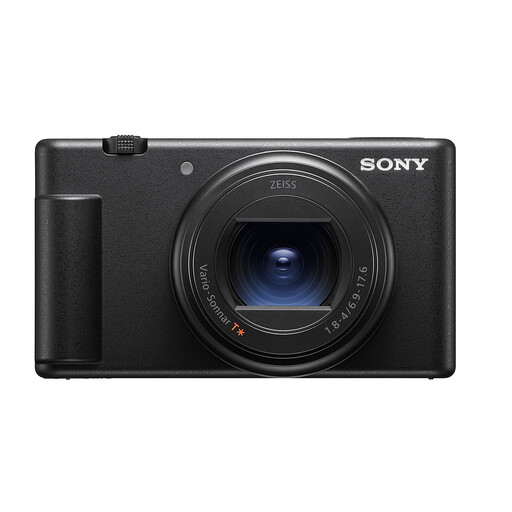
Sony ZV-1 II
Consider this zoom-lens camera if your portfolio combines general tool photographs with short clips.
The listed variant has a 1-inch stacked sensor, 20MP stills and 4K video. If small markings must fill the frame, check its maximum magnification and minimum focusing distance before choosing it.
View on Joybuy
 No image available
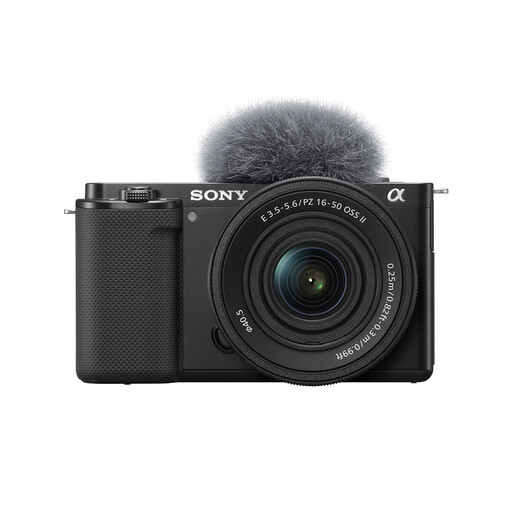
Sony ZV-E10K with 16–50mm Power Zoom Lens
Consider this interchangeable-lens kit if you mainly photograph complete tools but want to assess other lenses for closer work.
The kit name specifies a 16–50mm power zoom lens. Check that lens’s magnification and minimum focusing distance for the details you photograph, and confirm compatibility before choosing another lens.
View on Joybuy
 No image available
Sony Alpha ZV-E10 II K with 16–50mm f/3.5–5.6 Power Zoom
Consider this APS-C interchangeable-lens kit if your tool portfolio needs stills as well as process clips.
Its listed configuration specifies 26MP stills, 4K60p video and a 16–50mm f/3.5–5.6 power zoom lens. Check the included lens’s close-focus specifications separately if fine details are essential.
View on Joybuy
Common questions
Do I need a 1:1 macro lens for craft-tool photographs?
Not for every portfolio: if complete tools dominate, check whether a general-purpose or moderately close-focusing lens gives you the framing you need. If very small markings or components must appear large in the frame, compare 1:1 lenses; Fujifilm’s macro guidance defines 1x as life-size reproduction on the sensor, compared with half life-size at 0.5x.
Why do my close-up tool photographs look soft?
Close-range photographs demand precise focus, and only a small part of the subject may appear sharp at once. For stationary tools, Canon recommends a tripod or other support for macro still-life work; review focus across the detail you need to show.
Should I replace my camera or look for a macro lens?
If you already have an interchangeable-lens camera, check compatible macro lenses before replacing the body when close-detail coverage is the problem. If you are choosing a new system, compare its compatible lenses by maximum magnification and focusing distance alongside the camera features you need.
Can a retailer take back my old camera when I buy a replacement?
For a like-for-like replacement electrical product, GOV.UK states that the retailer must accept the old item free of charge. Ask the retailer how to arrange take-back when purchasing the replacement camera.


