Layout-documenting modeller
You want to show a whole layout or a train in its setting, with occasional closer photographs. A kit zoom gives you a way to change framing, but its close-focus capability still needs to suit your smallest subject.


For both wider layout views and close-ups of model trains, an interchangeable-lens camera with a kit zoom offers a starting point, provided the lens focuses close enough for the detail you want. If tiny fittings need to fill the frame, consider a dedicated macro lens and stable support; a smaller aperture can keep more of the model sharp but leaves less light for the exposure.
You want to show a whole layout or a train in its setting, with occasional closer photographs. A kit zoom gives you a way to change framing, but its close-focus capability still needs to suit your smallest subject.
You want small fittings, couplings or paintwork to fill more of the image. Lens magnification, precise focus and stable support matter more here than a body specification on its own.
You photograph beside a window where light may be dim, directional or behind the train. You need to manage exposure and support the camera, and may need to soften strong reflections.
Start with the smallest detail you want to photograph: that determines whether a kit zoom focuses close enough. For stationary models, assess camera support and window-light control before assuming a different body will solve blur or harsh contrast.
| Concern | What to check | Who this matters to |
|---|---|---|
| Fine detail and depth of field | Compare the proposed lens’s minimum focus distance and maximum magnification. Plan how you will steady the camera when using a smaller aperture. | If small fittings need to fill my photograph, I need enough magnification and careful focus without blurring the rest of the model. Around 40% of consumers put fine detail first. |
| Flexible framing | Check the supplied zoom range for both layout views and nearer train framing, and whether the camera accepts a different lens later. | I want to photograph the train in its setting and then move closer without changing lenses for every shot. Flexible framing is the primary need for around 30% of consumers. |
| Variable window light | Check exposure controls and how you will support the camera or soften direct sunlight. Lens stabilisation cannot freeze a moving train. | When the window leaves one side of the train dark or creates bright reflections, I need control over the light and exposure. Around 30% of consumers prioritise those conditions. |
A zoom may frame a layout well without making a small coupling fill the image. Canon specifies 0.25x maximum magnification for its RF-S 18-45mm kit lens, while describing 0.5x to 1.0x as typical for macro lenses.
Decide how tightly you need to frame your smallest feature, then compare the exact supplied lens’s minimum focus distance and maximum magnification.
A dedicated macro lens, stable support or equipment to control the light may be additional purchases for close work.
Lens stabilisation addresses camera shake, not movement of the train during an exposure. A stationary close-up and a moving train therefore call for different shutter-speed decisions.
For moving stock, check that the available light permits the shutter speed you need. For stationary models, steady support can help when a smaller aperture calls for a longer exposure.
Canon’s EOS R50 and Sony’s α6400 have published low-light autofocus figures under different stated conditions. Those figures do not establish which will focus better on a particular model train beside your window.
Check each model’s stated test conditions, and consider how you will place focus on the actual detail you want sharp.
The EOS R50 is an APS-C RF-mount camera that can begin with a compact zoom and use another compatible lens later.
The APS-C Z50II can be paired with Nikon’s Z DX 16-50mm zoom for layout views and nearer framing.
The APS-C α6400 offers E-mount lens compatibility and focus-assistance tools for deliberate close photographs.
These camera-and-zoom combinations offer starting points for layout views and nearer train framing. The Sony Alpha 7 III is a full-frame option; the other listed cameras are APS-C. For any of them, check the supplied lens’s close-focus capability before relying on it for tiny details.
 No image available
The supplied zoom offers framing choices for layouts and nearer train views. Sony specifies Focus Magnifier on the α6400 for deliberate focus placement; check the supplied lens’s minimum focus distance and maximum magnification for small fittings.
 No image available
This APS-C camera-and-zoom kit is an option for changing between wider layout and nearer train framing. Confirm the exact kit variant and the supplied lens’s close-focus figures before choosing it for small-detail photographs.
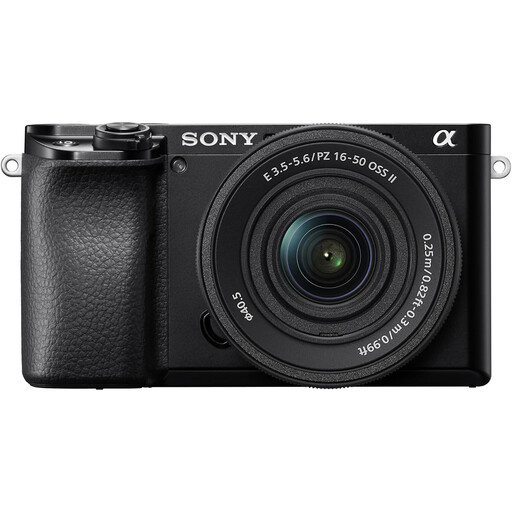 No image available
The supplied zoom provides a way to change framing between a layout and an individual train. Check the exact lens’s close-focus figures and your intended support arrangement if you plan longer exposures of stationary details.
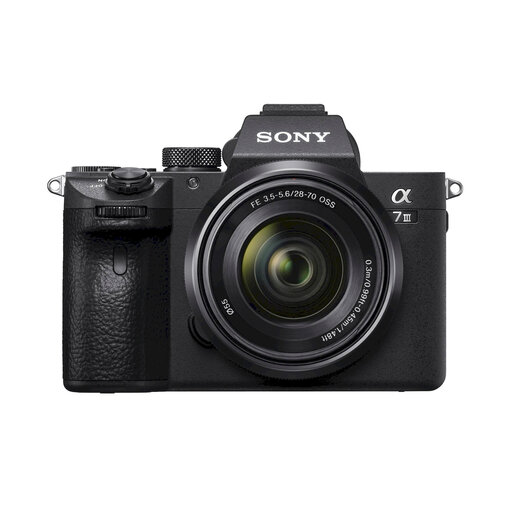 No image available
This full-frame camera-and-zoom combination offers framing choices for layout and train photographs, but it is distinct from the APS-C starting setups discussed above. Check the supplied lens’s minimum focus distance and maximum magnification before planning tight detail shots.
 No image available
This camera-and-zoom combination is relevant if you want to change framing between a layout and an individual train. Check the supplied lens’s close-focus figures for fine detail, and use stable support rather than assuming a stabilisation feature will address stationary close-up exposures.
Not for every photograph: a kit zoom may cover layouts and moderately close train views. For much tighter framing, compare maximum magnification as well as minimum focus distance; Canon specifies 0.25x for its RF-S 18-45mm kit lens and describes 0.5x to 1.0x as typical for macro lenses.
Soften direct sunlight where practical and watch for bright reflections and dark shadows on the train. Amateur Photographer advises diffusing bright sunlight for close photography; if that leaves too little light, steady a stationary model shot for a longer exposure or consider controlled fill light.
No: stabilisation addresses camera shake, not movement of the subject during an exposure. For a moving train, choose a shutter speed and lighting arrangement suited to its movement; for a stationary model, stable support can make a longer exposure more practical.
For most online orders, GOV.UK says customers can cancel within 14 days of receiving the item. Check the applicable cancellation procedure and any product exceptions before ordering; change-of-mind cancellation is separate from remedies for faulty, damaged or misdescribed goods.