Rely on your phone if quick sharing and light packing matter more to you than a separate camera's shooting options. A compact camera makes sense when you want optical reach without carrying lenses; consider mirrorless for planned photography that justifies a lens kit, or an action camera for mounted, wet or high-motion footage. Before choosing, account for the whole kit you will carry and the battery and baggage rules for your trip.
Who is choosing?
Phone-first holiday photographers
If everyday memories and quick sharing are your priorities, decide whether you encounter difficult light or distant subjects often enough to justify carrying another device. Which? identifies low-light photography and creative flexibility as reasons to consider a dedicated camera.
Sightseeing and wildlife travellers
If landmarks, animals or events will be some distance away, optical reach may matter more than lens-changing flexibility. A fixed-lens compact is one route to examine alongside the weight of a full camera kit.
Adventure and water-trip videographers
If you plan to film movement, use a mount or shoot around water, check the camera's configuration and handling rather than choosing on still-photo specifications alone. GoPro and Insta360 describe different water-use conditions for their respective models.
What matters when choosing?
Start with the footage you expect to make, then decide whether the equipment needed to make it will be practical to carry.
Phone-led setup
Choose it when: everyday photos, sharing and carrying one device are the main priorities.
Accept: a phone may not meet recurring needs for long optical reach or the low-light and creative options discussed by Which?.
Compact camera
Choose it when: you want a separate camera with useful built-in optical zoom but not a bag of lenses.
Accept: the fixed lens determines which focal lengths you can use; check each model's actual range.
Mirrorless camera
Choose it when: planned portraits, night scenes or other deliberate photography make lens choice worth the extra equipment.
Accept: the lens and accessories add to what you carry; Canon lists its EOS R50 at approximately 375 g with card and battery before a lens is fitted.
Action camera
Choose it when: mounting, movement or water use shapes the footage you want.
Accept: a wide-angle action view is not a substitute for telephoto subjects, and water ratings depend on the exact setup.
| Concern |
What to check |
Who this matters to |
| Low-light and creative photography |
Consider the complete body-and-lens setup for your planned scenes, including lens choice and total carrying weight. |
If indoor scenes, evenings or portraits are central to my trip, I want more control than I expect from my phone. Around 31% of consumers put those photographic options first. |
| Optical reach without a heavy kit |
Check the focal-length range and ready-to-carry size; a compact's built-in lens and a mirrorless kit are different packing commitments. |
When I expect distant landmarks or wildlife, I need a camera I will still take out for the day. Around 31% of consumers prioritise that combination of reach and portability. |
| Mounted and water-capable video |
Check the intended mount and the water rating for the exact lens and housing configuration. |
For moving or wet activities, I need to secure the camera and know the limits of my setup. Around 23% of consumers make action-and-water capture their primary concern. |
| Simple capture and sharing |
Decide whether your phone covers the scenes you expect before taking on another device to carry and charge. |
If most of my photos are everyday moments that I want to share quickly, I would rather travel light. Around 15% of consumers put that simplicity first. |
What can catch you out?
-
Comparing a mirrorless body with a ready-to-shoot compact
A body-weight figure leaves out the lens you need to take photographs. Canon lists the EOS R50 at approximately 375 g with card and battery, before a lens is fitted.
Compare the equipment you would actually carry throughout the day, including lenses and a way to protect them.
-
Assuming every waterproof setup has the same rating
GoPro states a 10 m rating for the HERO13 Black with its standard lens but 5 m with the Ultra Wide Lens Mod. Insta360 also warns that underwater 360° footage from the X5 can have stitching issues.
Check the rating and care instructions for your camera, lens and housing combination before using it in water.
If clean underwater 360° footage matters, Insta360 recommends a dive case for the X5.
-
Putting spare batteries in hold luggage
The UK Civil Aviation Authority says spare batteries and power banks should travel in the cabin, not in a checked bag.
Protect spare battery terminals, keep the batteries accessible if your cabin bag is moved to the hold, and check the airline's rules for your itinerary.
-
Buying a camera you will leave behind
A dedicated camera only helps with the photographs you take it out to make. The advantages discussed by Which?, including low-light options and creative flexibility, must be worth carrying another device for your trip.
Plan when you would use it: a phone may cover everyday sharing, while zoom, deliberate lens choice or mounted activity footage can justify different equipment.
Brands to consider
These model examples illustrate different camera types; the suitability of a particular kit depends on its lens, configuration and your trip.
Canon
The EOS R50 illustrates an interchangeable-lens mirrorless route for travellers planning a camera-and-lens kit.
- Canon specifies a 24.2 MP APS-C sensor, RF/RF-S lens compatibility and an approximate weight of 375 g with card and battery.
- That weight excludes the lens; the EOS R50 does not have in-body stabilisation.
Sony
The RX100 VII is an example of a fixed-lens compact for travellers considering built-in zoom instead of interchangeable lenses.
- Sony specifies a 24–200 mm equivalent zoom for the RX100 VII.
- Its lens cannot be swapped for a different focal-length range or lens type.
GoPro
The HERO13 Black illustrates the action-camera route for mounted and water-related footage.
- GoPro states that the HERO13 Black is waterproof to 10 m with its standard lens.
- GoPro gives the Ultra Wide Lens Mod configuration a different, 5 m rating; its wide perspective does not replace telephoto framing.
Insta360
The X5 is an example for travellers specifically interested in reframing 360° action footage.
- Insta360 rates the X5 to 15 m when its seals are correctly closed.
- Insta360 warns of possible underwater stitching issues and recommends a dive case for optimal underwater 360° results.
Holiday camera choices on Joybuy
These choices cover action footage, interchangeable-lens shooting and portable video or vlogging. Compare each camera with the scenes you plan to capture rather than treating every compact model as a long-zoom option.
 No image available
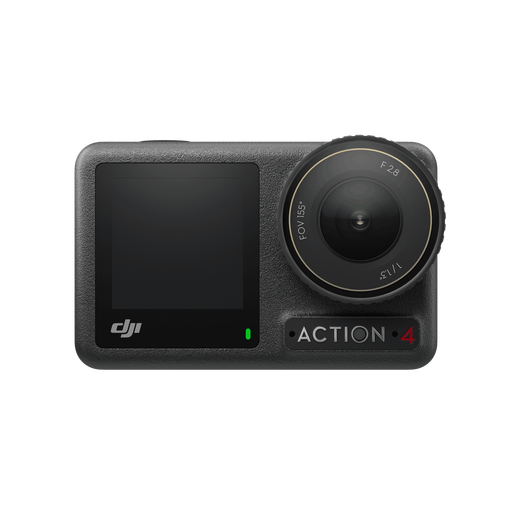
DJI Osmo Action 4 Adventure Combo
Consider this action camera for trips centred on moving, wide-angle footage. Its product name specifies 4K/120fps recording, a 155° field of view, a 1/1.3-inch sensor and three extra batteries. Check the water-use conditions for your setup and the battery markings before flying.
View on Joybuy
 No image available
Sony ZV-E10K with 16–50mm Power Zoom Lens
Consider this interchangeable-lens camera if you intend to carry a separate kit for holiday photos or vlogging. The named bundle includes a 16–50mm power-zoom lens. Check the weight of the complete kit you would pack, rather than comparing camera bodies alone.
View on Joybuy
 No image available
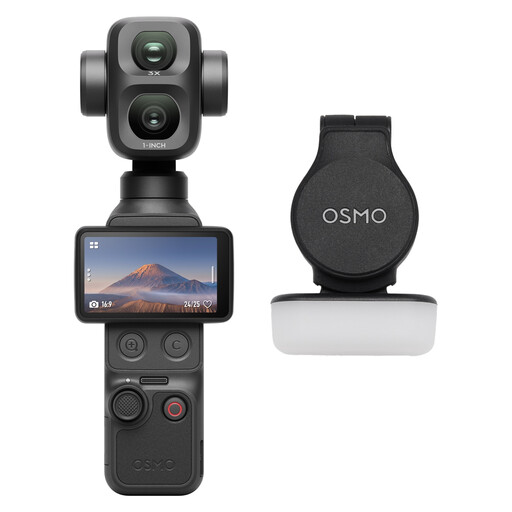
Osmo Pocket 4P Standard Combo, Black
This Standard Combo is a choice to examine for portable holiday video. If distant subjects are important, confirm its lens coverage and the full weight of what you would carry before choosing it over a zoom camera.
View on Joybuy
 No image available
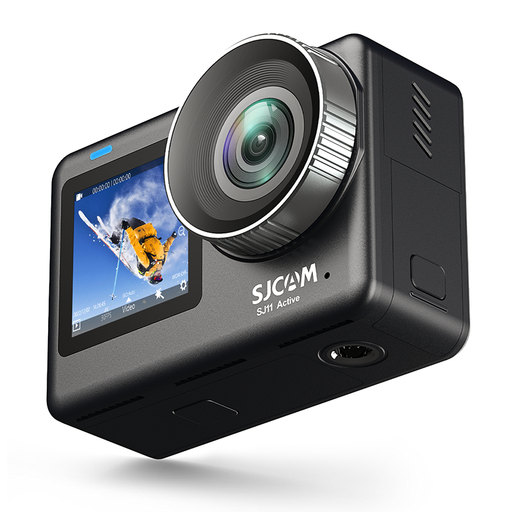
SJCAM SJ11 Active Dual Screen Action Camera
Consider this model for active trips where dual screens and wide-angle video matter. Its product name specifies 4K/30fps video, a 2.33-inch touch display, a 1.3-inch selfie display and 6-axis electronic image stabilisation. The stated water rating is 5 m without a case and 30 m with the waterproof case; check the case and seals before underwater use.
View on Joybuy
 No image available
Sony ZV-1F Compact Vlog Camera
Consider this compact for selfies, vlogging and wide scenes rather than assuming it has the reach needed for distant wildlife. Its product name specifies a 1-inch sensor and an ultra-wide lens. Check the lens coverage against the subjects you expect to photograph.
View on Joybuy
Holiday camera questions
Can spare camera batteries go in checked luggage on a UK flight?
No. The UK Civil Aviation Authority says spare batteries belong in the cabin and should be protected from damage. If your cabin bag is moved to the hold, take the spare batteries out first.
When does a camera battery need airline approval?
Under UK Civil Aviation Authority guidance, batteries from 100 Wh to 160 Wh require airline approval, while batteries over 160 Wh are prohibited in passenger baggage. Check the rating marked on your battery and your airline's current conditions before travelling.
Will a camera bag count as a separate cabin item?
Do not assume it will. The UK Civil Aviation Authority notes that baggage allowances vary by airline, destination and travel class; check your booking's allowance and whether the camera bag counts as a personal item or cabin bag before committing to a larger kit.
How should I care for an Insta360 X5 after using it in seawater?
For the X5, Insta360 instructs users to rinse the camera in fresh water, soak it for 5–10 minutes, wipe it dry and let it air dry before removing the battery or using it further. Follow the model's seal and maintenance instructions for the configuration you used.


