
24/7 Customer Support

Free returns

Same-day & Next-day Delivery

Quality Guaranteed

Unlock Your Welcome Offers: FREE Delivery | Up to 80% OFF | Free 30-day JoyPlus trial
Download the APP
Choosing camera and photography accessories can quickly become expensive when product listings focus on headline features rather than everyday usability. A camera may advertise 8K recording, a drone may promise impressive stunts or a printer may claim effortless photo output, yet the detail that matters most could be battery capacity, compatibility or the cost of consumables.
This guide explains the specifications worth checking before you buy, highlights common purchasing traps and matches a selection of products to different UK user profiles.
A high pixel count or 8K label does not automatically mean better footage for every situation. Storage requirements, lighting, stabilisation, lens coverage and editing-device compatibility also affect the final result.
For example, an action camera with 8K 360° video may suit travellers who want to reframe footage later, while a compact body-worn camera may prioritise continuous recording, night vision and simple playback over cinema-style image quality.
Battery claims usually depend on a particular recording resolution, frame rate or operating condition. Check whether the quoted runtime applies to your intended mode. Also consider whether spare batteries, a charging case or a camera battery charger are included.
A portable photo printer has a different limitation: its battery may support only a set number of prints per charge, while inkjet printers require replacement cartridges and photo paper. These running costs can matter more than the initial purchase price.
Accessories are rarely universal in practice. A selfie stick tripod must support your phone’s size and weight. A battery charger must match the exact battery model and charging specification. Canon ink cartridges must correspond to the printer series, not simply the brand name.
Before ordering, compare the product listing with your device model, operating system, connection type and intended mounting method.
For cameras, look beyond resolution and check:
A DJI Osmo 360 camera, for instance, is specified with native 8K 360° video, 4K/120fps and a 170° boost view. These modes are suitable for different filming styles, so check which setting you will use most often.
Battery capacity is measured in milliamp-hours, but capacity alone does not guarantee a specific runtime. Recording resolution, wireless connectivity, screen use and temperature all influence performance.
For longer shoots, look for:
For vehicle or security recording, loop recording and continuous power support may be more important than a compact battery. For travel, weight and the ability to recharge from a power bank may be the practical priorities.
A lightweight device is easier to carry, but a tall selfie stick tripod stand needs a stable base when fully extended. The Verbex K50 extends to approximately 193cm and weighs around 340g, so it should be placed on a firm, level surface before remote shooting.
For drones, check flight environment, age guidance, battery charging and local requirements before use. Keep the aircraft away from crowds, buildings and restricted areas, maintain visual line of sight and avoid unsuitable weather. Always follow current UK drone guidance before flying.
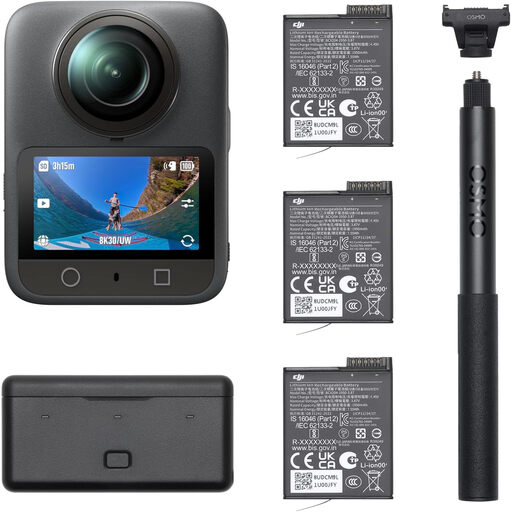
Why This Fits Their Persona: A suitable option for vloggers, travellers and action-sports users who want high-resolution 360° footage and a supplied multi-battery setup for longer outings.
The listing identifies recording modes, stabilisation and included batteries rather than relying on resolution alone. Buyers should still confirm storage and app requirements before purchase.
Native 8K 360° video, 4K/120fps and 170° boost video; Adventure Combo includes three batteries and a multifunctional battery case.
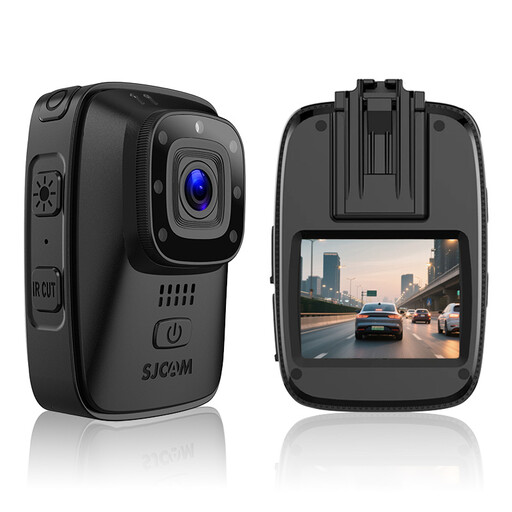
Why This Fits Their Persona: Designed for users needing a compact body-worn camera or car dash camera with extended recording, storage flexibility and low-light functionality.
Its recording modes, loop recording, 2.4GHz Wi-Fi and stated 450-minute 1080P runtime are clearly specified. IP65 protects against dust and water spray, but it should not be submerged.
Up to 1296P video, 140° viewing angle, infrared night vision and support for microSD cards up to 128GB.
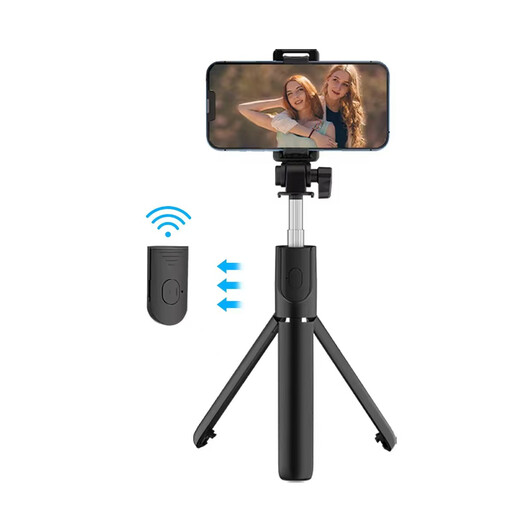
Why This Fits Their Persona: A practical choice for phone users creating travel photos, livestreams or group shots without carrying a separate full-size tripod.
The maximum extension, supported phone size and remote range are stated, helping buyers check whether their handset is suitable before ordering.
Approximately 193cm extension, Bluetooth remote control and vertical or horizontal phone positioning.

Why This Fits Their Persona: Suitable for families, parties and travellers who want small prints from a smartphone without carrying a conventional inkjet printer.
ZINK printing avoids ink cartridges, but buyers still need compatible photo paper. The stated battery capacity, print size and app requirements make ongoing use easier to plan.
Bluetooth 5.2 connectivity, approximately 180g weight, 50x76mm prints and an estimated 45-second print time.
Your requirements may call for a different type of equipment:
We have compiled a complete, real-time list of products that fully satisfy these strict selection criteria and UK safety regulations.
Check device compatibility, dimensions, battery or power requirements, storage support and included accessories. For cameras, compare the recording mode you intend to use rather than relying only on the maximum resolution.
The ongoing cost depends on the printing system. ZINK printers do not use ink cartridges, but require dedicated photo paper. Traditional printers use cartridges and paper, so compare pack contents, page yield and the price of replacement consumables.
There is no single runtime for every camera. Resolution, frame rate, stabilisation, Wi-Fi, screen brightness and temperature all affect performance. A stated runtime is most useful when it identifies the recording mode, such as 1080P at 30fps.