Choose an interchangeable-lens camera if you need more control over framing, focus and lens choice for pottery photographs. In a shared workshop, establish soft, repeatable lighting and stable support before choosing a body: a flexible screen helps with awkward bench angles, while close glaze details also depend on the lens you fit.
Who is this for?
Potters selling glaze-sensitive work online
When buyers cannot handle a piece, photographs need to show its colour, form and surface clearly. The Pottery People recommends a background, soft light and a stable camera as the basis of a pottery-photography setup.
Makers working around a shared bench
If you photograph between making sessions and need to clear the space promptly, consider how easily you can position the screen, support the camera and put the kit away. Canon and Nikon list flexible screens on relevant models; Nikon also describes its 16–50mm kit lens as retractable.
Ceramicists documenting small details
For rims, carving and local glaze variations, focus placement matters, but so does the lens’s ability to frame the detail closely. Sony lists focus magnification and manual-focus peaking for the α6400A; check the specification of the particular lens you intend to use.
What matters when buying?
Start with the lighting and working space, then decide how close you need to photograph and which camera-and-lens combination you can set up consistently.
| Concern | What to check | Who this matters to |
|---|
| Glare and glaze colour |
Plan for soft, controllable light and stable support. If you intend to edit stills, check RAW recording on the exact camera. |
I need glossy pieces to show their colour and surface without distracting reflections. Around 33% of consumers put glare and colour control first. |
| Close surface detail |
Check the exact lens’s minimum focusing distance and maximum magnification; focus aids on the body do not change either lens limit. |
When small variations or carved marks must fill the frame, I need a lens that can get close enough. For around 27% of consumers, close-detail photography is the primary concern. |
| Shared-space setup |
Compare screen movement and the size of the camera with its intended lens attached or stored. |
I have limited time at the bench and need to frame a piece before clearing my equipment away. Quick setup comes first for around 20% of consumers. |
| Complete kit |
Compare the exact supplied lens, battery and charging equipment, alongside the support and lighting you plan to use. |
Before committing to a body or kit, I need to know what else my photography setup requires. Around 20% of consumers primarily focus on completing the system. |
Buying pitfalls
-
Expecting a new body to fix reflections
Harsh light and an unstable position can make a glossy surface difficult to photograph regardless of the camera body. The Pottery People identifies soft light, a background and a stable camera as the foundations of a pottery setup.
Try a repeatable lighting position and neutral background, then assess which camera controls or lenses you still need.
Allow space for a stable support and lighting setup as well as the camera.
-
Assuming focus aids make a kit lens suitable for close-ups
Magnifying the camera’s view helps place focus, but it does not alter how closely the lens can focus.
Check the minimum focusing distance and maximum magnification of the exact supplied lens if small glaze effects need to fill the frame.
That requirement may call for a different close-focusing lens.
-
Comparing a body with a kit without checking the contents
Charging equipment is one reason to read the exact listing. Canon’s EOS R50 body listing includes a battery charger but not a USB-C charger; Nikon’s Z50II 16–50mm kit listing states that a charger is not included.
Compare the supplied lens, battery and charging equipment for the particular packages you are considering.
-
Putting used batteries in household rubbish
GOV.UK advises against putting batteries and electrical products in household rubbish.
Take unwanted batteries and camera equipment to an appropriate collection point for recycling.
Brands to consider for this setup
Canon
The EOS R50 is relevant if a light body and vari-angle screen would make tabletop framing easier.
- Canon UK lists a 24.2 MP APS-C sensor, vari-angle touchscreen and approximately 376 g body weight with card and battery for the EOS R50.
- Canon specifies lens/digital rather than sensor-shift image stabilisation. Stable support still matters for repeatable pottery photographs.
Nikon
The Z50II with the 16–50mm kit lens is worth considering when viewing angles and storage space change during a workshop session.
- Nikon UK describes a vari-angle screen, a viewfinder that previews setting changes and a retractable 16–50mm lens with in-lens vibration reduction.
- Creative Picture Controls are not a substitute for controlled lighting when recording glaze colour. Check the current kit contents before purchase.
Sony
The α6400A is relevant when placing focus on small ceramic details is a priority.
- Sony UK lists 24.2 MP APS-C capture, 14-bit uncompressed RAW, Focus Magnifier and adjustable manual-focus peaking for the α6400A.
- Those focusing aids do not change the fitted lens’s close-focus limit or control reflections on a glaze.
Joybuy camera choices
These camera-and-zoom-lens choices provide different ways to frame pottery at a shared bench. For any kit, check the included lens’s close-focus capability if small glaze details are central to your work, and plan for controlled light and stable support.
 Image unavailable
Sony Alpha 7 III full-frame camera with 28–70mm zoom lens
Consider this full-frame camera-and-zoom combination for framing whole pieces; check the included lens’s close-focus specifications if you also need small glaze details.
View on Joybuy
 Image unavailable
Sony Alpha ZV-E10 II K APS-C camera with 16–50mm f/3.5–5.6 Power Zoom kit lens
The flip-out screen described for this kit may help when framing pottery from changing bench positions. Check how closely the included lens can focus before choosing it for surface details.
View on Joybuy
 Image unavailable
Sony A6400 APS-C camera with 16–50mm Power Zoom lens
This zoom-lens kit is an option for framing pottery at the bench. Confirm the exact camera’s file formats if you plan to edit RAW files, and check the lens’s close-focus specifications for detail shots.
View on Joybuy
 Image unavailable
Sony A6700 APS-C camera with 16–50mm lens
The rotating screen described for this camera may suit changing tabletop angles. If editing files or photographing tiny glaze features matters, confirm the camera’s file formats and the included lens’s close-focus specifications.
View on Joybuy
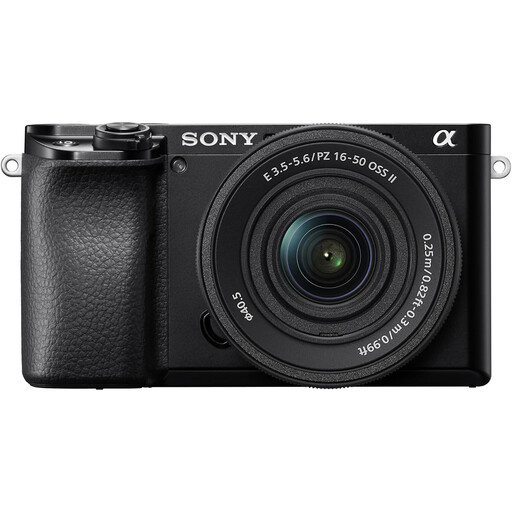 Image unavailable
Sony A6100 APS-C camera with 16–55mm zoom lens
The tilting screen described for this camera may help with overhead or low-angle framing. Check the exact kit’s file formats and lens close-focus specifications against your editing and detail-photography needs.
View on Joybuy
Common questions
Will a different camera body make glossy glazes look accurate?
Not by itself: lighting and camera position still shape how reflections, shadows and colour appear. The Pottery People recommends soft light, a background and a stable camera for photographing ceramic work; establish a repeatable setup before comparing bodies.
Do I need a macro lens for pottery photographs?
Not necessarily for photographs of a whole piece, but a close-focusing lens may be needed when small surface effects must fill the frame. Check the exact lens’s minimum focusing distance and maximum magnification; focus magnification on the camera helps place focus but cannot change those lens limits.
What should I check in a body-only or kit listing?
Confirm the supplied lens, battery and charging equipment for the exact package, then account for any support or lighting you need. Canon’s EOS R50 body listing includes a battery charger but not a USB-C charger, while Nikon’s Z50II 16–50mm kit listing states that a charger is not included.
Where should I take an unwanted camera battery or camera in the UK?
Use an appropriate battery or electrical-waste collection point rather than household rubbish. GOV.UK advises that batteries and electrical products should be taken to suitable collection points for recycling.


