What should you check?
Start with the smallest feature your photographs must show, then plan the lighting and repeatable shooting setup around the lens you choose.
| Concern |
What to check |
Who this matters to |
| Small details |
Check the exact lens’s maximum magnification, minimum focusing distance and camera-mount compatibility. A 0.5x close-focus lens and a 1:1 macro lens offer different native magnification. |
If small clasps or engraving must fill a detail shot, I want to capture them through the lens rather than depend on heavy cropping. Around 34% of consumers would put native close-up detail first. |
| Reflections and colour |
Check that you can control exposure and white balance; plan a stable camera position, diffused lighting and clean product surfaces. |
When photographing shiny accessories, I need to manage bright spots and room reflections so the item remains clear. Roughly 33% of consumers would make reflection and colour control their primary concern. |
| Repeatable catalogue shots |
Check the lens mount and whether the screen, self-timer and file-transfer options suit your tabletop workflow. |
If I photograph a changing range of products, I need a practical way to repeat whole-item and detail views. Around 20% of consumers would prioritise that workflow. |
| Kit complexity |
Consider the body, exact lens, support equipment and lighting together. Decide whether your smallest required shot calls for 1:1 magnification. |
If my listings mainly need whole-accessory views, I do not want to build a more complex kit than those photographs require. Approximately 13% of consumers would put proportionate kit complexity first. |
Joybuy camera choices
These interchangeable-lens camera kits offer starting points for whole-accessory catalogue photographs. For tiny detail shots, check the included lens’s close-focus specifications and consider a compatible macro lens separately.
 No image available
Sony Alpha ZV-E10 II K with 16-50 mm f/3.5-5.6 lens
Consider this APS-C interchangeable-lens kit for whole-item catalogue views; its title specifies a 26-megapixel camera and a 16-50 mm f/3.5-5.6 lens.
Before planning shots of tiny clasps or engravings, check the included lens’s maximum magnification and minimum focusing distance.
View on Joybuy
 No image available
Sony A6700 with 16–50mm lens
This APS-C mirrorless camera comes with a 16–50mm lens to consider for whole-accessory catalogue framing.
Check the supplied lens’s magnification and minimum focusing distance against the smallest feature you need to photograph.
View on Joybuy
 No image available
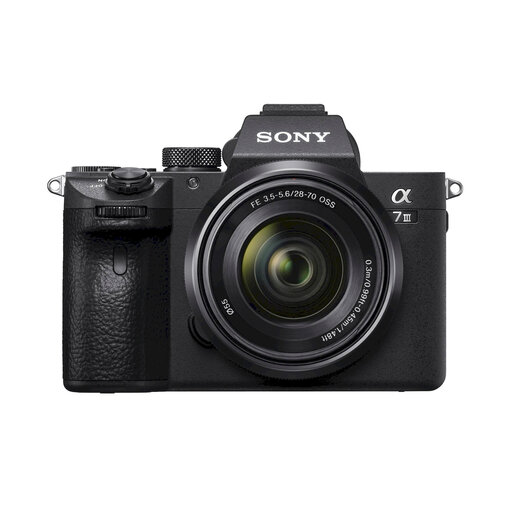
Sony Alpha 7 III with 28–70mm zoom lens
For general catalogue framing, this full-frame mirrorless kit includes a 28–70mm zoom lens.
Check that lens’s maximum magnification before relying on it for frame-filling photographs of small stones or fastenings.
View on Joybuy
 No image available
Sony A6400 with 16–50mm power zoom lens
Consider the included 16–50mm power zoom lens for whole-item views. Sony specifies that the α6400 uses E-mount lenses, so a compatible close-up lens can be considered separately.
The supplied zoom’s magnification and minimum focusing distance need checking for tiny details; the FE 50mm F2.8 Macro discussed above is a separate lens.
View on Joybuy
Questions about accessory photography
Do costume accessories need a 1:1 macro lens?
Not always: a 0.5x close-focus lens may suit whole accessories and moderate close-ups, while 1:1 magnification is worth considering if tiny clasps, stones or engravings must fill the frame. Canon UK, Nikon and Sony specify different maximum magnifications for the lenses discussed here, so check the exact lens rather than the word “macro” alone.
Why do shiny accessories look distracting even when they are in focus?
Sharp focus does not remove reflections, bright spots or fingerprints. Shopify UK highlights these problems with reflective products; clean the item, clear the surroundings and try controlled, diffused lighting before deciding to replace the camera.
Can I add a macro lens after buying the camera?
Yes, if a lens with the magnification you need is compatible with the chosen camera mount. Check that lens’s mount, maximum magnification and minimum focusing distance before buying the body; a camera body has no macro magnification rating on its own.
Do online-shop photographs replace written accessory details?
No. GOV.UK’s online-selling guidance tells sellers to describe goods before an order is placed and to include as much information as possible. Use photographs alongside clear written details such as the accessory’s dimensions, materials and contents where relevant.


