For folded-textile catalogue photos, consider an interchangeable-lens camera when you need repeatable overhead framing and an editable colour workflow. An APS-C body with a standard zoom is a starting point, but the lens must frame your largest item from the height available and focus closely enough for the details you intend to show. Consistent lighting and white balance still matter, whatever camera you choose.
Who this setup suits
DIY flat-lay shop owners
If you photograph folded garments, scarves, bedding or fabric pieces from above, you need to fit the item into the frame and repeat the camera position across listings. Shopify describes flat-lay clothing photography as shooting a garment on a flat surface from directly above.
Colour- and texture-conscious textile sellers
When hue, weave or print affects a customer’s choice, consistent lighting and white balance deserve attention alongside the camera and lens. Adobe explains that white balance adjusts how colours appear in a photograph.
Mixed-content small retailers
If the same camera will also record product demonstrations or short clips, screen position and video handling become relevant. Those features serve a different task from keeping still catalogue images consistently framed and lit.
What matters when choosing
Start with the shooting surface and available camera height, then decide how you will keep colour consistent. Treat video features as a separate priority if demonstrations are part of your shop workflow.
| Concern | What to check | Who this matters to |
|---|
| Consistent colour and detail |
Check RAW recording and white-balance controls on the exact body; plan for consistent lighting. |
When colour or weave distinguishes my textiles, I need images that stay consistent across variants rather than relying on a changing camera preset. Around 36% of consumers put consistent colour and detail first. |
| Overhead framing and close-ups |
Measure the shooting area and camera height; check the exact lens’s field of view and close-focus specification. |
If I photograph differently sized folded items, I need the whole piece in a level overhead frame and enough reach for detail views. For around 29% of consumers, framing and close-ups are the primary concern. |
| Repeatable listing workflow |
Check whether you can view the screen from your mounted camera position and use a transfer method that fits your workflow. |
With many items or variants to list, I want a camera position and capture routine I can repeat without disrupting each shot. Ease of workflow comes first for around 21% of consumers. |
| Stills and product video |
If demonstrations are planned, check the exact model’s video and audio connections as well as its still-photo handling. |
When I also show textiles in product clips, I need one setup that accommodates both outputs. Around 14% of consumers make mixed photo-and-video use their primary priority. |
Buying pitfalls
-
Choosing the body before checking the overhead distance
A flat lay is photographed from above, so the space between camera and textile affects whether the lens can fit the whole item into a level frame.
Measure your largest folded item and available mounting height. Check the lens’s field of view and close-focus capability against both full-item and detail shots.
A lens that cannot cover those shots from your available position may call for a different lens or a change to the overhead setup.
-
Assuming automatic white balance makes colours consistent
Changing light or creative camera settings can change the appearance of textile colours between photographs. Adobe explains that white balance affects colour throughout an image.
Keep lighting consistent, check white balance for each setup and apply edits consistently across variants of the same textile.
Correcting inconsistent batches can add editing time or require a reshoot.
-
Prioritising video features for a still-photo task
Features intended for demonstrations do not fix uneven flat-lay lighting, an unsuitable lens or an unstable overhead position.
Decide whether you will make product clips before weighing video functions against the lens, lighting and secure camera support needed for still images.
-
Retouching away details customers need to see
Colour, pattern and condition can affect a textile purchase. Business Companion says traders are responsible for ensuring the products they offer and sell to consumers are accurately described.
Correct capture problems without changing how the textile is represented. Include detail views where they help customers assess the item.
Relevant camera brands
Canon
Canon’s EOS R50 and RF-S 18-45mm lens are relevant to a compact APS-C flat-lay setup.
- Canon UK specifies a 24.2MP APS-C sensor and vari-angle touchscreen for the EOS R50. Its RF-S 18-45mm lens is listed with a 29–72mm full-frame-equivalent zoom range on an APS-C EOS R camera.
- Check whether your mounting height permits a level full-item shot, particularly when using the wider end of the lens.
Nikon
The Z50II is relevant when catalogue stills share a camera with product demonstrations.
- Nikon describes a vari-angle touchscreen and Product Review Mode that shifts focus towards an item presented to the camera.
- Creative Picture Controls are not a substitute for consistent lighting and white balance when photographing textile colours.
Sony
Sony’s Alpha 6400 is relevant to sellers considering an editable still-image workflow with E-mount lenses.
- Sony UK specifies a 24.2MP APS-C sensor and 14-bit uncompressed RAW recording for the Alpha 6400.
- Choose the lens for your actual overhead height and close-detail needs; the body specification alone cannot establish that fit.
Joybuy cameras for textile photography
These interchangeable-lens camera kits are options to assess for folded-textile stills and, where needed, product clips. Compare each supplied lens with your shooting height and detail requirements before choosing.
 No image available
Sony Alpha ZV-E10 II K with 16–50mm f/3.5–5.6 power zoom
Consider this APS-C kit if you plan to make textile stills and product clips with the same camera.
The product title specifies 26MP stills and 4K60p video. Confirm the supplied lens’s exact model and close-focus capability against your detail-shot needs.
View on Joybuy
 No image available
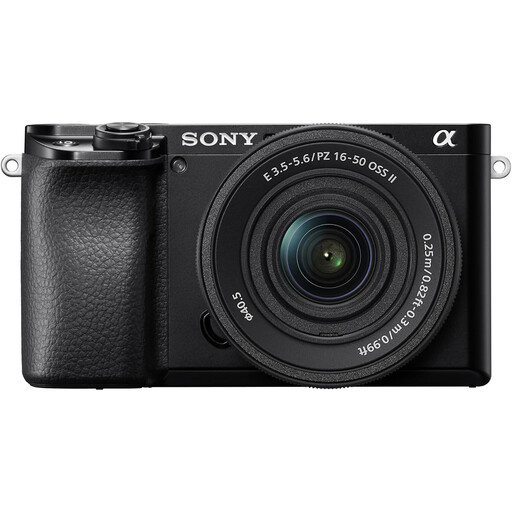
Sony A6400 with 16–50mm power zoom
Consider the A6400 if an editable still-image workflow is important to your catalogue photography. Sony UK specifies 14-bit uncompressed RAW recording for this camera model.
Check the supplied lens’s exact identity and close-focus capability: the kit information gives conflicting lens-range figures.
View on Joybuy
 No image available
Sony A6700 with 16–50mm lens
This APS-C kit is worth assessing if you want a zoom-equipped camera for textile stills and may also make clips.
Before choosing it for catalogue work, check whether the exact lens fits your largest overhead frame and focuses closely enough for your detail views. Confirm the camera’s colour-workflow controls if you intend to edit batches.
View on Joybuy
 No image available
Sony A6100 with zoom lens
Consider this APS-C kit for a fixed textile-photography setup if its supplied lens works at your available overhead height.
Confirm the exact lens model and its close-focus distance before relying on it for weave, trim or label photographs. Check RAW and white-balance controls if they are part of your editing workflow.
View on Joybuy
 No image available
Sony Alpha 7 III full-frame with 28–70mm zoom
This full-frame kit is another interchangeable-lens option if its framing suits your shooting space; sensor format alone does not resolve textile colour or overhead composition.
Check the 28–70mm lens against the available camera height and the detail views you need. Confirm RAW and white-balance controls for your intended editing routine.
View on Joybuy
Questions about textile photography
Do I need more megapixels for folded-textile product photos?
Not necessarily: choose a lens and shooting position that frame the item, then address lighting and colour consistency before deciding on resolution alone. Canon UK and Sony UK each specify 24.2MP for the researched EOS R50 and Alpha 6400 models; check your shop’s image requirements when comparing exact cameras.
How can I keep fabric colours consistent across listings?
Keep the light and white-balance process consistent across each batch, then edit variants with the same approach. Adobe explains that white balance changes how colours appear; an editable file gives you room to make corrections, but the shooting setup still needs attention.
Can a kit zoom photograph both whole items and fabric details?
It can if the exact lens covers both shots from the camera positions you can use. Canon specifies a 29–72mm full-frame-equivalent range and 15cm close focus for its RF-S 18-45mm lens on an APS-C EOS R camera; do not assume another kit zoom has the same range or close-focus capability.
Do photographs for a UK textile shop need to show the product accurately?
Yes: photographs used to describe a textile should not give customers a misleading impression of its colour, pattern, condition or included items. Business Companion says traders are responsible for ensuring that products offered and sold to consumers are accurately described; review edits and add detail images where they help customers understand the item.


