A dedicated camera is worth considering when your phone cannot give you the optical reach, low-light results or lens and exposure choices you regularly need. For travel, wildlife and events, the choice then depends on what you photograph most: a compact keeps the kit small, a bridge camera builds in a long zoom, mirrorless offers interchangeable lenses, and an action camera is designed around mountable video. Check the lens and the complete recording kit, not just the camera body.
Who might need a dedicated camera?
Travellers and wildlife watchers photographing distant subjects
If animals, birds, sport or far-off details are your recurring subjects, optical reach may matter more than another phone upgrade. Which? identifies distant subjects as a reason to consider a dedicated camera, while Nikon recommends a long lens for wildlife photographed from a distance.
Low-light event and creative-control photographers
Indoor events, dusk scenes and deliberate choices about exposure or background blur can make lens and camera controls worth carrying. Which? identifies low light and creative flexibility as reasons to compare a dedicated camera with a phone.
People recording active trips
For footage captured while moving, mounting and protection against wet conditions may matter more than long-distance still photography. GoPro describes its HERO range as waterproof and compatible with mounts and accessories; check the limits and contents of the particular model you choose.
What matters when choosing?
Start with the shots your phone misses most often. That determines whether you need a different camera at all, then whether reach, a manageable kit, creative control or mountable video should lead the choice.
Keep using your phone
Choose it when: Convenience and quick sharing matter most, and your usual subjects are close enough for the camera you already carry.
Trade-off: Which? identifies distant subjects, low light and creative control as situations where a dedicated camera may offer practical advantages.
Compact camera
Choose it when: You want a small travel camera with built-in optical zoom for subjects you cannot approach.
Trade-off: The fixed lens keeps packing simple but cannot be exchanged if you later need a different focal range.
Bridge camera
Choose it when: Long built-in optical reach is your main reason for photographing distant wildlife, sport or travel details.
Trade-off: You avoid a separate lens purchase, but you cannot replace the built-in lens as your needs change.
Mirrorless camera
Choose it when: You want to select compatible lenses for different subjects or need camera controls and moving-subject features suited to your work.
Trade-off: Lens compatibility, the weight of the complete kit and protection for both body and lens become part of the decision.
Action camera
Choose it when: Mountable footage during a wet or movement-heavy activity matters more than conventional stills.
Trade-off: It does not provide the interchangeable lenses or long telephoto framing sought for many distant wildlife and sport shots.
| Concern | What to check | Who this matters to |
|---|
| Reach for distant subjects |
Compare optical focal ranges, not digital zoom figures. For a mirrorless kit, check that a compatible telephoto lens is included or available. |
If I cannot get closer to wildlife or sport, I need to frame the subject before taking the shot. Around 33% of consumers would put that reach first. |
| Travel portability |
Compare the weight and size of the camera with its working lens fitted, and check whether one lens covers your usual subjects. |
I want a camera I will carry throughout a trip, without planning every outing around extra lenses. Portability would be the main concern for around 25% of consumers. |
| Low light and creative control |
Check the intended lens’s maximum aperture across its zoom range, available exposure controls and camera–lens compatibility. |
For indoor events or dusk scenes, I care most about the exposure and look I can achieve with the lens I use. Around 25% of consumers would prioritise that control. |
| Mountable action footage |
Check the exact model’s waterproof limits, compatible and supplied mounts, recording modes and power requirements. |
I need footage while I am moving or in wet conditions, when holding a conventional camera is awkward. That would come first for around 17% of consumers. |
Buying mistakes to avoid
-
Choosing a body before working out the reach you need
A camera body alone will not frame a distant animal or player closely. Nikon recommends telephoto or super-telephoto lenses for wildlife, while a bridge camera offers its stated focal range through a fixed lens.
Identify the subjects you usually cannot approach, then compare fixed-lens equivalent ranges or the focal range of a compatible lens in the complete kit.
A mirrorless body bought without suitable reach may mean carrying or obtaining another lens later.
-
Treating digital zoom as optical reach
Enlarging a captured image is not the same buying criterion as the focal range available when you take it. Which? highlights optical zoom when discussing distant subjects.
Compare the stated optical zoom or lens focal length separately from any digital-zoom figure.
-
Assuming the right focal length means a lens will fit
Mount and sensor-format conditions also matter. Canon distinguishes its RF, RF-S, EF, EF-S and EF-M systems; an RF-S lens used on a full-frame EOS R body invokes a cropped image area.
Check the exact camera model, lens mount and applicable sensor-format behaviour before ordering.
-
Assuming the whole setup is weather-protected or ready for your recording mode
Protection and card requirements vary by model and setup. Weather protection stated for a body does not establish the limits of an attached lens or accessory, and the recording mode you choose may call for a particular card specification.
Check the manufacturer’s conditions for the exact body and lens, then confirm card requirements, charging arrangements and included accessories for your intended use.
Relevant camera brands to consider
Canon
Relevant to travellers and outdoor-event photographers considering EOS R mirrorless bodies and compatible lenses.
- Canon describes APS-C bodies as lighter than full-frame alternatives and notes the narrower field of view available for framing distant subjects with the same focal length.
- Check the exact RF or RF-S lens and body combination; other Canon lens systems cannot be treated as interchangeable without their stated compatibility conditions.
Nikon
Relevant to photographers considering Z-system bodies and long lenses for wildlife or sport.
- Nikon’s wildlife guidance recommends a long lens and, where available on the camera, continuous autofocus and animal-subject detection.
- Those recommendations do not mean every Nikon body or lens supplies the same focusing features or reach.
Panasonic LUMIX
Relevant to fixed-lens travel compacts and bridge cameras with built-in optical zoom.
- Panasonic specifies a 24–720 mm equivalent 30× optical range for the TZ99 and a 20–1200 mm equivalent 60× range for the FZ82D.
- Their fixed lenses cannot be swapped later, so compare the particular built-in range with the subjects you photograph.
Sony
Relevant to buyers considering a small, fixed-lens compact rather than carrying separate lenses.
- Sony specifies a 24–200 mm equivalent F2.8–4.5 lens for the RX100 VII.
- Check whether that range reaches far enough for your usual wildlife or sport distance; a compact lens cannot be exchanged for a longer one.
GoPro
Relevant to mountable activity footage rather than an interchangeable-lens photography system.
- GoPro describes its HERO action camera as waterproof and compatible with 35 mounts and accessories.
- Confirm the individual model’s waterproof limits and supplied mounts; an action-camera viewpoint does not replace long telephoto framing.
Joybuy cameras for these uses
These options cover mountable action video and one mirrorless kit for travel photography and video. If distant wildlife or sport is your main reason to buy, pay particular attention to lens reach: the mirrorless kit shown has a 16–50 mm lens, while the action cameras serve a different kind of shot.
 No image available
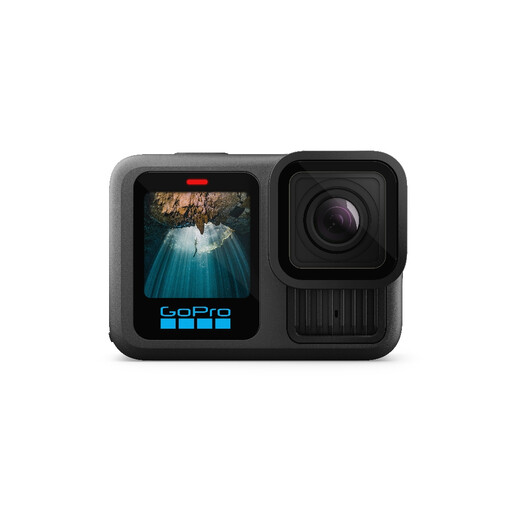
GoPro HERO13 Black
Consider this action-camera model for footage from an active trip rather than distant-subject photography.
Check that your intended mount and a microSD card meeting the stated A2 and V30-or-higher requirement are ready for your recording plans. Check battery runtime in the mode you expect to use.
View on Joybuy
 No image available
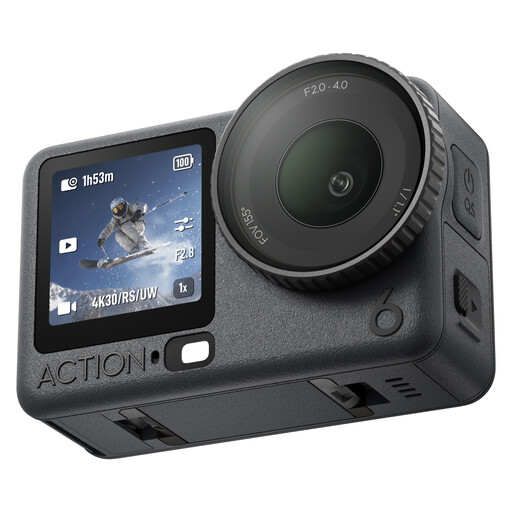
DJI Osmo Action 6 Standard Combo
This action-camera bundle is a choice for activity-led video, not a substitute for a telephoto wildlife setup.
The product name specifies a 1/1.1-inch sensor, variable aperture and 4K video. Its four-hour battery figure is stated for normal conditions; check runtime at your chosen settings and whether DJI Mimo will work with your phone setup.
View on Joybuy
 No image available
Sony Alpha ZV-E10 II K with 16–50 mm f/3.5–5.6 power-zoom lens
Consider this interchangeable-lens kit if you want to develop a travel photography and video setup over time.
The product name specifies an APS-C camera, 26 megapixels and 4K60p recording. Its supplied 16–50 mm lens is not a long telephoto lens: for distant wildlife or sport, check compatible longer lenses. Confirm the card speed required for your recording mode and the weather protection of the body-and-lens combination.
View on Joybuy
 No image available
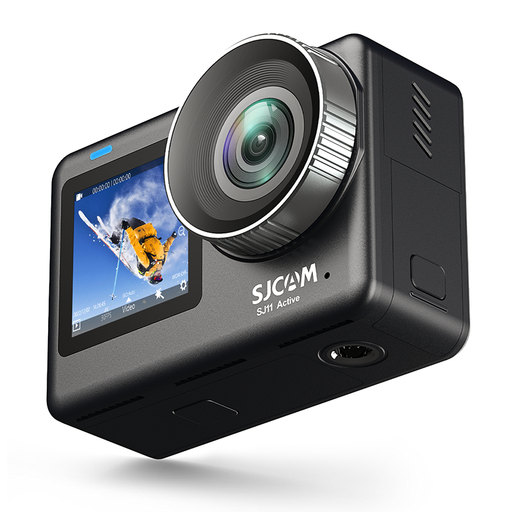
SJCAM SJ11 Active dual-screen action camera
The front and rear displays make this a model to consider when framing activity footage from either side of the camera.
The product name states 4K at 30 fps, 5 m waterproofing without a case and 30 m with a waterproof case. Use the case for conditions beyond the bare-body limit. Check runtime in your chosen mode and whether the included 64 GB card meets its recording requirements.
View on Joybuy
 No image available
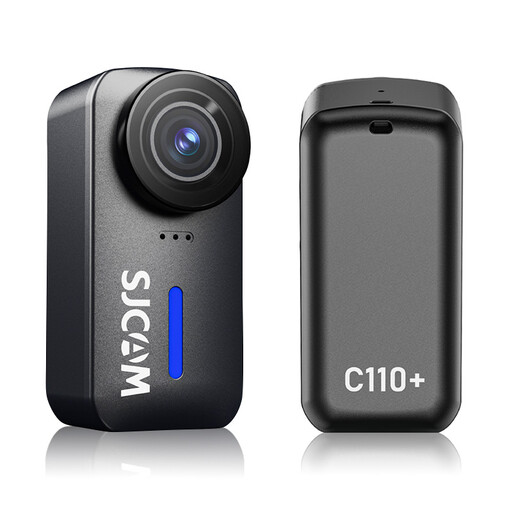
SJCAM C110+ 4K action camera
Consider its wide-angle format for nearby activity scenes rather than telephoto views of distant subjects.
The product name specifies a 170° f/1.8 lens and 4K recording. Waterproofing to 30 m requires the case. The stated 120-minute recording time applies at 2K/30 fps, so check runtime if you intend to use other settings.
View on Joybuy
Common questions
When is a dedicated camera worth carrying instead of my phone?
It is worth considering when distant, low-lit or fast-moving subjects, or the control offered by different lenses, repeatedly limit the photographs you want to make. Which? identifies low light, optical zoom and creative flexibility as practical reasons to compare dedicated cameras, while recognising that phones take strong pictures in many conditions.
What should I check before buying a separate lens?
Check the exact camera mount and lens compatibility before comparing focal length or aperture. Canon states that RF and RF-S lenses are for EOS R System bodies; using an RF-S lens on a full-frame EOS R body invokes a cropped image area. Check stabilisation and the lens’s maximum aperture for the way you intend to shoot.
What else do I need for a full day of photos or video?
Plan for a memory card that meets your camera’s stated recording-mode requirements and a way to keep it powered. Check the contents of the exact kit for a card, charger and spare battery rather than assuming that items shown with another bundle are included.
Can I rely on weather sealing when it rains?
Only within the protection conditions stated for your exact camera and lens. Canon identifies weather sealing as a feature that varies by camera, while Nikon describes protection for the Z6III specifically; neither statement establishes the limits of every setup or accessory.
Do personal travel or family photos need UK GDPR compliance steps?
The Information Commissioner’s Office says data protection does not cover photographs and videos made for personal use, such as a family album. That personal-use guidance does not settle requirements for commercial, organisational or surveillance photography; also check the rules of the particular venue or event before shooting there.


