A smartphone keeps everyday travel photography simple, but a dedicated camera is worth considering when optical reach, difficult lighting, lens choice or mounted action video matters more. Which? identifies zoom, low light and creative flexibility as reasons to consider a separate camera; the right format then depends on whether you need a camera to carry all day, a lens system, long built-in zoom or rugged video.
Who might need a camera?
Travellers moving beyond phone photography
You want a camera you will actually carry throughout the day, with optical reach or more control over the picture. A compact may suit that priority; check its lens range against the subjects you expect to photograph.
Wildlife and distant-subject travellers
You need to frame birds, animals or other distant subjects without relying on digital enlargement. Consider the lens’s optical reach alongside the size and support you can manage on a trip.
Active-trip video shooters
You want footage while moving or using a camera around water. Mounting, stabilisation, audio and the conditions attached to water protection matter more here than interchangeable lenses.
What should you prioritise?
Decide what your phone cannot do for your intended subjects before choosing a camera format. A smaller camera is easier to carry, while long optical reach, interchangeable lenses and mounted video call for different equipment.
Smartphone
Choose it when: Everyday travel pictures and quick sharing matter more than a separate camera.
Consider: Which? points to zoom, low light and creative flexibility as reasons to look beyond a phone.
Compact camera
Choose it when: You want a self-contained camera that remains practical to carry.
Consider: Its built-in lens sets the available framing range; compact models do not all offer the same optical zoom.
Mirrorless camera
Choose it when: Selecting lenses for subjects or creative control is your reason to carry a camera.
Consider: The lens you pack changes the kit’s reach, carrying weight and suitability in difficult light.
Bridge camera
Choose it when: Distant subjects are the priority and you want long optical reach in one built-in lens.
Consider: It is not a pocket-compact or interchangeable-lens route.
Action camera
Choose it when: You need mounted, moving or water-based video.
Consider: Check the fitted accessories and water-protection conditions; this format does not replace a long wildlife lens.
| Concern |
What to check |
Who this matters to |
| Optical reach |
Compare the optical 35 mm-equivalent lens range, then consider how you will support the camera at its longest setting. |
If distant wildlife is the main subject, I need to frame it through the lens rather than depend on digital enlargement. Around 29% of consumers put optical reach first. |
| Low light and creative control |
Check the actual body-and-lens combination, including lens aperture and the type of stabilisation. |
For indoor scenes or deliberate control over depth of field, I want to choose a lens that suits the shot. Around 29% of consumers put difficult light or lens-based control first. |
| Travel carry |
Compare the camera with its battery, card and intended lens; check what charging equipment you will take. |
A camera needs to fit into my travel day, not stay at the accommodation. For around 21% of consumers, manageable carry is the primary concern. |
| Active video |
Check mounting, stabilisation modes, audio and whether the stated water depth requires a case. |
When recording movement or water activities, I need a setup suited to the activity and its conditions. Around 21% of consumers put rugged, mountable video first. |
Buying pitfalls
-
Confusing digital zoom with optical reach
Digital enlargement is not the same specification as a lens’s optical focal-length range. Nikon, for example, distinguishes the COOLPIX P1100’s 125× optical zoom from its separate Dynamic Fine Zoom figure.
For distant subjects, compare the stated optical 35 mm-equivalent range and consider whether you can hold or support the camera at the long end.
-
Judging a mirrorless kit by the body alone
The lens changes both what you can photograph and what you must carry. Canon lists the EOS R50 at approximately 375 g with a battery and card, before accounting for the selected lens.
Plan the complete kit around your subjects: body, lens, battery, charger, card and any carrying or support equipment.
-
Choosing a video card by capacity alone
The SD Association says speed-class markings indicate minimum writing-speed categories. A camera’s card requirement can vary with the recording mode.
Check the camera’s stated requirement for the video setting you intend to use, then match the card’s marked class.
-
Assuming water protection applies to every setup
Depth ratings can change with a case or fitted lens accessory. DJI gives separate ratings for the Osmo Action 5 Pro with and without its case, while GoPro specifies a lower rating when the HERO13 Ultra Wide Lens Mod is fitted.
Confirm the rating for the exact setup you will use, inspect its seals and covers, and follow the maker’s water-use instructions.
Brands to consider for these camera formats
Canon
The EOS R50 illustrates the APS-C mirrorless route for travellers who want to select lenses.
- Canon specifies a 24.2 MP APS-C sensor, RF/RF-S mount and approximately 375 g ready-to-shoot weight for the EOS R50 body with battery and card.
- Its stabilisation is lens-based or digital rather than in-body; check the chosen lens and the complete kit’s weight.
Nikon
The COOLPIX P1100 illustrates a bridge-camera route centred on distant subjects.
- Nikon specifies a built-in 125× optical zoom covering 24–3000 mm equivalent.
- Its lens cannot be changed, and this is not the pocket-compact route.
Sony
The RX100 VII illustrates a compact camera with a built-in zoom for travel.
- Sony specifies a 24–200 mm equivalent f/2.8–4.5 lens and tracking autofocus for the RX100 VII.
- The lens is fixed; check whether that range reaches your intended subjects.
DJI
The Osmo Action 5 Pro illustrates the mounted, water-capable video route.
- DJI specifies water protection to 20 m without its Waterproof Case and 60 m with that case for the Osmo Action 5 Pro.
- Follow the cover-closure instructions and check the case required for your activity; an action camera is not a telephoto wildlife camera.
GoPro
The HERO13 Black line is relevant to compact, mounted action video.
- GoPro specifies burst slow-motion recording at up to 400 fps at 720p for the HERO13 Black.
- GoPro states that the HERO13 Ultra Wide Edition’s water rating changes from 10 m with the standard lens to 5 m with the Ultra Wide Lens Mod.
Joybuy product choices
These choices cover action cameras for active-trip video, a mirrorless lens kit for creative photography and a compact camera for travel filming. Compare each with your intended subjects; the action-camera options are not long-zoom wildlife cameras.
 No image available
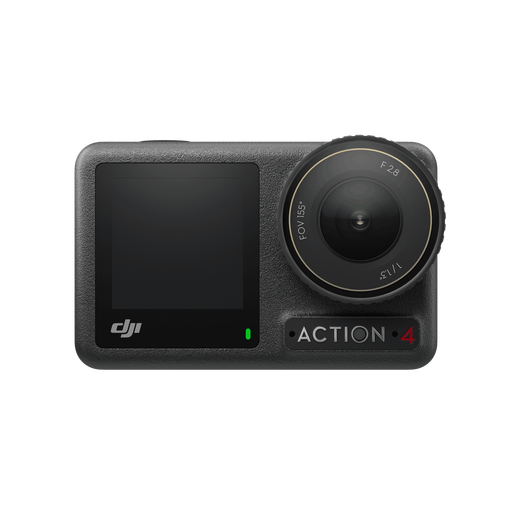
DJI Osmo Action 4 Adventure Combo
Consider this action camera for wide-angle, movement-heavy travel video rather than distant wildlife stills.
The product title specifies a 1/1.3-inch sensor, 155° field of view, 4K/120fps recording and three extra batteries. Check the exact included accessories and water-use instructions before taking it into water.
View on Joybuy
 No image available
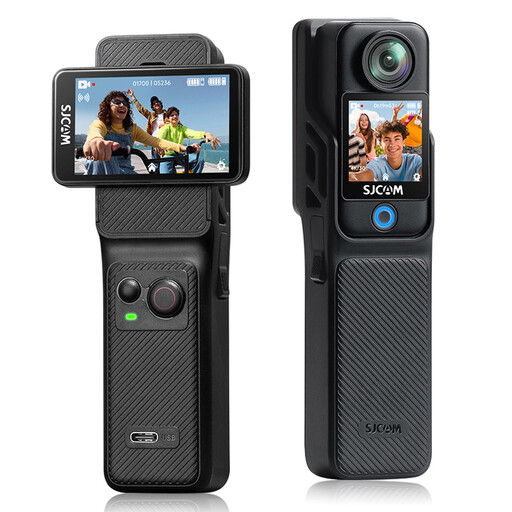
SJCAM C400 4K action camera
This is an action-video option for trips where stabilisation and a wide view are priorities.
Its title specifies 4K/30fps, 6-axis electronic image stabilisation, a 154° view and a 30 m water rating with a case. Confirm the case contents and seals before underwater use; check the required accessories if recording duration is important.
View on Joybuy
 No image available
Sony Alpha ZV-E10 II K with 16–50 mm kit lens
Choose the mirrorless route if lens choice is central to your travel photography; check whether the included lens frames your intended subjects.
The title specifies an APS-C camera, a 16–50 mm f/3.5–5.6 power-zoom kit lens, 26 megapixels and 4K60p video. Check the lens’s equivalent coverage before planning distant-wildlife shots, and confirm weather protection for wet trips.
View on Joybuy
 No image available
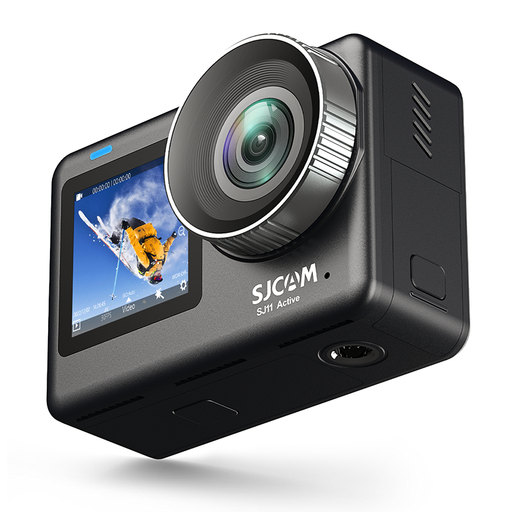
SJCAM SJ11 Active dual-screen action camera
This action-camera format suits moving travel clips when front-facing framing is useful.
The title specifies 4K/30fps, 6-axis electronic image stabilisation, a 2.33-inch touchscreen and a 1.3-inch front display. It states 5 m water protection for the bare camera and 30 m with a waterproof case; check the case, seals and fitted accessories before water use.
View on Joybuy
 No image available
Sony ZV-1F compact vlog camera
Consider this compact for travel filming when a wide view matters more than framing distant wildlife.
The title specifies a 1-inch sensor and an ultra-wide lens. Check the lens’s coverage, battery arrangements and weather protection against your trip plans.
View on Joybuy
Frequently asked questions
Do I need a camera if I already have a good smartphone?
Not necessarily: a smartphone remains the simpler choice for everyday travel pictures and quick sharing. Which? identifies low light, zoom and creative flexibility as reasons a dedicated camera may be more suitable when those needs determine your shots.
Should I choose a bridge or mirrorless camera for wildlife?
Choose a bridge camera if long built-in optical reach is the main need; choose mirrorless if selecting a lens system matters more and you can carry a suitable telephoto lens. Compare optical focal ranges for the actual lenses rather than digital-zoom figures.
What memory card do I need for 4K video?
Use the camera maker’s card requirement for the specific recording mode you plan to use. The SD Association explains that Speed Class, UHS Speed Class and Video Speed Class markings indicate minimum writing-speed categories.
Where should I pack spare camera batteries when flying from the UK?
Take spare batteries and power banks in the cabin, as advised by the UK Civil Aviation Authority. Check your airline’s instructions for the batteries you will carry before travelling.
Does an action camera’s waterproof rating always apply?
No: the rating depends on the exact camera setup and the maker’s conditions. DJI specifies different depths for the Osmo Action 5 Pro with and without its case, while GoPro gives different HERO13 Ultra Wide Edition ratings for its standard lens and Ultra Wide Lens Mod; check closures and accessories before water use.


