Detail-first weaving tutors
You need to show hands, yarn paths and small loom operations clearly, while keeping enough of the loom in view for context.


Choose an integrated-lens camcorder if you want to move between a full-loom view and hand details without changing lenses. An interchangeable-lens camera gives you more choice over framing and accessories, but requires a more deliberate setup. With either route, check focus at your planned camera position, provide stable support and account for sound, power and recording media.
You need to show hands, yarn paths and small loom operations clearly, while keeping enough of the loom in view for context.
You need framing and focus you can manage while weaving and teaching, with a way to capture spoken instruction when needed.
You need to plan power and recording media for a full lesson or repeated takes, as well as a practical way to control framing.
Choose it when: You want to change from a loom-wide shot to a tighter view using the same built-in zoom lens.
Trade-off: You cannot change lenses, and the zoom range alone does not establish whether the camera will focus on yarn at your planned distance.
Choose it when: Selecting a lens and configuring the audio setup are worth the extra preparation for your demonstration.
Trade-off: The lens, support and accessories you select determine whether the complete setup covers the loom and records the instruction you need.
For a weaving demonstration, start with the issue that would most affect your recording, then check the camera at its intended position rather than relying on a headline video specification.
| Concern | What to check | Who this matters to |
|---|---|---|
| Detail and framing | Check the full-loom view from your mount and minimum focus distance at the zoom setting needed for hand details. Sony specifies approximately 1 cm at wide angle but 80 cm at telephoto for the FDR-AX43A. | If my lesson depends on showing exactly where the yarn passes, I need a close view that still makes sense alongside the wider shot; around 36% of consumers put detail and framing first. |
| Long recordings | Match power and compatible media to the recording mode and lesson length. Panasonic states up to 6 hours 10 minutes for the HC-X1600 with its supplied battery under its stated 60 Hz condition. | When I record a full workshop, an interruption could break the sequence I am teaching; roughly 29% of consumers make uninterrupted recording their primary concern. |
| Solo control and sound | Check microphone and monitoring connections, screen position on the mount, and focus behaviour with moving hands. | If I am weaving while I explain, I need viewers to hear me without continually stopping to adjust the camera; about 21% of consumers prioritise solo control and sound. |
| Simple setup | Compare an integrated zoom and video controls with the lens and accessories required for an interchangeable-lens setup; still test the intended close-up. | I may prefer fewer equipment decisions before each demonstration, provided the camera can show the work clearly; around 14% of consumers put simple setup first. |
Resolution does not tell you whether the camera can focus on the yarn from its mounted position. Sony specifies different wide-angle and telephoto focus distances for the FDR-AX43A.
Check both a full-loom composition and the smallest action you need to show, at the actual camera position and zoom setting.
An interchangeable-lens body needs a suitable lens to produce the planned view. Canon UK Store identifies its EOS R50 V listing as a body and says a USB-C charger is not included.
Check the lens, charging arrangement, recording card, stable support and microphone needed for your lesson.
Selecting and setting up those separate components also takes preparation before filming.
Panasonic states up to 6 hours 10 minutes of shooting for the HC-X1600 with its supplied battery under a specified 60 Hz condition; your recording mode and use conditions still matter.
Plan compatible media and a power arrangement for the lesson, setup and retakes rather than scheduling to the stated maximum.
The Office for Product Safety and Standards explains that some electrical-equipment provisions apply differently in Northern Ireland.
For equipment supplied for use in Northern Ireland, check the relevant Northern Ireland guidance and the seller’s product information.
Its integrated-lens camcorders are relevant when one camera must cover both the loom and tighter actions without a lens change.
The FDR-AX43A is a camcorder option to examine when close-focus behaviour and an integrated zoom matter to the lesson.
The EOS R50 V represents an interchangeable-lens video route for a deliberately configured view and audio setup.
These choices include compact recording kits and interchangeable-lens cameras. For each one, assess close-focus framing from your loom position, then check the sound, support and power arrangements needed for your lesson.
 No image available
Consider this compact kit if you want a microphone included for spoken instruction. Its title specifies 4K/120fps video, 3-axis stabilisation and face/object tracking; check close focus, recording duration and media for your planned lesson.
 No image available
The supplied 16–50 mm lens offers a range of framing choices without swapping lenses during a demonstration. Check close focus at your mounting distance, and confirm the microphone and power arrangement you will use.
 No image available
This lens-and-body option suits a setup where you intend to adjust framing with the supplied 28–70 mm zoom. Confirm that it focuses closely enough on the weaving from your chosen position, and plan audio and power separately.
 No image available
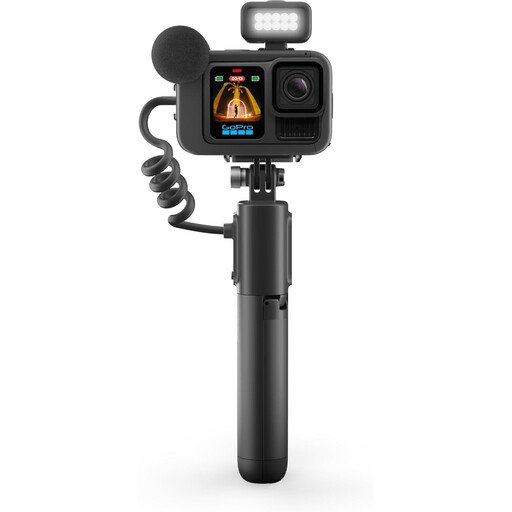
Consider the Creator Edition kit if a compact camera and hands-free support fit your filming position. Before relying on it for weaving details, check the view of both the whole loom and the smallest action, plus the kit contents and recording duration.
 No image available
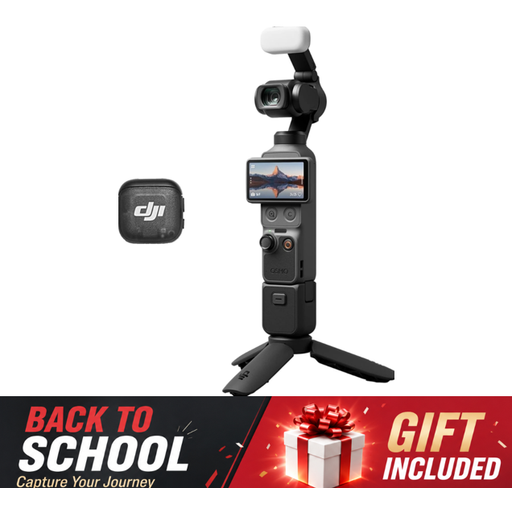
This compact camera is worth assessing if you want a mounting option and some framing adjustment without a separate lens. Its title specifies 2x lossless zoom, 107 GB built-in storage and a handle with a 1/4-inch thread; check close focus, audio and recording duration for the lesson.
Use a camcorder if its integrated zoom lets you show the loom and hands from your chosen camera position without changing lenses. Choose an interchangeable-lens camera if you want to select a lens and configure accessories for a more deliberate setup; in either case, test the close-up before committing to the arrangement.
Check minimum focus distance at the focal length you will actually use. Sony specifies approximately 1 cm at wide angle but approximately 80 cm at telephoto for the FDR-AX43A, so a close-focus figure at one end of a zoom does not establish the view you will get at the other.
You need a lens that frames the weaving from your mounting position, along with suitable power, recording media and stable support; check your microphone needs too. If considering the Canon EOS R50 V body listed by Canon UK Store, note that the listing says a USB-C charger is not included.
Do not assume guidance for Great Britain applies unchanged in Northern Ireland. The Office for Product Safety and Standards publishes separate electrical-equipment guidance and explains that some provisions apply differently in Northern Ireland; check the guidance relevant to where the equipment will be supplied and the seller’s product information.