For repeated photographs of folded textiles against a dark background, start with an interchangeable-lens camera, a suitable standard zoom, a tripod and controllable lighting. Check manual exposure and RAW support before choosing a body, and consider a close-focusing or macro lens if small stitches, labels or weave must fill the frame. Extra resolution can help with cropping, but it cannot correct unsuitable lighting or exposure.
Who is this setup for?
Online textile sellers making repeatable listing photos
If you photograph many folded garments, linens or fabric stacks, a fixed camera position and controlled exposure help keep framing consistent across items. Adobe recommends a tripod for repeating product-photo angles.
Makers showing weave and construction
If listings need close views of stitching, embroidery or labels as well as the whole item, check the lens’s focusing distance and magnification. Sony’s specifications for its E 30mm F3.5 Macro illustrate why these are lens-specific checks.
Small businesses making photos and product clips
If the same camera will also record demonstrations or short videos, screen positioning and video-focused features may influence your choice. Nikon, for example, describes Product Review Mode on the Z50II for shifting focus between a presenter and an item.
What matters when choosing?
Decide first how much of the frame the smallest required textile detail must occupy; then assess the lens, repeatable shooting setup and camera controls together.
| Concern | What to check | Who this matters to |
|---|
| Colour and tonal detail |
Check manual exposure and RAW support, then test lighting and white balance with the intended fabric and background. |
If fabric and backdrop are both dark, I need the item’s colour and edges to remain distinguishable in the final image; around 36% of consumers put colour and usable detail first. |
| Repeatable framing |
Check that the camera works comfortably at your tripod height and lets you repeat exposure settings. |
When I photograph one folded item after another, I need consistent angles and scale across listings; repeatability is the primary need for around 29% of consumers. |
| Close-up detail |
Compare the exact lens mount, minimum focus distance and maximum magnification. |
If a label, seam or weave must occupy much of the image, I need a lens that frames it closely while leaving room to position the lights; around 21% of consumers prioritise this close-detail need. |
| Photos and video |
Consider screen movement and relevant video functions only if product clips are part of the work. |
When I make listing photos and demonstrations with one camera, I need both workflows to be practical; hybrid use comes first for around 14% of consumers. |
Buying pitfalls
-
Assuming every kit lens can fill the frame with fabric texture
Close-up framing depends on the exact lens. Sony specifies 1.0x maximum magnification for its E 30mm F3.5 Macro, whereas Canon specifies 0.25x for its RF-S 18-45mm F4.5-6.3 IS STM zoom; those figures describe different lenses, not the camera bodies.
Decide how small a stitch, label or swatch you need to show, then compare the lens’s magnification and focusing distance before ordering.
-
Prioritising action features over a stable still-life setup
Folded textiles stay still, while a changing camera position makes angles harder to repeat. Adobe’s product-photography guidance recommends stabilising the camera with a tripod for consistent angles.
Plan the lens, tripod and controllable lighting alongside the body rather than choosing on shooting speed alone.
-
Expecting more megapixels to fix inaccurate fabric colour
Resolution affects how much you can crop, but it does not set the lighting or exposure. Canon’s product-photography guidance treats colour accuracy as a separate consideration.
Test the intended fabric against the dark background and inspect its colour, shadow separation and focus at the image size you plan to publish.
-
Overlooking who handles a faulty-camera claim
A fault may interrupt a regular photography workflow, and the applicable remedy is distinct from a retailer’s change-of-mind policy.
Check the retailer’s identity and fault-contact process, keep the order record, and inspect the camera when it arrives.
Relevant brands to consider
Canon
The EOS R50 is an APS-C EOS R option for still-product photography; Canon UK specifies a 24.2MP sensor.
- Canon’s product-photography guidance identifies resolution and colour accuracy as useful considerations.
- Check the exact RF or RF-S lens for close-detail work. Canon specifies 0.25x maximum magnification for its RF-S 18-45mm F4.5-6.3 IS STM zoom.
Nikon
The Z50II is a DX-format option for buyers who also want product-focused video; Nikon UK specifies a 20.9MP sensor and describes its Product Review Mode.
- A vari-angle screen may be useful when positioning the camera for stills and clips.
- Check the chosen Z-mount lens’s close-focus capability; the video features do not establish its suitability for frame-filling textile details.
Sony
The APS-C E-mount system is relevant when a dedicated close-up lens is part of the plan. Sony specifies 1.0x maximum magnification and a 0.095m minimum focus distance for its E 30mm F3.5 Macro.
- That macro lens offers a specified close-detail option for compatible APS-C E-mount cameras.
- Its close focusing can leave less room for lighting. Check the exact camera and lens bundle rather than assuming a zoom kit includes macro capability.
Fujifilm
The X-S20 is an X-mount option for a stills-led workflow; FUJIFILM X Series UK specifies 26.1 million effective pixels.
- The specified resolution is relevant when alternative crops are part of the editing workflow.
- Select an X-mount lens for the required framing and close-up size. A tripod remains useful when catalogue shots must share the same angle.
Joybuy camera choices
These camera kits offer zoom-lens starting points for photographing whole folded items, with options for buyers who also make product clips. For small textile details, confirm the exact supplied lens and its close-focus specifications before choosing a kit.
 No image available
Sony Alpha ZV-E10 II K with 16–50 mm power zoom
Consider this APS-C kit if you photograph folded items and also plan to record product clips. Its title specifies a 26MP camera, a 16–50 mm f/3.5–5.6 lens and 4K60p video. Check the supplied lens’s close-focus capability and the camera’s manual exposure controls for your intended setup.
Joybuy
 No image available
Sony A6700 APS-C camera with 16–50mm lens
This zoom-lens kit is an option for full views of folded garments or fabric stacks. Confirm the lens’s minimum focus distance and magnification if labels or stitching need their own close-up images; check RAW support and manual exposure modes if those controls are essential to your workflow.
Joybuy
 No image available
Sony A6400 APS-C camera with 16–50mm power zoom
The included zoom makes this kit relevant to general folded-item framing. Check the lens’s close-focus specifications before planning weave or label shots, and confirm RAW support and manual exposure controls if your editing and repeatability needs depend on them.
Joybuy
 No image available
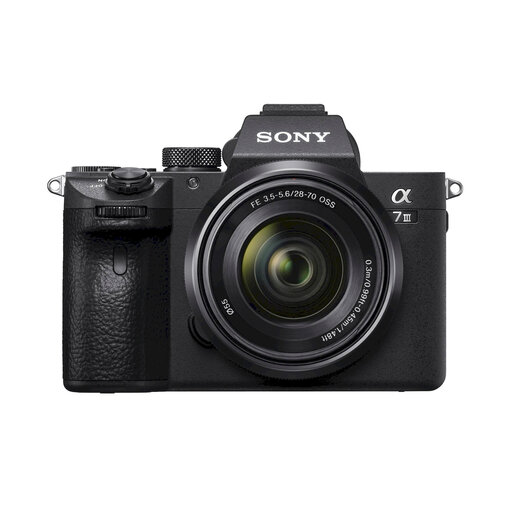
Sony Alpha 7 III full-frame camera with 28–70mm zoom
This full-frame zoom kit is relevant if you are considering that format for general folded-textile images. Sensor format alone does not settle the choice: check whether the included lens frames your smallest required detail, and confirm the exposure and file controls needed for your workflow.
Joybuy
 No image available
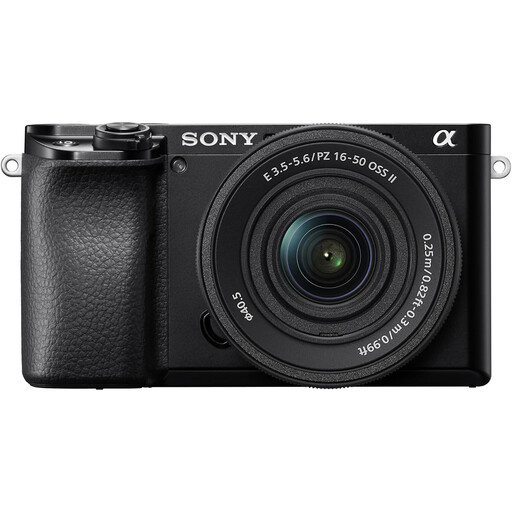
Sony A6100 APS-C camera, advertised 16–55mm kit
Consider this zoom-kit listing for general folded-item photographs, but confirm the exact included lens before ordering: the advertised 16–55mm lens is not consistently identified in the accompanying details. Check that lens’s close-focus specifications, along with RAW and manual exposure support, against your planned shots.
Joybuy
Frequently asked questions
Do I need a full-frame camera for folded textiles?
No, full frame is not a prerequisite for this setup. Canon UK specifies 24.2MP for the APS-C EOS R50, while FUJIFILM X Series UK specifies 26.1 million effective pixels for the APS-C X-S20; decide how much cropping you need, then assess the lens, lighting and repeatability alongside sensor format.
Should I buy a macro lens with the camera?
Buy a macro lens when the smallest required textile detail cannot fill enough of the frame with your chosen zoom. Sony specifies 1.0x maximum magnification for its E 30mm F3.5 Macro, while Canon specifies 0.25x for its RF-S 18-45mm F4.5-6.3 IS STM zoom; check compatibility and the working space available for lights.
How can I keep a dark backdrop without losing fabric detail?
Set up the actual fabric and backdrop under controllable lighting, then test exposure and white balance before photographing a full batch. A tripod helps repeat the angle, as Adobe recommends for product photography; inspect whether the textile remains distinguishable from the background at the intended image size.
What if a camera bought from a UK trader is faulty?
A faulty camera may qualify for statutory remedies that are separate from a retailer’s change-of-mind policy. The Consumer Rights Act 2015 explanatory notes describe a minimum 30-day period for the short-term right to reject, subject to the applicable rules on ownership, delivery and any required trader installation; keep your purchase and delivery records and contact the retailer promptly.


