What matters when choosing
For pottery glazes against a dark background, decide what must be repeatable in the finished image before choosing a camera body: colour and highlights, close detail, or handheld operation.
| Concern | What to check | Who this matters to |
|---|
| Glaze colour and highlights |
Check the camera’s RAW options and how you will set white balance under the shoot lighting; check filter compatibility if you intend to try a polariser. |
If the glaze must look consistent across listings, I need to control colour without losing the highlights that show its finish. Around 42% of consumers put colour and highlight control first. |
| Surface detail and cropping |
Compare capture resolution, then check the chosen lens’s minimum focusing distance and magnification for the detail you want to frame. |
When small marks or crackle need their own close view, I need enough detail in the composition or crop. For around 33% of consumers, close-detail capture is the primary concern. |
| Handheld use |
Confirm stabilisation on the exact body or lens and assess the size of the complete kit you would carry. |
If I photograph pieces away from a fixed setup, I need a kit I can handle while composing the shot. Handheld flexibility comes first for around 25% of consumers. |
Joybuy camera choices
These Sony interchangeable-lens camera kits are options to consider for pottery stills. Compare their stated kit lenses with your working distance, and plan lighting and colour control separately from the body choice.
 No image available
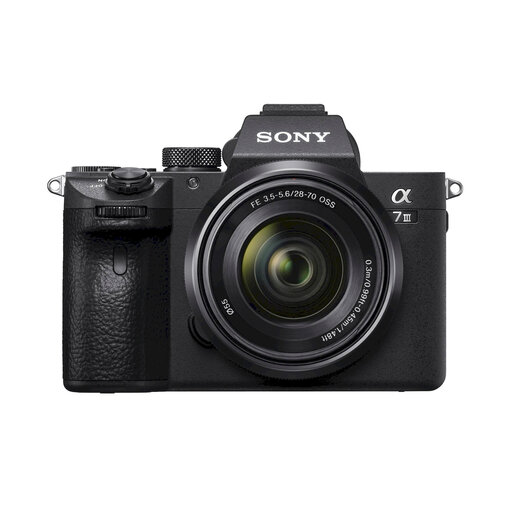
Sony Alpha 7 III full-frame camera with 28–70 mm zoom lens
Consider this lens kit if you want to start with a full-frame interchangeable-lens setup for pottery stills. Check whether the 28–70 mm lens can frame your smallest glaze details at your preferred working distance.
View on Joybuy
 No image available
Sony Alpha ZV-E10 II K APS-C camera with 16–50 mm f/3.5–5.6 power zoom kit lens
This APS-C lens kit is a choice to assess if you want one camera to take between pottery-shooting locations. Check the lens’s minimum focusing distance and magnification before relying on it for close views of glaze texture.
View on Joybuy
No image available
Sony A6400 APS-C camera with 16–50 mm power zoom lens
Consider this kit for a portable pottery-stills setup, subject to whether its lens frames the details you need. If RAW editing or manual white balance is central to your colour workflow, confirm those options for the exact camera before choosing it.
View on Joybuy
 No image available
Sony A6700 APS-C camera, 16–50 mm lens variant
This is an option to assess for portable pottery stills, but confirm whether the 16–50 mm lens is included before planning the kit around it. Also check the lens’s close-focus specifications and the camera’s RAW and white-balance options if those are important to your work.
View on Joybuy
Frequently asked questions
How can I reduce glare on a glossy pottery glaze?
Adjust the lighting direction first, then compare shots with and without a compatible circular polariser. Nikon explains that the filter can reduce reflections, but retaining some highlight may be important when you want the photograph to show that a glaze is glossy.
How can I keep glaze colours consistent between shoots?
Use a colour-reference target under the lighting used for each shoot and apply it within your white-balance or editing workflow. X-Rite describes ColorChecker targets as tools for white balance and managing colour shifts, including under mixed lighting.
Do I need a macro lens to photograph pottery?
Not for every photograph: the deciding factor is whether your lens can frame the detail you want at a workable distance. For close views of crackle, brushwork or a maker’s mark, check minimum focusing distance and magnification on the particular lens rather than relying on the camera body’s name.
What else should I plan for besides the camera body?
Plan for a lens suited to your framing distance, lighting that lets you place reflections deliberately, and a repeatable colour-reference workflow. Stable support can also help when you need comparable catalogue images across several pieces.


