What should you check first?
Start with the work the laptop must do, then check how you will power it and access your files at each stop.
| Priority | What to check | Your needs |
|---|
| Time between charges |
Compare battery tests conducted under a stated method, where available. Check the exact laptop’s charging requirement and estimate the watt-hours used by all equipment between charges; the Caravan and Motorhome Club advises accounting for both equipment use and charging intervals. |
I need to finish a light-work session without relying on the next electric hook-up, while leaving enough energy for the campervan’s other equipment. |
| Charging compatibility and safety |
Confirm USB Power Delivery support and the source’s compatible output, or check the mains charger against a suitable inverter’s continuous output and waveform. Electrical Safety First advises using the original charger or a replacement from the manufacturer or a reputable retailer. |
I want a charging arrangement that works with this laptop and can be used safely in a small living space. |
| Offline files and connectivity |
Check that essential documents and the required software work offline. Use Ofcom’s mobile checker for planned stops rather than assuming that a national coverage measure predicts service at a particular pitch. |
When Wi-Fi drops out, I still need access to my work; email and synchronisation can wait until I have a usable connection. |
| Portable workspace |
Check the weight and screen arrangement you would carry and set up regularly. Confirm the operating system runs any employer or specialist applications, and assess screen visibility where you expect to work. |
There is little room to leave a workspace set up, so I need a laptop I can put away and use again without compromising the software my work requires. |
Relevant brand references
These examples illustrate different laptop considerations; a brand reference does not establish that every model has the same charging or battery characteristics.
Apple
The 13-inch MacBook Air with M5 is worth considering if macOS runs your required software and charging from a compatible USB Power Delivery source matters.
- Apple specifies USB-C or USB Power Delivery charging, a 30W minimum charging source and a 53.8Wh battery for this model.
- Apple’s claim of up to 15 hours of wireless-web use does not establish runtime for your particular workday.
Lenovo
The ThinkPad X1 Carbon Gen 14 Aura Edition is a Windows option to examine when carrying weight matters.
- Lenovo lists a starting weight below 1kg for the model.
- Check the weight and charging requirements of the exact configuration you would buy; a starting-weight specification does not describe every configuration.
MSI
The Prestige 14 Flip AI+ is a convertible laptop to consider if that screen arrangement suits your workspace.
- PCMag UK identified the Prestige 14 Flip AI+ as the longest-lasting laptop in its battery test in August 2026.
- MSI UK lists multiple Prestige 14 Flip AI+ D3M variants. Check the exact variant’s display and charging requirements before planning a power setup around it.
Joybuy laptop options
These laptops address the computer side of light work from a campervan. Check each one against your software, offline files and intended charging source before choosing the rest of the setup.
 No image available
ASUS Zenbook DUO UX8406CA-QL135W, 14-inch Dual OLED Touch
Consider the dual-screen arrangement if your document work calls for more than one on-screen workspace in the campervan.
This configuration names an Intel Core Ultra 7 255H, 16 GB LPDDR5X RAM and a 1 TB SSD. Confirm the exact display resolution and charging compatibility for this SKU before pairing it with a portable power source.
View on Joybuy
 No image available
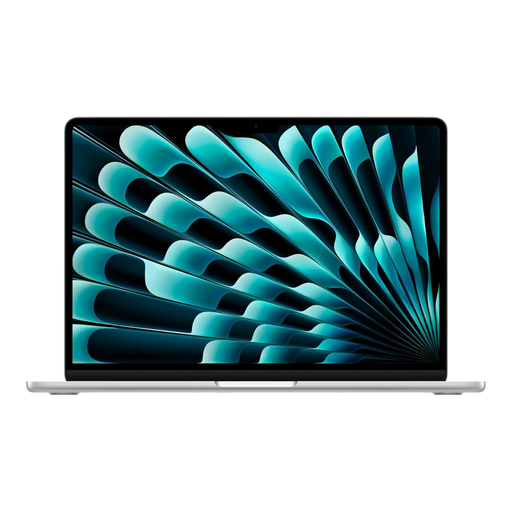
Apple 13-inch MacBook Air M5, 16GB/512GB, Silver
This is an option for documents and local files if the software you need runs on macOS.
The listed configuration has a 10-core CPU, 8-core GPU and 512GB SSD. Apple specifies a 53.8Wh battery and a minimum 30W source for USB-C or USB Power Delivery charging on the 13-inch M5 model. Its claim of up to 15 hours applies to wireless-web use, not every work session; check the supplied charger and your intended power source.
View on Joybuy
 No image available
ASUS Vivobook 14 X1407QA-LY003W, Snapdragon X, Quiet Blue
This 14-inch laptop is an option to assess for portable document work and local file storage.
The named configuration includes 16GB RAM and a 512GB SSD. Confirm that required applications run on this Snapdragon X configuration, and check its battery endurance and charging requirements against your planned power source.
View on Joybuy
Common questions
How do I estimate whether my leisure battery can support laptop work?
Estimate the watt-hours used by all equipment over the time between charges, not just the laptop. The Caravan and Motorhome Club advises basing battery needs on how long equipment runs and the interval between charges; for a 12V system, its example divides estimated watt-hours by 12 to express draw in amp-hours. Check the installed battery’s chemistry, permitted discharge and charging arrangement before using that estimate to plan working time.
Can I run a laptop charger from a campervan inverter?
Potentially, if the inverter and vehicle electrical system suit the charger and the other loads. The Camping and Caravanning Club describes small inverters from around 100W as relevant to low-power equipment such as laptops, but warns that modified-sine-wave output can affect some chargers. Check the charger input, inverter continuous output and waveform compatibility rather than choosing by headline wattage alone.
Will any USB-C power source charge a USB-C laptop?
No. Confirm that the exact laptop accepts USB-C Power Delivery charging and that the source and cable meet its requirements. Apple specifies a minimum 30W charging source for the 13-inch MacBook Air with M5, but that figure must not be applied to a different laptop.
Can mobile data replace campsite Wi-Fi for work?
It can provide another connection route, but check coverage at each intended work stop. Ofcom’s Spring 2026 update predicted good 4G geographic coverage from all operators across 84% of UK landmass as of January 2026; that does not guarantee service at a particular pitch. Check the location and keep essential files available offline.


